Deutsche Tageszeitung - Lucid Gravity 2026: Test report

Lucid Gravity 2026: Test report


Lucid Gravity 2026: Test report

The new electric SUV from a US manufacturer combines the range of a saloon car with the elite space of a van. An extensive winter test covering 8,000 kilometres in Europe, in which pre-production vehicles travelled from the Munich development centre to the Arctic Circle, confirms this high and fulfilled claim. The development team examined both performance on unlimited motorway sections and charging at three-phase European AC connections and state-of-the-art fast charging stations. In extreme cold and summer heat, the interaction of drive, charging performance and comfort was tested to meet the expectations of European customers.

Design and space
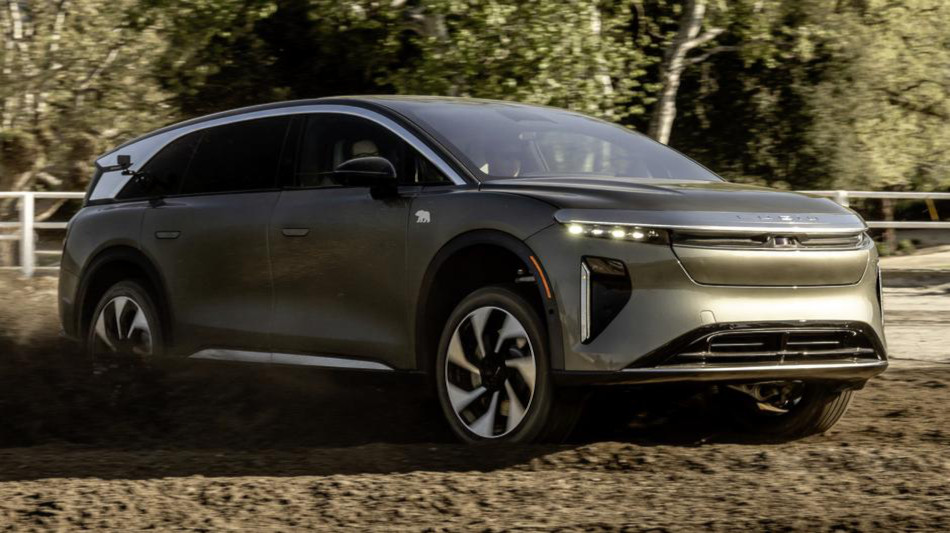
With a length of around 5.03 metres, a wheelbase of over 3.3 metres and a drag coefficient of 0.24, the SUV is surprisingly aerodynamic despite its imposing dimensions. The flat silhouette and flush-mounted door handles emphasise its elegant appearance. The raised windscreen extends seamlessly over the passengers' heads and, together with the panoramic glass roof, creates an airy feeling of space. Depending on the configuration, the vehicle can seat five to seven adults. The second row of seats can be folded electrically into the floor; individual seats will also be available in future. An additional storage compartment under the front bonnet – known as the frunk – has a capacity of 227 litres and can be converted into a bench seat thanks to upholstery. When the rear seats are folded down, the load volume increases to up to 3,450 litres.

Change text size:

Drive, battery and performance
The SUV uses a modular electric architecture with all-wheel drive and two electric motors. In the basic Touring version, the system delivers 418 kW (568 hp) and accelerates to 100 km/h in 4.2 seconds. The range of the Touring variant is up to 545 kilometres according to WLTP. The more powerful Grand Touring version delivers 617 kW (839 hp), sprints from 0 to 100 km/h in 3.6 seconds and achieves a range of up to 748 kilometres. An extreme torque of 1,232 Newton metres is available right from the start, which corresponds to the acceleration of a sports car. With a top speed of 270 km/h, the SUV sets new standards for electric family vehicles.

At the heart of the drive system is a 123 kWh battery with 926 volt technology. This voltage enables charging capacities of up to 400 kW. Depending on the charging station, a range of 400 kilometres can be recharged in around a quarter of an hour. At 500-volt charging points, 225 kW is permanently available. The vehicle supports bidirectional charging, meaning it can also feed energy back into the grid or to external devices. The European test fleet also used the large number of three-phase AC connections to optimise the everyday usability of the charging system.

Driving performance and comfort
Despite its heavy weight of just under three tonnes, the SUV is surprisingly agile. Adaptive air suspension and optional rear-axle steering ensure high driving stability on long motorway journeys and precise handling on country roads. Three driving modes (‘Smooth’, “Swift” and ‘Sprint’) allow you to switch between a comfortable glider and a performance SUV. The acceleration pushes passengers noticeably into their seats, but the suspension confidently irons out any bumps. The manufacturer even considers the model to be off-road capable; thanks to the air suspension, the ground clearance can be increased to such an extent that it rivals that of an iconic off-road vehicle. In practice, however, the SUV will mainly be used on paved roads.

Interior, infotainment and equipment
The cockpit is dominated by a 24-inch 6k OLED display that floats above the dashboard as a continuous panel. Below it is a second Full HD display for important functions. Both screens can interact and, during charging, show an animated surf reminiscent of the sound of the sea. Operation is almost exclusively via touch surfaces; even the mirror and glove compartment controls have been digitised. Haptic touch controls on the square steering wheel support menu navigation, while voice control with the command ‘Hey Lucid’ offers additional operating options.

Standard equipment includes four-zone climate control, ambient lighting, massage and ventilated front seats, and a Dolby Atmos sound system with 22 speakers. There are five different colour and material themes to choose from, with a special focus on sustainable materials. Large storage compartments in the doors, a sliding centre tunnel and a deep glove compartment offer plenty of storage space. To sum up the equipment without exaggeration: luxury as far as the eye can see!

Safety and assistance systems
The manufacturer has equipped the SUV with modern driver assistance systems. An invisible ‘co-pilot’ assists with driving and parking, while a system called ‘HaloSecure’ monitors the surroundings and detects potential hazards. In addition, there are functions required by EU regulations, such as emergency braking and lane departure warning systems, intelligent speed assistance, reversing assistance, fatigue warning and tyre pressure monitoring. Official crash test results are not yet available, but a similar saloon from the manufacturer has already received the highest rating in safety tests.

Warranty and reliability
Customers receive a four-year or 80,000-kilometre vehicle warranty, the powertrain is covered for up to 160,000 kilometres and the high-voltage system for ten years. However, there is a lack of long-term experience because the manufacturer has only a few models on the market. There have been isolated recalls and software problems with the saloon; whether the new SUV will experience similar teething problems will only become apparent after the first deliveries.

Market launch and prices
Production of the Grand Touring variant began in Arizona in the United States at the end of 2024, with the Touring version following a year later. In Europe, the SUV has been available to order since autumn 2025; the first deliveries for Germany were also made in autumn 2025, and production is ongoing. Prices start at around £99,900 for the Touring variant, while the Grand Touring version is available from £116,900.
 
In the USA, the base model starts at around $79,900, while the higher-powered version costs from $94,900. A future entry-level model could further round off the price range below €100,000.

Conclusion on the new Gravity
The new electric SUV sets new standards with its powerful drive, record-breaking charging capacity and generous space. Winter testing in Europe shows that the vehicle performs extremely reliably even under extreme conditions and is adapted to the requirements of European roads and charging infrastructure. The combination of pure luxury, practical versatility and impressive performance makes the model a serious competitor for established premium manufacturers. However, high prices and a still sparse distribution network could severely limit its success, but its technical capabilities promise an exciting future for the electric SUV.

Featured

Genesis GV60 Magma before launch

The new Genesis GV60 Magma is a model that means much more to the brand than just another particularly powerful version of an existing electric car. The car represents a strategic change of direction. Genesis no longer wants to define itself solely through design, material quality and quiet luxury, but also through its own credible form of high performance. That's exactly why the GV60 Magma is so important: it's not just any sporty derivative, but the first production vehicle in the new Magma world – and thus concrete proof that an idea is now becoming a real product.The timing is well chosen. The regular GV60 has recently undergone noticeable technical and visual enhancements, the brand has visibly sharpened its electric expertise, and at the same time, pressure is growing in the premium segment to more closely link performance, digitalisation and brand character. Many manufacturers today can build fast-accelerating electric cars. The real question is no longer just how much power a vehicle offers, but how this power is staged, dosed and translated into a credible overall picture. This is precisely where Genesis is trying to make its mark with the GV60 Magma.Even at first glance, it is clear that the Magma is not just a cosmetically enhanced GV60. The car appears wider, lower and significantly more taut. The proportions seem more compact, the body sits more solidly on the road, and the add-on parts are not merely decorative, but designed for downforce, cooling and high-speed stability. The front end, side skirts, rear spoiler and air ducts visibly follow a functional logic. Added to this are forged 21-inch wheels, wide tyres and an overall appearance that focuses less on striking aggression and more on controlled presence. This is precisely one of the most interesting features of this vehicle: Genesis is attempting to define sportiness not through visual exaggeration, but through excitement, attitude and technical credibility.The GV60 Magma also goes a clear step beyond the previous GV60 range in terms of drive technology. Two electric motors and all-wheel drive form the technical basis. A very high level of performance is already available as standard, and in boost mode, the system performance increases significantly once again. Genesis is thus positioning the Magma at the top of its electrified model range. Added to this is a top speed that stands out in this class, as well as a 0-200 km/h time that clearly shows that this is not just the usual electric sprint from a standing start, but real performance beyond the first few metres. This is an important difference: many electric cars feel spectacular at first, but lose their punch as speed increases. The GV60 Magma is designed to close this gap.It is noteworthy that Genesis does not present the car as an uncompromising race track machine despite its performance orientation. Instead, the focus is on a synthesis of power, control and premium comfort. The battery is generously sized at 84 kWh, the fast-charging capability remains high, and the official range also shows that the vehicle does not sacrifice everyday usability for mere effect. The GV60 Magma therefore aims not only to impress, but also to remain usable. This is crucial for its future market role.A model like this has to meet two expectations at the same time: it should be emotionally charged, but at the same time not seem exhausting in everyday use. It is precisely this balancing act that Genesis has made its core message.A look beneath the surface shows that the Magma is not just a show car exercise. The chassis, geometry and roll centre have been specifically revised, and electronic damper systems, special control strategies and a braking system tuned to the increased performance level have been added. Equally important is the temperature control of the battery system. Anyone who takes high-performance electric cars seriously knows that raw peak values alone mean little if thermal management, reproducibility and stability cannot keep up. Genesis addresses precisely these points with its own high-performance battery management system. This is an indication that the GV60 Magma is not only designed for spectacular acceleration manoeuvres, but also for repeatable performance under load.The interior is particularly interesting because it encapsulates the actual philosophy of the vehicle. Genesis does not compromise on luxury – on the contrary. High-quality surfaces, a deliberately calm interior, special seats, exclusive material combinations and the brand's characteristic attention to detail remain intact. At the same time, a new, more performance-oriented operating logic has been introduced. A special Magma mode changes the instrument display, bringing important driving data to the fore, while the head-up display focuses more on driving-related information. Added to this are virtual gear changes, specific soundscapes, launch control, drift function and various driving programmes designed to noticeably change the character of the vehicle. This is interesting from both a technological and cultural perspective, because Genesis is bringing two worlds together here: the classic premium idea of calm and sovereignty on the one hand, and the digitally supported performance experience that has been reinvented in the electric age on the other.It is precisely this combination that is likely to distinguish the GV60 Magma from other high-performance electric cars on the market. While some competitors focus on maximum toughness, aggressive communication and the most spectacular driving dynamics possible, Genesis is clearly opting for a more refined interpretation. The driver should feel fast, but not overwhelmed. The car should make its reserves felt without constantly proclaiming how serious it is about them. This approach is anything but insignificant. It could become the actual identity of the model – and, in the long term, the calling card of an entire Magma family.The development programme also shows how seriously Genesis takes this claim. The GV60 Magma was not left in the protected space of a design study, but was put through a broad-based test programme. Winter testing, heat, high altitude, real roads, racetracks and fine-tuning in the home market – all this is part of the preparation. Added to this is the early public demonstration of the concept car in Goodwood, where the Magma gained attention as a serious performance project even before series production began. This is important for the brand's image. Genesis presents high performance not as an afterthought, but as something that has been systematically developed.What the GV60 Magma heralds for the coming years is also exciting. The Magma idea is bigger than this one car. Genesis sees it as a long-term programme and a testing ground for future performance models. The GV60 is a logical starting point for this: it is compact enough for agility, modern enough for a consistently digital interpretation of performance, and emotional enough to bring new substance to the brand. In this sense, the GV60 Magma is a production vehicle – and at the same time a manifesto. It shows how Genesis wants to see its future: electric, fast, luxurious and technically independent.

Speed cameras: Brazen rip-off or necessary?

Germany is once again engaged in increasingly heated debate on an issue that has long since become much more than a mere traffic matter: have speed cameras actually become a convenient source of revenue for cash-strapped towns and municipalities, or are they a necessary means of protecting lives on Germany's roads? The outrage felt by many motorists is not without reason. When you see local authorities raking in millions from speeding and red light violations while at the same time complaining about austerity measures, deficits and budget shortfalls, you quickly get the impression that this is not just about monitoring, but above all about collecting money. It is precisely this suspicion that has further fuelled the debate in recent months.In fact, the sums speak for themselves. In a recent evaluation of major German cities, numerous local authorities once again generated millions in revenue from traffic monitoring. It is particularly striking that it is not just a few outliers reporting high amounts, but that a permanently lucrative level of revenue has become established in many cities. This is politically sensitive because, although fines are justified on regulatory grounds, many citizens perceive them as a fixed component of municipal financial planning. Mistrust grows even stronger in cities that like to refer to safety but at the same time do not make a clear distinction between prevention and revenue generation.Hamburg in particular is a prime example of this tension. The figures currently available there show the scale that traffic monitoring has now reached. In 2024 alone, stationary and mobile speed monitoring generated almost £47 million in revenue. By far the largest share came from mobile controls, while stationary systems generated significantly less, but still tens of millions. In addition, there was revenue from stationary red light monitoring. Even in the following year, the city remained at a very high level: speeding offences alone again generated more than 40 million euros. Anyone who reads such figures immediately understands why the term ‘rip-off’ is no longer a polemical exaggeration for many people, but a perceived finding.There is a second point that exacerbates the criticism: in many cities, these revenues are not earmarked for improving road safety, but rather flow into the general budget. This is not surprising from a legal perspective, but it is politically explosive. Anyone who expects money from speed cameras to be automatically invested in safe routes to school, intersection renovations, better lighting, cycle paths or accident prevention is often mistaken. This creates a fatal image for citizens: the local authority measures, collects and records – but whether the revenue is visibly returned to dangerous traffic spots often remains unclear. Where transparency is lacking, suspicion grows that a legitimate safety instrument has gradually become a fiscal business model.The situation becomes particularly explosive when the financial side effect is no longer just tacitly accepted, but openly discussed in consolidation debates. A current case from Halle an der Saale illustrates this problem precisely. There, the budget consolidation concept is to include additional revenue from traffic monitoring. Last year, the revenue there was already in the millions, and now further amounts are to be added. At the same time, it is officially emphasised that the primary objective remains traffic safety. It is precisely this double message that is at the heart of the problem: as soon as a city promises more safety on the one hand, but openly expects higher revenues on the other, every new measuring system becomes politically explosive.

Germany: Electric car boom remains fragile

The German market for electric cars is showing signs of life again. After the setback caused by the abrupt end of subsidies at the end of 2023, new registrations are now rising noticeably again. At first glance, this looks like the belated return of the upswing. At second glance, however, a much more complicated picture emerges: Government support is once again in the billions, the expansion of the charging infrastructure is progressing, tax advantages remain in place – and yet many buyers, especially in the private market, continue to react with remarkable caution.This is what makes the current figures so contradictory. Pure electric cars are on the rise again in terms of new registrations, but there is no sign of a broad wave of purchases. The market is growing, but not with the momentum that might be expected after years of political prioritisation, new purchase incentives and infrastructure programmes worth billions. This is precisely the core problem of German e-mobility: it is making progress, but it is not yet convincing across the board.It is true that significantly more battery electric vehicles have recently been registered. In 2025 as a whole, Germany once again proved to be an important growth driver within Europe. At the same time, the share of purely electric cars in all new registrations remains at a level that looks more like stabilisation than a breakthrough. It is also striking that the overall market is growing only moderately and that the commercial sector continues to dominate the new car business. Where company cars, fleet vehicles and tax-privileged company cars are strong, the figures often appear more dynamic than private demand actually is.This is precisely why industry observers are now looking less at the pure number of new registrations and more at the question of who is actually buying. And here, the situation is much more sobering. In the private sector, there is still a great deal of reluctance. Many households are postponing the switch, driving their combustion engines for longer or opting for petrol, diesel or a hybrid again when buying their next vehicle. This means that mass acceptance in the everyday market has not yet been achieved.

Germany: Fuel rage and the 2026 election year

The war in Iran and the escalation in the Gulf region are no longer just foreign policy news from afar for Germany. They are having a major impact on people's everyday lives – and in the place where many feel the economic reality most directly: at the petrol pump. As soon as production volumes, transport routes and security situations in the Middle East start to slide, the price of oil jumps, traders factor in risk premiums, and ultimately the geopolitical turmoil ends up in motorists' wallets. That is exactly what is happening at the moment. What is a strategic crisis for governments, stock exchanges and commodity markets becomes a very real cost burden for commuters, families, tradespeople, delivery services and small businesses within hours.What is particularly explosive is not only the size of the price increases, but also their speed. Just a few days ago, fuel prices in Germany were already high enough for many people. But then a new dynamic set in: within a very short time, petrol and diesel prices shot up, with diesel even exceeding the two-pound-per-litre mark at times and, in some phases, exceeding the price of petrol. This picture alone reveals the nervousness of the market. Because when diesel – despite lower energy taxes – suddenly becomes more expensive than Super E10, it shows how strongly crisis fears, expectations of shortages and market mechanisms are influencing pricing.For millions of people, this is not a theoretical debate. Those who live in rural areas, work shifts, care for relatives, drive to construction sites, deliver goods or work in the field cannot replace mobility with Sunday speeches. In many regions of Germany, the car is not a convenient additional option, but a prerequisite for work, supplies and everyday life. If the price per litre rises by double-digit cents in a few days, this not only eats into purchasing power, but also directly impacts monthly budgets that are already under pressure. Those who have to fill up three times a week feel the difference not in abstract terms, but as a real additional burden. And those who drive commercially will sooner or later pass on these costs – to customers, to consumers, to the entire price chain.

Change text size: