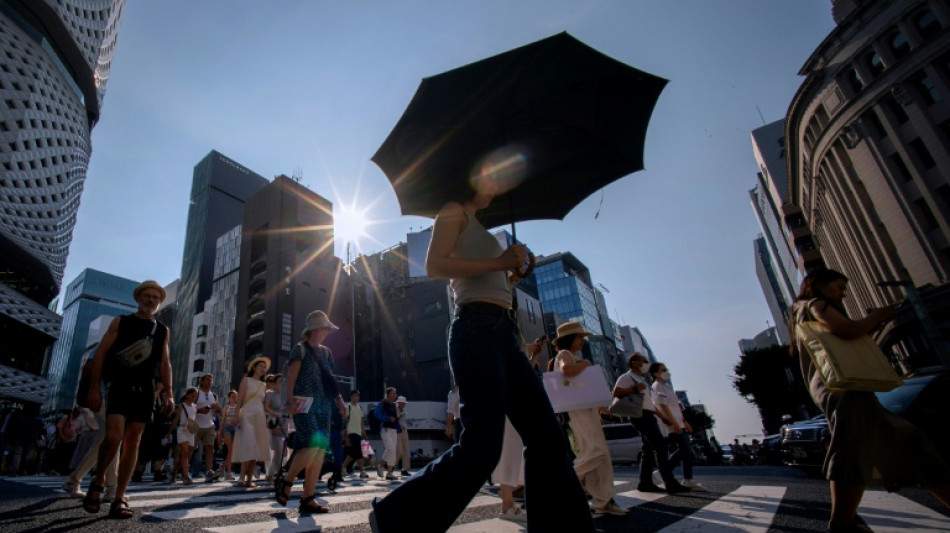
Japan govt sued over 'unconstitutional' climate inaction / Photo: © AFP/File

Hundreds of people across Japan sued the central government Thursday seeking damages for "unconstitutional" inaction on climate change, the country's first such litigation.
The landmark lawsuit criticises Japan's "grossly inadequate" fight against the climate crisis, saying it jeopardises the health and livelihoods of the approximately 450 plaintiffs.
"We just submitted our complaint and evidence to the court and our lawsuit has been officially accepted," lead lawyer Akihiro Shima told AFP.
Plaintiff Kiichi Akiyama, a construction worker, said that relentless heat forced his team to work slower, causing "huge losses" to his business.
There have also been cases where "people collapse out in the field, or have dropped dead after they return home", the 57-year-old said.
In the past, five climate-related lawsuits have been filed with Japanese courts, including against coal-fired power plants, said Kyoto University assistant professor Masako Ichihara, who has followed such cases in the country.
But Ichihara -- as well as lawyers working on the suit -- say this is the first compensation claim against the state over climate change.
"The defendant's climate change measures are grossly inadequate, and as a result, the plaintiffs' rights to a peaceful life and to the enjoyment of a stable climate are being violated," said the complaint summary, which was obtained by AFP ahead of the filing.
This year, Japan sweltered through its hottest summer since records began in 1898, and the plaintiffs argue such heatwaves cause economic losses, ruin crops and put many at risk of crippling heatstroke.
Akiyama, who frequently works outside in the searing heat, said it now takes his team triple the estimated time to finish their projects.
"I can barely dig with a shovel for 10 minutes without sitting down to rest," he added.
"We wouldn't be in this terrible situation if the government had taken more initiative in implementing policies."
- Burning hot playgrounds -
Similar legal moves are underway globally, including in South Korea where young environmental activists won the first such case in Asia.
Last year, a South Korean court ruled that much of the country's climate goals were unconstitutional. In Germany, climate targets were also ruled insufficient and unconstitutional in 2021.
The suit in Japan is seeking damages of 1,000 yen ($6.5) per plaintiff.
Lead lawyer Shima said plaintiffs wanted to focus on "the issue of the country's responsibility" rather than on money.
Japan's case is bolder than previous lawsuits in the country in that it seeks to directly hold the state accountable for climate inaction, academic Ichihara said.
Chances of a legal win are slim, she explained, but "if the purpose ... is to raise public awareness, then it may succeed because of its "very relatable" messaging.
Another plaintiff, who only gave her surname, Saito, was spurred into action by concerns over her six-year-old son.
She said recent record temperatures were robbing him of opportunities to play outdoors, with public pools sometimes declared off-limits due to heatstroke alerts.
"Not just in pools, but playing outside generally is becoming difficult in summer. The playground equipment is burning hot and that scares me," Saito told AFP.
Thursday's lawsuit criticises Japan's latest emissions target as incompatible with the Paris Agreement's goal of limiting warming to 1.5C from pre-industrial levels.
Japan's nationally determined contributions aspire to cut its greenhouse gas emissions by 60 percent by 2035 and 73 percent by 2040 compared with 2013 levels.
But the targets "fall significantly short" of the global reduction targets outlined in the latest assessment report by the UN Intergovernmental Panel on Climate Change (IPCC), and they are not legally binding, the complaint summary said.
"This legislative omission is unmistakably unconstitutional."
(G.Khurtin--DTZ)