'Necessary evil': Some artists say can't quit Spotify

After music legends Neil Young and Joni Mitchell quit Spotify over a Covid misinformation row, some lesser-known artists have said they simply couldn't afford to leave the world's largest music streamer -- despite their concerns.
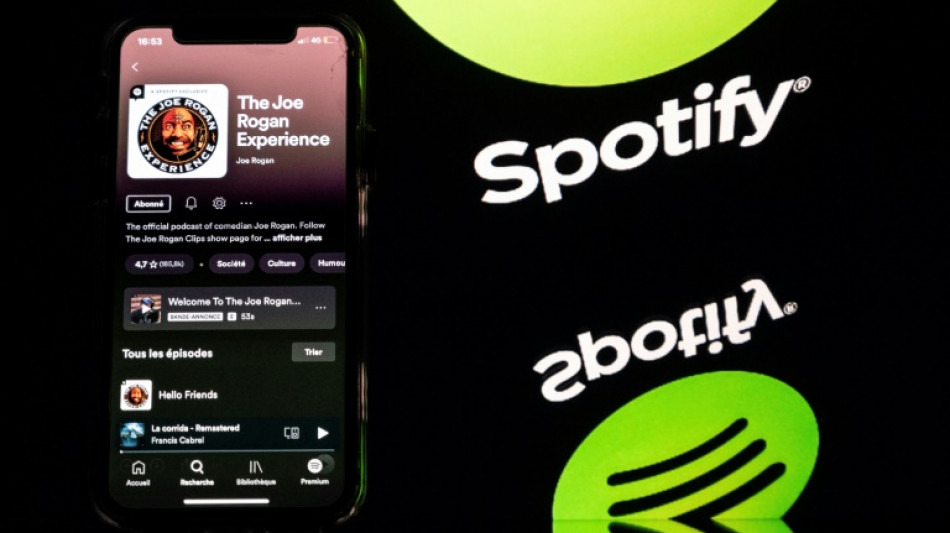
The row sparked a discussion about other artists exiting the platform of more than 170 million subscribers in a stand against Spotify's partnership with podcaster Joe Rogan, who has been accused of promoting vaccine falsehoods on his show.
But the opportunity for less well-known artists to reach a large audience and potentially get paid for streams of their music means they feel obligated to stick with Spotify, even though many say the streaming giant unfairly compensates them.
"For me, Spotify is kind of a necessary evil," said Leo Sidran, musician and host of the podcast "The Third Story." "To leave Spotify would be a decision to eliminate an enormous potential for people to find me."
The music business has always been a tough one for performers, but the decline in major record labels' absolute power as industry gatekeepers has given rise to a new landscape that has its own pitfalls.
Acts with smaller followings have to do a lot of their own promotion, which makes platforms like Spotify or other streaming programs -- and their music-hungry audiences -- a way to get onto listeners' playlists.
"It's crucial to be heard," said New York-based jazz guitarist Michael Valeanu. "I think those platforms are how people consume music these days."
Valeanu had not listened to the Rogan podcasts in question and so was undecided on the controversy at hand -- but said he was willing to quit Spotify simply because he says the platform does not fairly distribute revenue among artists.
For example, Valeanu said he has been paid only about $500 across platforms, largely from Spotify, for his roughly 10-year-old first album that has been streamed "thousands" of times.
- Going to be discovered -
Spotify told AFP that as of 2020, it has paid over $23 billion in royalties to rights holders -- including over $5 billion in 2020 alone.
Artists' streaming payments are tied to how in-demand they are, so there will be a financial impact for popular performers such as Mitchell and Young -- and for their record companies.
Billboard magazine estimates Young's decision to pull his music from Spotify will cost him personally around $754,000 annually, while the impact will be a roughly $272,000-per-year loss for Mitchell.
Young's Twitter account directed fans to head to Amazon Music to stream his tunes, providing a link and noting "all new listeners will get four months free."
"He is standing up to Spotify... (And) now he's pointing people to Amazon Music, which actually doesn't make any difference," said a singer-songwriter who performs under the name Pilsner Man, noting both are streaming platforms that don't favor less famous acts.
The 29-year-old Pennsylvania-based artist said he makes less than $200 a month via Spotify, noting that losing that money by leaving the app would hurt his professional prospects -- but maybe not as much as losing the exposure.
"A lot of it has to do with algorithms as well -- people find music on playlists," he added. "So if you're on (Spotify), you're going to be discovered by people who aren't even really looking for you."
Some artists complained that bigger acts like Young, Mitchell and others had stepped away from the platform over misinformation, not in support of criticism of streaming pay rates.
- Last straw -
While singer-songwriter India.Arie cited Rogan in her social media post announcing her departure from Spotify, she went a little further.
"Paying musicians a fraction of a penny? And (Rogan) $100 million?" she wrote. "This shows the type of company they are and the company they keep."
Sidran, the musician and podcast host, said the only way he sees the current system changing is for the biggest names in music to withdraw their work -- and so far, they haven't.
"(If) Adele, or Billie Eilish, or some really big contemporary pop artists were to leave, maybe it would make a difference," he said. "But for the independent artists to leave, it doesn't really impact Spotify, it impacts the artists."
But independent performer Miles Blackwood, a 31-year-old known as Baze Blackwood, said the Rogan episode came on top of his concerns about the pay rate, citing other platforms he thinks are more equitable.
"I'm in the process of removing all my music from Spotify," the Boston-based musician told AFP on Monday. "I think this was really more of the final straw."
(U.Stolizkaya--DTZ)