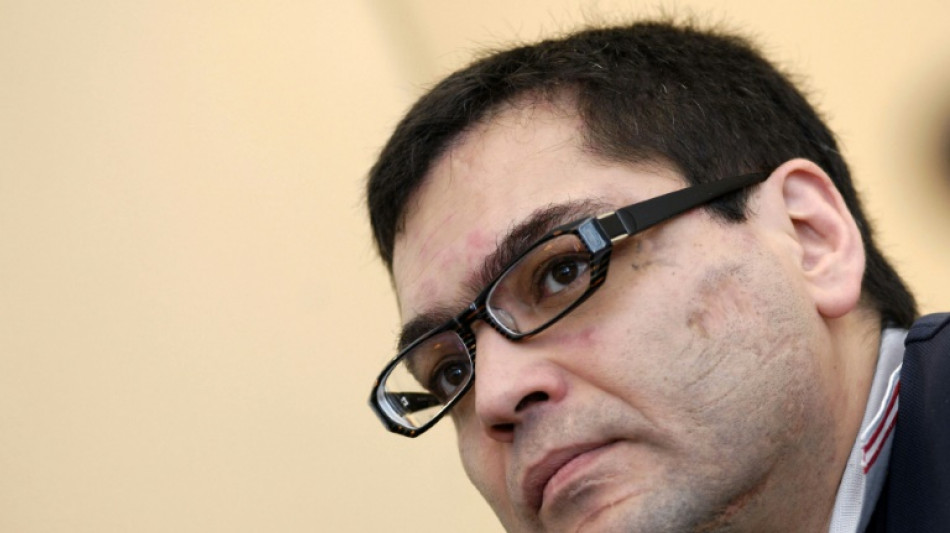
Russian war reporter Andrei Babitsky dies at 57

Russian journalist Andrei Babitsky died at home in the eastern Ukrainian city of Donetsk aged 57, regional media and Radio Free Europe reported.
A contradictory figure, he was best known as an award-winning war reporter covering both Chechen wars for US-funded Radio Free Europe's Russian-language station.
In 2000, he was taken prisoner by Russian forces and handed over to Chechen rebels in a bizarre swap that prompted international condemnation.
After Moscow annexed Crimea in 2014, however, Babitsky strongly backed the cause of separatist regions in eastern Ukraine, cut ties with Radio Free Europe and moved to the separatist hub of Donetsk.
His reports were strongly critical of Kyiv and liberal viewpoints.
Oplot (bulwark) television channel for the Donetsk separatist region, where Babitsky had a show, said he "died last night in his flat in Donetsk". Reports gave a possible cause of heart failure.
Babitsky started out editing dissident journal Glasnost in 1985. He began working with Radio Free Europe two years later, reporting on the 1991 attempted coup and the 1993 White House siege in Moscow, then both Chechen wars.
He was said to enjoy excellent contacts with rebel leaders, many of whom relied on the radio station for their news.
The radio correspondent was detested by Russian authorities for his powerful reports on civilian suffering and soldiers' hardships in Chechnya which official television coverage carefully avoided.
"His reports prompted harsh criticism from Russian officials," Radio Free Europe said in an obituary.
In January 2000, he was arrested by Russian forces in Chechnya over breaches of accreditation rules.
Soon afterwards, he was exchanged by the Russian side for two Russian soldiers held prisoner by Chechen rebels, with the handover shown on Russian television.
This swap prompted condemnation from Washington, since Babitsky was a non-combatant, and widespread criticism in Russia for then-acting president Vladimir Putin.
Babitsky said in a note that he had consented due to "a desire to help in the freeing of military prisoners".
He re-emerged more than a month later in the neighbouring republic of Dagestan -- after being arrested again by Russia, for possessing a forged passport.
He was flown to Moscow days later and freed, although he was fined for the forged passport.
His story was told in a book and a documentary film.
He later worked in Prague for Radio Free Europe and Ekho Kavkaza radio stations.
In 2005, he filmed an interview with Chechen warlord Shamil Basayev aired on US television network ABC, angering Moscow.
"We need to talk with terrorism," he told the opposition newspaper Novaya Gazeta.
He reported from separatist-controlled regions of Ukraine in 2014 and parted ways with his former employers, living in Donetsk from 2015.
(L.Møller--DTZ)