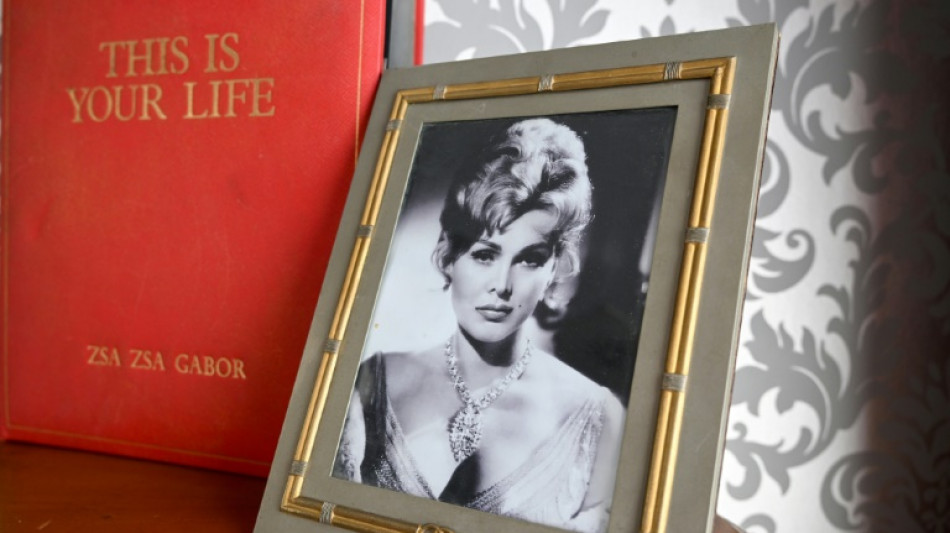
Zsa Zsa Gabor museum opens in Budapest / Photo: © AFP

A museum dedicated to the glamourous Hungarian-born actress Zsa Zsa Gabor, who died in 2016, was opened in Budapest on Thursday by her widower Frederic Prinz Von Anhalt.
The permanent exhibition, located in the Origo film studio on the outskirts of the capital, celebrates Gabor's flamboyant Hollywood lifestyle and personality.
"Zsa Zsa was the world's first real celebrity, wherever she went around the world the doors were opened for her," Von Anhalt, 78, told AFP after the opening.
"It's wonderful there is a museum for her now," he said.
Exhibits donated by Von Anhalt include lavish dresses and furniture, as well as memorabilia such as a copy of the "Life" magazine featuring Gabor on the cover.
One of the dresses on show was worn by the actress when she was famously arrested for slapping a Los Angeles traffic policeman in 1989.
Von Anhalt married Gabor in 1986, making it by far the longest of her nine marriages.
Gabor's ashes were buried in Budapest last July nearly five years after her death aged 99 from a heart attack at home in Los Angeles in December 2016.
- 'Zsa Zsa is alive again' -
"Now Zsa Zsa is alive again, she is right over there," said Von Anhalt, pointing to the exhibition.
"People ask me why am I giving away things that she left to me but I know they are now kept in a good place, she should be celebrated," said Von Anhalt.
"So I am giving her stuff back to her, I lived with her for 35 years, everything is in my heart, every picture, every dress, I will never forget them as long as I live".
Born into a wealthy family in Hungary in 1917 as Sari Gabor, Zsa Zsa was one of a trio of sisters known for their shapely curves and passion for well-heeled men.
In her heyday she embodied the film industry's platinum blonde ideal as a voluptuous former beauty queen who won "Miss Hungary" in the 1930s.
Her resume after emigrating to the United States before World War II includes a long list of film roles in such hit movies as "Moulin Rouge," "Lili" and "Arrivederci, Baby!"
But the actress was at least as famous for her romantic conquests as her triumphs on the silver screen.
Her thick Hungarian accent was much parodied -- especially her signature penchant for calling everyone she met "darling" -- or "dahlink" as she pronounced it.
"I call everyone 'dahlink' because I can't remember their names," the socialite once said.
Von Anhalt said a statue is also in the works to honour Gabor, and there could even be a TV series and movie about her life.
(V.Korablyov--DTZ)