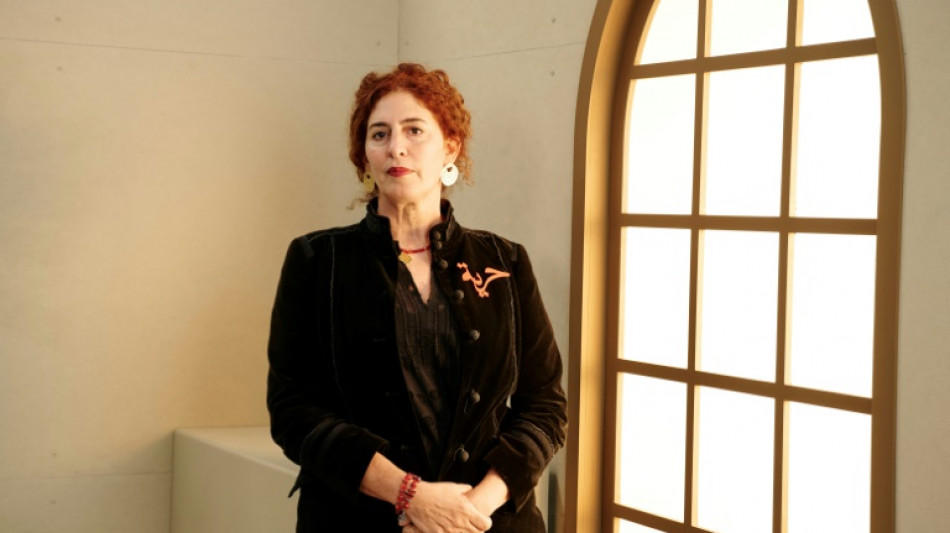
'Palestine 36' shines light on Arab revolt against British rule / Photo: © GETTY IMAGES NORTH AMERICA/AFP

In "Palestine 36," director Annemarie Jacir recounts a year of Arab revolt against British colonial rule that she says is crucial to understanding current events in the Middle East.
"You can't understand where we are today without understanding 1936," Jacir told AFP a day after the film's world premiere at the Toronto International Film Festival.
The Palestinian filmmaker, who lives in the Israeli city of Haifa, was motivated to make the film, in part, to redress a lack of awareness about the consequences of British policies during the so-called mandate period, before Israel's creation in 1948.
"I wanted to really point the finger at the British," she said.
The film features a mostly Arabic-speaking cast, including Hiam Abbass from HBO's "Succession," and Jeremy Irons as a British high commissioner unsettled by rising violence and protests against the colonial administration.
With Jewish immigration from Europe increasing and Palestinian villagers concerned about further loss of land, Arab support for armed revolt against the British surges.
The film details the brutal crackdown launched to contain the violence.
Villagers are beaten, people are arrested en masse while soldiers torch homes after searching them for weapons.
They are tactics Jacir said Israel's army learned from the British and have used since against Palestinians living under occupation.
But Jacir -- who was born in Bethlehem in the Israeli-occupied West Bank -- told AFP a key goal of the film was to shine a spotlight on the British colonial practice of divide and rule, which was used across the empire.
The narrative in "Palestine 36" builds toward the publication of the Peel Commission's report, a British inquiry into the causes of Arab and Jewish unrest in Palestine.
The commission recommended Palestine be partitioned -- with separate areas for Jews and Arabs -- a finding that influenced the United Nations-backed partition plan that coincided with Israel's creation.
"It was a British policy: first, we'll bring (Arabs and Jews) together," Jacir said.
Then "we separate... It was a tactic of control," she added.
Jacir said the reception for the film at Friday's world premiere was overwhelming.
"Yesterday was crazy," she told AFP, an outpouring of support likely tied to widespread outrage over the conflict in Gaza.
She voiced hope that the film could foster broader awareness about the lasting impacts of the British mandate period in Palestine.
"I'm shocked how many people have told me when I tell them about the film, they were like, 'the British were in Palestine?'"
British rule, she said, was "decisive."
(V.Sørensen--DTZ)