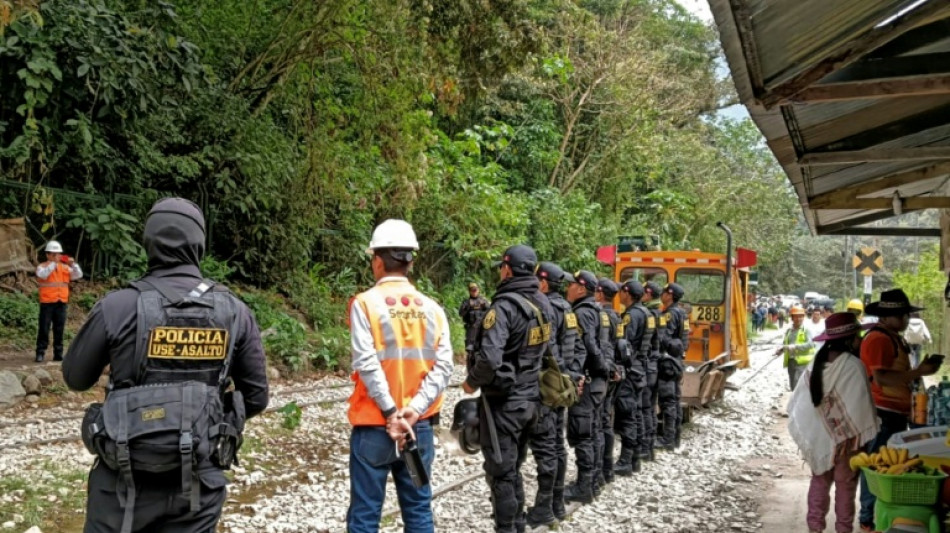
Peru evacuates 1,400 tourists from Machu Picchu amid protest / Photo: © AFP

Peru evacuated some 1,400 tourists overnight from the train station that serves the Inca citadel of Machu Picchu, while about 900 others remained stranded Tuesday as protesters blocked the railway tracks, officials said.
A UNESCO World Heritage Site since 1983, the ancient fortified complex receives some 4,500 visitors on average each day, many of them foreigners, according to the tourism ministry.
Residents placed logs and rocks on the tracks Monday to demand a new company be chosen to run the buses that ferry visitors from the Aguas Calientes train station, at the foot of Machu Picchu, to the site itself.
"We managed to evacuate about 1,400 tourists" stuck at the train station in an overnight operation before a fresh blockade Tuesday, Tourism Minister Desilu Leon told RPP radio.
Authorities have not said where the visitors were from.
A police statement said 14 agents were injured in clashes with protesters during Monday night's temporary unblocking of the tracks.
After the evacuation was halted, trapped tourists told AFP authorities had suggested they walk for several hours to catch a train or some other means of transport out of the Machu Picchu area.
"In my case, I can't do it because my wife is pregnant," said Chilean visitor Miguel Salas.
Leon said a meeting was planned with local authorities and unions "to find a solution" to residents' complaints.
Visitors arrive at Aguas Calientes by train from the city of Cusco -- the Inca empire's ancient capital -- some 110 kilometers (68 miles) away.
From Aguas Calientes they can take a bus to the entrance of the citadel, and return the same way.
The previous bus firm's contract had come to an end after a 30-year concession, but it has continued to provide services much to the ire of residents, who demand a new company, responsive to their interests, be chosen in a fair bidding process.
Machu Picchu was built in the 15th century at an altitude of 2,500 meters (about 8,200 feet) on orders from the Inca ruler Pachacutec.
It is considered a marvel of architecture and engineering, but has repeatedly been the scene of protests by locals pressing home their social demands.
In January last year, some 1,200 tourists also had to be evacuated from Machu Picchu. Many never even lay eyes on the site.
A year earlier, the complex was closed for 25 days during protests over the impeachment and arrest of then-president Pedro Castillo.
Tourism is key to the economy of Peru.
(S.A.Dudajev--DTZ)