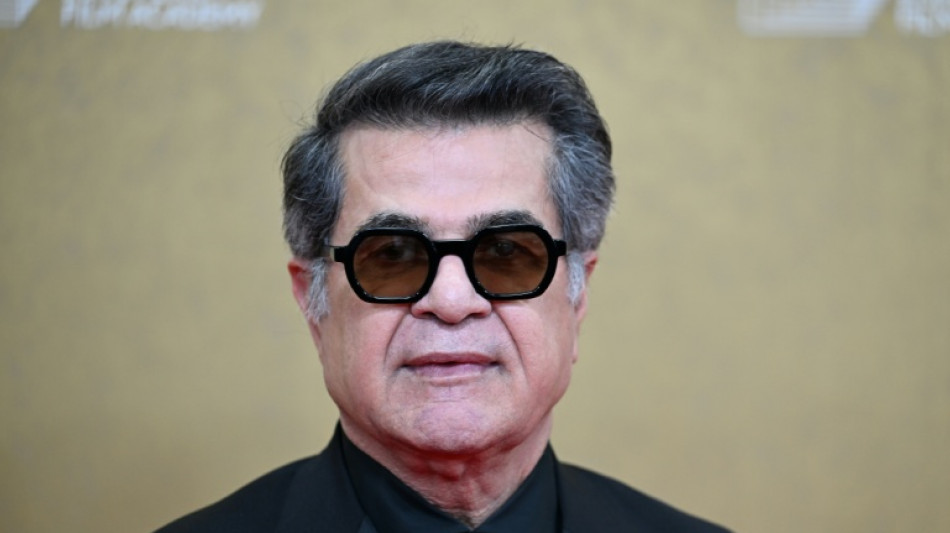
Iran filmmaker Panahi fears Iranians' interests will be 'sacrificed' in US talks / Photo: © AFP

Dissident Iranian film director Jafar Panahi told AFP he believes ordinary Iranians risk being "sacrificed" in talks between Iran and the United States on Friday, with his country still "in shock" over a deadly crackdown on protests.
Panahi, Iran's best-known director, offered support for anti-government protests last month in which thousands of people were killed by security forces, according to rights groups.
US President Donald Trump, having initially encouraged the demonstrations, has since focused his attention on making a deal with Iran's clerical leadership over the country's nuclear and missile programmes.
In an interview in Paris on Wednesday, Panahi told AFP that "whatever happens in these negotiations they will not be in the people's favour".
"The people have no representative in these negotiations, and their interests are never taken into account. They can easily be sacrificed in these exchanges," he added.
Panahi's comments reflect concerns that the talks between US and Iranian officials scheduled for Friday in Muscat could help consolidate the power of supreme leader Ayatollah Ali Khamenei.
Panahi has been out of Iran for the last few months and his latest film "It Was Just an Accident" is in the running for Best International Feature at the Oscars.
The 65-year-old has been sentenced to a year in jail during his absence for "propaganda activities" against the state, but insisted to AFP he planned to return home.
- Detention -
The director is still absorbing the news that Mehdi Mahmoudian, who worked on the script of his latest film, was detained at the weekend in a sweep that also saw student leader Abdollah Momeni and journalist Vida Rabbani arrested.
"Friends told us that Mehdi Mahmoudian and Abdollah Momeni were each able to make a one-minute phone call to say they are okay and that they are in detention," Panahi said.
He met Mahmoudian, a human rights campaigner, while the two men were in jail during the second of Panahi's stints behind bars.
Iranian filmmaker Javad Ganji was shot dead during the protests in early January in Tehran, according to reports.
Despite his previous convictions, Panahi was one of several leading film figures to sign a statement supporting the latest anti-government demonstrations.
Panahi's son and other family members have remained in Iran during his foreign travels and talking candidly about recent events is impossible over unsecure phone lines.
"They are okay, but all of them are in shock -- a shock that, like the rest of the people of Iran, has put everyone in a state of mourning," Panahi said.
Rights groups and witness statements point to an unprecedented mass killing by Iranian security forces last month under the cover of a weeks-long internet blackout.
Tehran has acknowledged more than 3,000 deaths during the unrest, while some rights groups think the final toll could be as high as 30,000.
"This number is beyond imagination. This shows that the regime has reached a point where it knows it has no legitimacy left. It lost legitimacy long ago, and this massacre is the final confirmation," Panahi said.
"As we've seen in other places -- India, South Africa -- when people emerge from mourning, when they rediscover themselves, they find ways to continue their struggle," he added.
- 'I will return' -
"It Was Just an Accident" has won over critics and filmgoers as a wry and humane thriller that spotlights the dilemmas of a group of ordinary Iranians as they confront a man they believe to have tortured them in jail.
After being released from a travel ban last year, Panahi travelled to the Cannes Film Festival in France in May to present "It Was Just an Accident", which went on to scoop the top prize.
The feature is clearly allegorical, imagining what might happen to the country if the current clerical system headed by Khamenei falls.
"I have always felt that our people are non-violent, and this regime has always tried to inject violence into them," Panahi said.
Despite a prison sentence and a two-year travel ban hanging over him, he insisted he would return home after the Oscars ceremony on March 15.
"It is my home and I will return to my country," he told AFP.
(L.Svenson--DTZ)