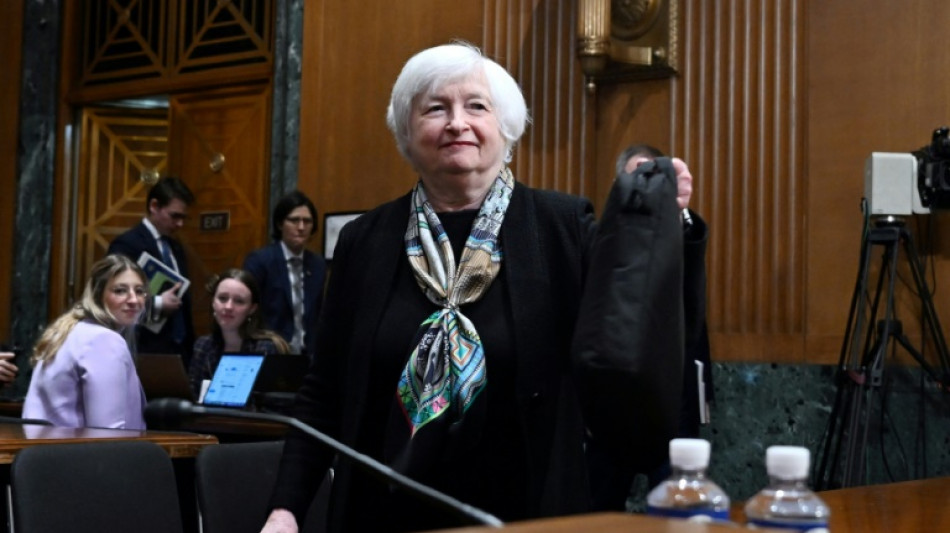
US banking sector 'stabilizing' after turmoil: Yellen / Photo: © AFP/File

The US banking sector is "stabilizing" after the recent failures of Silicon Valley Bank and Signature Bank rattled the industry, Treasury Secretary Janet Yellen will tell a summit Tuesday, according to prepared remarks.
The collapses caused a crisis of confidence, with many customers of similarly sized banks withdrawing their money and depositing it in larger institutions -- considered too big for the government not to bail them out if they faced failure.
But "outflows from regional banks have stabilized" following authorities' moves to shore up confidence and stem contagion, according to Yellen's remarks.
"Our intervention was necessary to protect the broader US banking system," she will say in a speech to the American Bankers Association's (ABA) meeting in Washington.
"And similar actions could be warranted if smaller institutions suffer deposit runs that pose the risk of contagion," she adds.
For now, the banking industry remains resilient despite recent upheaval, said ABA chief executive Rob Nichols at the event.
"The overall banking industry remains strong, resilient, well-capitalized, liquid and serves customers and communities extremely well," he added, noting that authorities took swift action to prevent a bad situation from spreading.
After SVB's collapse, the Treasury, Federal Reserve and Federal Deposit Insurance Corporation set out plans to ensure its customers would be able to access their deposits. A similar exception was announced for Signature Bank.
The Fed also introduced a new lending tool for banks in an effort to prevent a repeat of SVB's quick demise, and has since launched a drive with other major central banks to improve banks' access to liquidity.
- Reducing risk -
"I believe that our actions reduced the risk of further bank failures," according to Yellen's remarks.
She maintains that the US banking system remains sound.
But there are fears over which lender could be the next domino to fall, with 11 US banks announcing last week they would deposit $30 billion into First Republic amid worries surrounding the bank.
A coalition of midsized US banks has also asked federal regulators to guarantee all of their customers' deposits for two years, a move that would help to halt an "exodus of deposits" from smaller banks, Bloomberg reported Saturday.
Financial authorities have been scrambling to ease fears while worries of contagion spread to Europe, as Switzerland's second biggest bank Credit Suisse came under pressure.
Rival UBS has since agreed to take over Credit Suisse in a government-brokered deal after days of market upheaval.
While US and European markets picked up on Monday, analysts say investors remain wary.
But Yellen, in her speech, is set to try to reassure bankers of the Treasury Department's commitment to safeguarding the "health and competitiveness" of the community and regional banking institutions.
"You should rest assured that we will remain vigilant," according to her speech.
(V.Varonivska--DTZ)