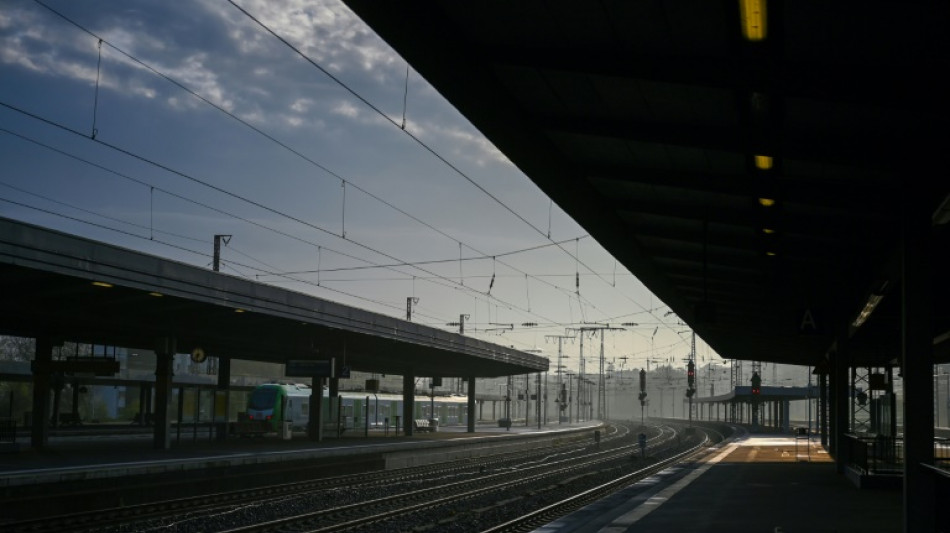
Strike brings rail traffic to a halt in Germany / Photo: © AFP

Rail traffic came to an almost complete standstill in Germany on Friday as workers across the country went on strike to demand higher wages to help offset inflation.
"Almost no trains" were running due to the shortage of staff, Achim Stauss, a spokesman for national rail operator Deutsche Bahn, told reporters at Berlin's deserted central station.
More than 15,000 employees from 50 companies have joined the strike, according to the EVG transport union, which represents some 230,000 workers.
The strike, which is due to last until 11:00 am local time (0900 GMT), is intended to "increase pressure on employers", EVG representatives Cosima Ingenschay and Kristian Loroch said in a statement.
"Employers think they can ignore the demands of their employees and want to dictate collective bargaining from above. This is unacceptable," they said.
EVG is demanding a 12-percent pay rise over one year for the workers it represents, with a minimum increase of 650 euros ($712) a month.
Stauss said the strike was "unnecessary" since negotiations are ongoing.
Travel disruption was likely to continue after the end of the strike, Deutsche Bahn warned, adding that the situation at stations remained "quiet".
Urban and regional rail services will resume after the end of the strike, while long-distance trains will start running again from 1:00 pm local time.
Germany's rail system was largely brought to a halt in a major strike at the end of March led by EVG and public sector union Verdi.
Verdi, which represents around 2.5 million employees, has also been engaged for several weeks in tense negotiations with national and local authorities. The talks here are set to resume on Saturday.
Over the last months, workers in different sectors including healthcare, childcare and transport have gone on strike to demand better conditions.
Inflation in Germany stood at 7.4 percent in March, remaining very elevated despite having fallen from a peak of 8.8 percent in October.
(M.Dylatov--DTZ)