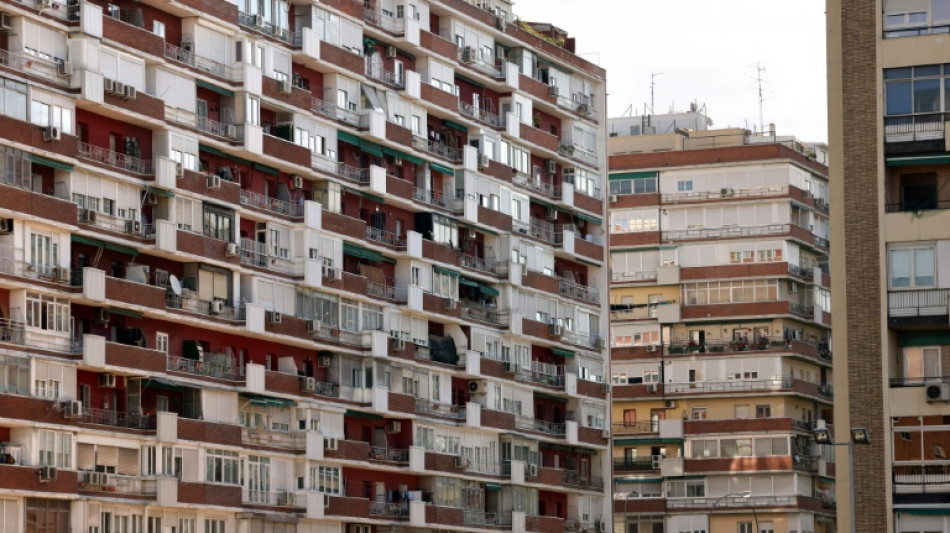
Spain to vote on key housing law ahead of elections / Photo: © AFP

Lawmakers vote Thursday on a housing bill aimed at capping soaring rents and addressing Spain's dire social housing shortage as the government seeks to bolster the right to affordable housing.
Spain's left-wing government is hoping to fast-track the bill so it becomes law before regional and local polls on May 28, seen as a sounding board ahead of a year-end general election which promises to be a tight race.
Flagged by Prime Minister Pedro Sanchez as the "first-ever housing law" since Spain's return to democracy in 1975, the bill is part of a reform promised to Brussels in exchange for EU recovery funds.
The government says the legislation aims to meet the needs of those struggling to afford housing while limiting property speculation by capping rental increases, increasing help in high-demand areas and offering more protection for those facing eviction.
"Spain has a huge, very serious problem with housing," Sanchez told lawmakers last week, saying average rents had risen 45 percent between 2014 and 2021, making housing "unobtainable for many people, especially youngsters".
Soaring rents have sparked bitter debate in a country traumatised by the collapse of its housing sector following the 2008 financial crisis, when thousands of families were evicted after being unable to pay their mortgages.
Ahead of Thursday's vote, Sanchez unveiled plans to add 113,000 homes to Spain's depleted social housing stock.
But the move was rubbished by the right-wing opposition Popular Party (PP) claiming it failed to address long-term housing problems and the issue of squatting.
"A fantastic opportunity for squatters," the PP said, denouncing the bill as making the eviction process "harder and slower", claiming squatting had "risen by 50 percent in recent years" without government response.
Under the proposal, rental rises will be decoupled from the consumer price index and permanently capped at 3 percent in 2024, with a new index due to be set by 2025.
It will allow regional authorities to designate "stressed areas" neighbourhoods where particularly high prices are driving out tenants and cap rental prices.
The text also penalises landlords for leaving homes empty if they own more than 10 properties -- or five in stressed areas.
It also obliges them to inform those facing eviction of the exact date and time they must leave and lengthens the grace period for vulnerable tenants.
(P.Hansen--DTZ)