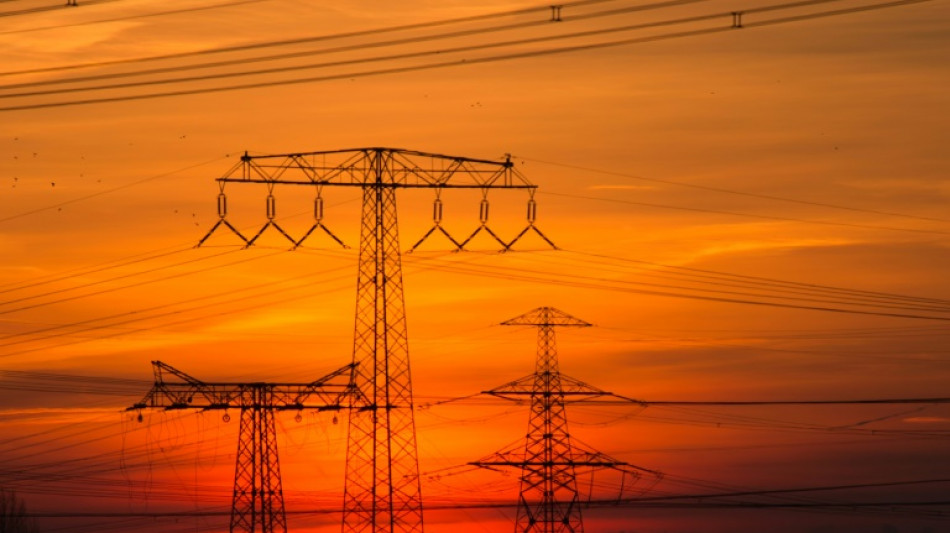
Germany considers electricity price cap for industry / Photo: © dpa/AFP/File

Germany's Economy Minister Robert Habeck on Friday presented plans to cap the price of electricity used by energy-intensive industries to insulate the sector against sharp cost increases, but the proposal immediately sparked criticism.
The cap, which would be set at 0.06 euros ($0.07) per gigawatt hour (GWh), would apply until 2030 and cover at least 80 percent of companies' electricity usage.
Energy costs rose sharply in the wake of the Russian invasion of Ukraine, as Moscow dwindled critical gas supplies to Europe.
The electricity price for non-residential customers averaged 0.18 euros without taxes in the second half of 2022, according to the German statistics agency Destatis.
The leap in costs for heating and electricity have weighed on industry with Germany experiencing anaemic growth in the months since the outbreak of the conflict.
Berlin announced a 200-billion-euro package in November to protect consumers and businesses from sky-high energy costs through April 2024.
The measures had "stabilised energy-intensive industry but we must not squander this achievement", Habeck said at a press conference.
The new cap would ensure that "critical branches of industry" remained based in Germany and Europe, Habeck said.
The Green party minister described the proposal as a longer-term "bridge" solution until renewables capacity has been increased and prices have come down.
A "clearly defined" group of energy-intensive industries would have access to the low-cost electricity, according to the plan, including sectors such as chemicals, steel and glass manufacturing.
Beneficiaries would see the difference between the market price for electricity and the cap reimbursed, with the total cost of the project running to between 25 and 30 billion euros, according to the economy ministry's estimates.
The VCI chemicals lobby welcomed the price cap ion a statement as a "clear game changer for our international competitiveness".
The proposal however faces resistance from within the government coalition, a three-way alliance between the Social Democrats, Greens and the liberal FDP.
"I take a very critical view of the industrial electricity price," Finance Minister Christian Lindner wrote in the Handelsblatt daily earlier this week.
The idea was "economically unwise", said Lindner, whose party the FDP has championed Germany's balanced-budget orthodoxy.
Habeck's proposals could also raise concerns in Brussels that Germany is unfairly subsidising its industry.
The ministry said it would "enter into a constructive discussion with the European Commission on all competition-related issues", while calling for a broader "European strategy to strengthen energy intensive industries".
(U.Kabuchyn--DTZ)