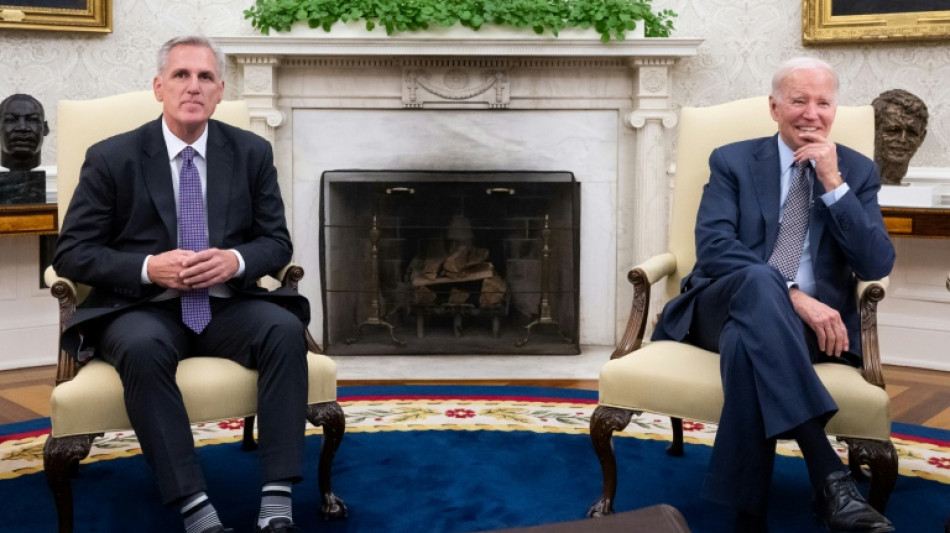
US debt ceiling deal: the key takeaways / Photo: © AFP/File

President Joe Biden and House Republicans have reached a deal in principle to raise the government's debt ceiling and avert a devastating default.
Here, AFP details the key takeaways from the agreement, which still needs to be approved by a divided Congress in a vote on Wednesday.
- Did either side win? -
After days of long, difficult talks, the deal allows both sides to claim a victory of sorts. Biden called it a "compromise" while Republican House speaker Kevin McCarthy described it as "worthy of the American people."
The text has yet to be published and the agreement will be the subject of intense scrutiny and debate in the coming days.
Sources and reports suggest that some demands from both camps were not accepted, such as the elimination of certain tax loopholes requested by Democrats, and the repeal of clean energy tax credits sought by Republicans.
- The crux of it -
Sources close to the negotiations say the deal raises the $31.4 trillion debt ceiling for two years, meaning Biden will crucially not need to negotiate it again before the 2024 presidential election.
The tentative deal also places limited curbs on federal spending that will please some Republicans, but it does not deliver the big cuts that right-wingers wanted and which progressive Democrats would have balked at.
- Spending -
The deal holds non-military spending roughly flat for the 2024 fiscal year from this year. It also limits the increase by one percent for 2025, according to sources familiar with the negotiations.
The agreement preserves plans by the Biden administration to increase spending for the military and veterans in line with inflation as well.
- IRS clawback -
The deal also pares back funds allocated for the expansion of the Internal Revenue Service (IRS). Last year, Congress approved $80 billion for the IRS to boost tax enforcement. The debt ceiling agreement would cut $10 billion.
- Unspent Covid money -
The tentative deal would also take back some funding that Congress allocated for the coronavirus pandemic but did not spend. A source close to the negotiations estimated that it could amount to tens of billions of dollars.
No changes will be made to Medicaid, the government's health insurance program for the most disadvantaged Americans.
- Work requirements -
The tentative deal purports to increase work requirements for people who are receiving federal food stamps or on family welfare, in a victory for the Republican side.
It is set to raise the age at which childless adults will be required to work to receive food stamps from 49 to 54. As a concession to Democrats, the deal is expected to relax the requirements for veterans and the homeless.
(P.Tomczyk--DTZ)