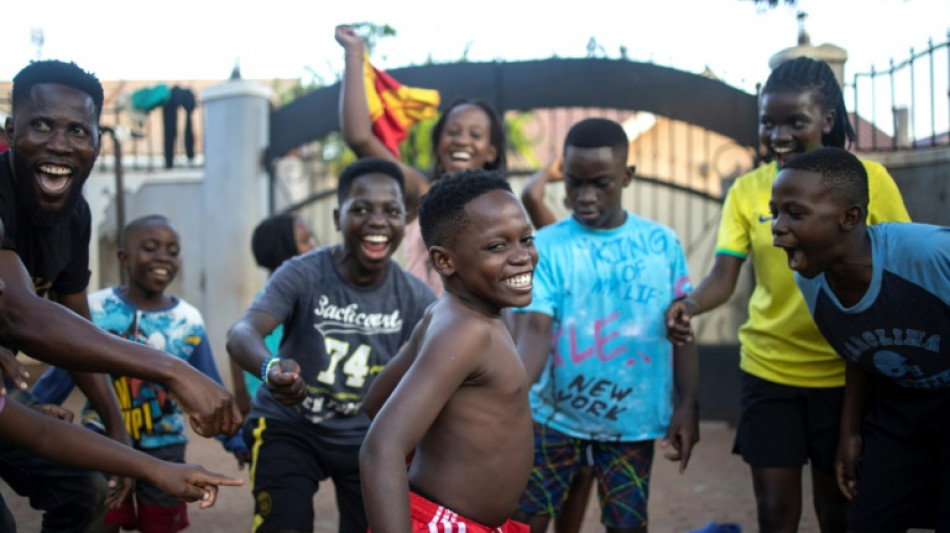
From slums to stardom: Uganda's Ghetto Kids / Photo: © AFP/File

The sprawling slums of Kampala are a far cry from the glitzy stage of Britain's Got Talent, where a group of Ugandan street kids will be performing in Sunday's grand finale of the hit UK television show.
The children of the Triplets Ghetto Kids troupe have already wowed the Britain's Got Talent judges and viewers alike with their energetic dance medley, colourful costumes and beaming smiles.
A straw-roofed hut under a blazing yellow sun is the backdrop for their exuberant stage routine that has propelled them through the talent competition, giving just a hint of their impoverished and often troubled beginnings in the Ugandan capital.
The children were given a new start in life by the Inspire Ghetto Kids Foundation, which was set up in 2007 in the poor Kampala neighbourhood of Makindye by former school teacher Dauda Kavuma.
The 36-year-old -- one of 30 children from six mothers -- recalls how he had to hustle from a young age after the death of his father, rummaging through rubbish heaps to collect scrap or selling fruit to drivers stopped at traffic lights.
Kavuma tells AFP that as a boy his first love was football but he was later encouraged by a friend to take up singing.
"Whenever I sang, I forgot my troubled past," he says, attributing help from his teachers including the head of an Islamic school who paid his fees, for setting him on a path out of poverty.
"Most people thought street kids... have no value in society but I thought otherwise.
"I thought, what if I use music, dance and drama to transform the underprivileged in the ghettos," he says. "My inspiration was my love for music and to pay back to the society that has supported me through my hard life."
- 'My life's changing for good' -
Kavuma's foundation is based in a five-bedroom house in a warren of streets in Makindye, where he takes in homeless, orphaned or disadvantaged children and provides shelter, food, clothes and an education.
The youngsters in his care, currently 30 of them aged from three to 18, have heart-wrenching stories -- some born as a result of rape, others who lost their parents and had to fend for themselves.
"As much as I remember the hard life in the ghetto, at least now I have hope that my life is changing for good," says 13-year-old Priscilla Kisakye, one of those competing in the British show.
Priscilla's parents, both without jobs, found themselves unable to take care of their six children, and she was taken under Kavuma's wing.
Now, Priscilla tells AFP, she is treated by her schoolmates as a celebrity but she thinks of herself as just a normal kid.
And rather than showbusiness, the softly-spoken youngster says her career goal is in law or politics -- perhaps to become "the president of Uganda".
- 'Golden buzzer' -
The Ghetto Kids first became an internet sensation in 2014 when their homemade dance video featuring the hit "Sitya Loss" by Eddy Kenzo, another Ugandan orphan turned music star, went viral.
The clip of several youngsters dancing on a dirt road opened a floodgate of opportunities for the group whose videos on YouTube have had many millions of hits.
They have gone on to win several African and global awards, and have worked with international music stars such as American singer-songwriter Chris Brown and Nigerian Afrobeats star Wizkid.
In 2022, the crew took to the stage at the World Cup in Qatar, one of a number of live performances across the globe.
The Ghetto Kids earned a coveted "golden buzzer" on BGT in April -- which automatically sent them through to the semi-finals on Wednesday.
"This is huge for us, for Uganda and for Africa!" the foundation posted on its Facebook page after they made it through to Sunday's finale.
The winners will scoop a £250,000 ($313,000) cash prize.
Kavuma says the foundation relies on donations from well-wishers, earnings from Ghetto Kids videos on YouTube and TikTok as well as live concerts.
"My dream is to have a bigger home to accommodate and help as many children on the streets as possible," he says.
The current compound is "too small", he adds, watching the youngsters jostling for space as they play football, volleyball or simply run around with car tyres.
One of the boys, 13-year-old Madwanah Ssegirinya or "king" to his friends, says the foundation paid for surgery that helped him recover from a playtime injury, and his dream is to follow in Kavuma's footsteps and build another orphanage.
"Above all, (Kavuma) mentored us to be good citizens," Ssegirinya tells AFP. "He is a father and mother to all of us."
(P.Vasilyevsky--DTZ)