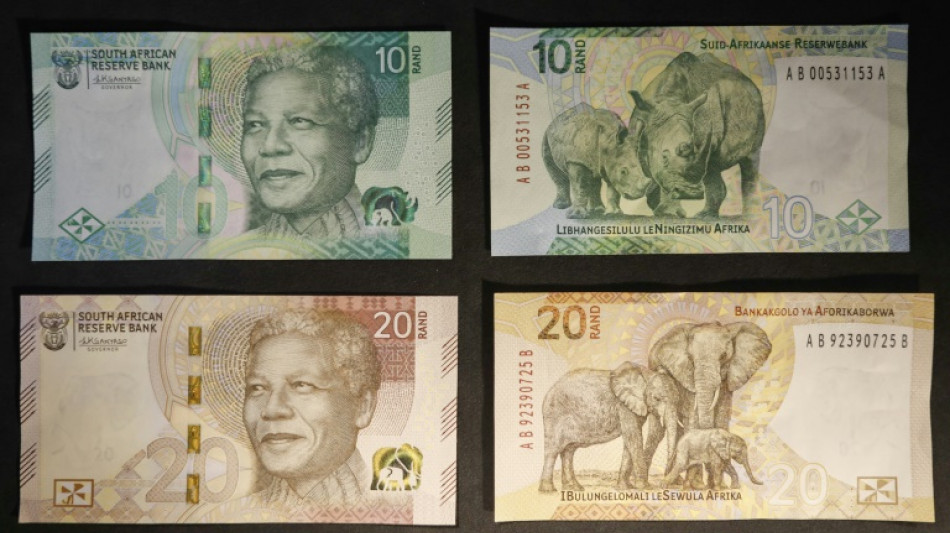
S.Africa skirts recession with surprise first quarter growth / Photo: © AFP/File

South Africa's economy grew slightly in the first three months of the year, shooing away fears of recession hanging over Africa's most industrialised country, official data showed Tuesday.
The gross domestic product (GDP) increased by 0.4 percent between January and March after shrinking by 1.1 percent in the final three months of 2022, the national statistics agency said.
The growth came despite crippling power cuts that continue to hit economic activity -- and beat many analysts' expectations.
"The manufacturing and finance industries were the major drivers of growth on the supply side of the economy," StatsSA said in a statement.
"The demand side was lifted by exports, with smaller positive contributions for household, government, and investment spending."
Economists at South African bank FNB said last week they expected a "mild recession", while others predicted growth to stagnate at around zero percent.
South Africa has been battered by record blackouts over the past year, as problems at beleaguered power utility Eskom have mounted.
The outages are costing more than $50-million in lost output each day, according to estimates by the energy minister.
GDP has been swinging like a pendulum.
It recorded a 0.8 percent contraction in the second quarter of 2022, followed by a 1.8 percent expansion in the following quarter -- before diving back in the last three months of the year, according to revised data.
High inflation and a weakening currency have compounded the lacklustre performance.
Inflation dropped to the lowest level in almost a year in April, slowing to 6.8 percent from 7.1 percent in March.
But in May the central bank still raised its main interest rate by 0.5 percentage points to 8.25 percent -- a 14-year high.
It forecast GDP would grow by 0.3 percent in 2023, followed by 1.0 percent and 1.1 percent increases in 2024 and 2025 respectively.
Power cuts alone would cost the economy two percentage points this year, it estimated.
State-owned freight logistics group Transnet has also experienced maintenance troubles and other issues that have hampered exports.
Nevertheless, eight out of 10 industries recorded growth in the first three months of the year, with only the agriculture and the electricity, gas and water sectors slumping, according to StatsSA.
Mining activity turned positive after "a disappointing end to 2022", and the trade industry also registered upward growth, the agency said.
(U.Stolizkaya--DTZ)