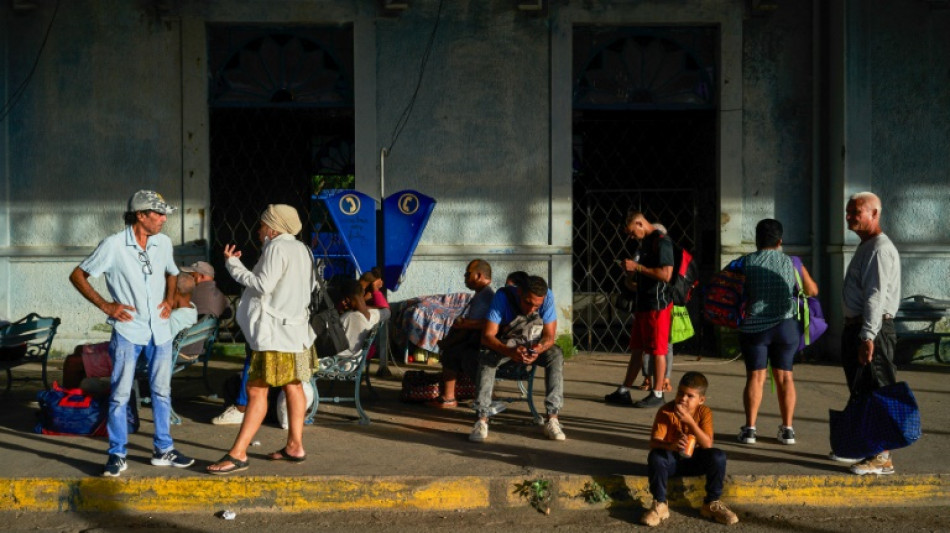
Power plant failure triggers blackout across cash-strapped Cuba / Photo: © AFP

Cuba was plunged into a nationwide blackout Friday after the island's biggest power plant failed, the energy ministry said, coming on the heels of weeks of extended outages across the cash-strapped country.
The capital Havana came to a virtual standstill as schools closed, public transport ground to a halt and traffic lights stopped functioning.
The head of electricity supply at the energy ministry, Lazara Guerra, announced the unexpected shutdown of the Antonio Guiteras power plant, the biggest of the island's eight decrepit coal-fired power plants.
"The system collapsed," he told state media, adding the government was working to restore service as soon as possible to communist Cuba's 11 million inhabitants.
The blackout followed weeks of power outages, lasting up to 20 hours a day in some provinces, which prompted Prime Minister Manuel Marrero on Thursday to declare an "energy emergency."
The government on Thursday suspended all non-essential public services in order to prioritize electricity supply to homes.
Schools across the country have now been closed until Monday. Authorities in Havana said hospitals and other essential facilities, which are powered by generators, would remain open.
"This is crazy," Eloy Fon, an 80-year-old retiree living in central Havana, told AFP.
"It shows the fragility of our electricity system... We have no reserves, there is nothing to sustain the country, we are living day-to-day."
- 'They've messed up' -
Barbara Lopez, a 47-year-old digital content creator, fumed that she had "barely been able to work for two days and now this: what do I do?
"It's the worst I've seen in 47 years," she said. "They've really messed up now... we have no power or mobile data."
For three months, Cubans have been battling chronic blackouts that had become longer and more frequent.
The national energy shortfall has hovered at around 30 percent but on Thursday it rose to nearly 50 percent of the island's needs, causing widespread frustration and anger.
President Miguel Diaz-Canel said on X Friday that the government would "not rest" until the lights were back on.
He blamed the situation on Cuba's difficulties in acquiring fuel for its power plants, which he attributed to the tightening of a six-decade-long US trade embargo under former president Donald Trump.
- Worst crisis in 30 years -
Cuba is in the throes of its worst economic crisis since the collapse of the Soviet Union, a key ally in the early 1990s -- marked by sky-high inflation and shortages of food, medicine, fuel and even water.
With no relief in sight, many Cubans have emigrated.
More than 700,000 entered the United States between January 2022 and August 2024, according to US officials.
While the authorities chiefly blame the US embargo, the island is also feeling the aftershocks of the Covid-19 pandemic battering its critical tourism sector, and of poor economic mismanagement.
To bolster its grid, Cuba has leased seven floating power plants from Turkish companies and also added many small diesel-powered generators.
In July 2021, blackouts were the spark for an unprecedented outpouring of public anger.
Thousands of Cubans took to the streets shouting "We are hungry" and "Freedom!" in a rare challenge to the government.
One person was killed and dozens were injured in the protests. According to the Mexico-based human rights organization Justicia 11J, 600 people detained during the unrest remain in prison.
In 2022, the island also suffered months of daily hours-long power outages, capped by a nationwide blackout on September 27 caused by Hurricane Ian.
(L.Møller--DTZ)