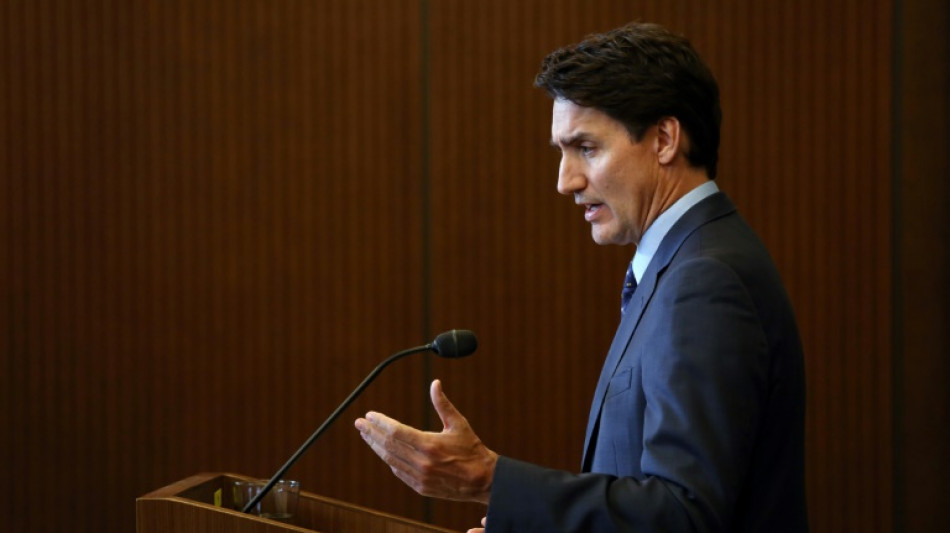
Canada slashes immigration as public concern rises / Photo: © AFP

Canada said Thursday it was significantly curbing immigration targets in an effort to "pause" population growth, a shift that comes as public support for immigration declines.
This marks a big pivot for a country with a long-standing reputation as a destination for immigrants, including economic migrants from the developing world seeking better living conditions.
Canada's population jumped 3.2 percent from 2023 to 2024, the biggest annual rise since 1957, and now stands at 41 million, the national statistic agency said.
The rise was partly fueled by a wave of new arrivals.
Announcing the curbs, Prime Minister Justin Trudeau said the influx helped the Canadian economy bounce back from disruptions caused by the Covid pandemic by ensuring robust labor supply -- but the time had come for "adjustments."
"Today, we're announcing that we will reduce the number of immigrants we bring in over the next three years, which will result in a pause in the population growth over the next two years," Trudeau said.
Trudeau said Canada needed to stabilize its population to give "all levels of government time to catch up, time to make the necessary investments in health care, in housing, (and) in social services to accommodate more people in the future."
The immigration ministry had previously planned to let 500,000 new permanent residents settle in the country in 2025 and 2026.
But the new targets were revised down to 395,000 next year and 380,000 for 2026. It set the 2027 target at 365,000.
Immigration Minister Marc Miller called the plan "probably the first of its kind," in terms of its broad efforts to control population growth in Canada.
According to the last census in 2021, 23 percent of Canada's population was foreign-born.
Statistic Canada said that as of 2021 most immigrants were from Asia and the Middle East, but an increasing share were coming from Africa.
Nearly one of five recent immigrants were born in India, the statistics agency said.
- Anti-immigrant sentiment? -
A survey last month from the Environics Institute on public attitudes toward immigration found that "for the first time in a quarter century, a clear majority of Canadians say there is too much immigration."
Fifty-eight percent of Canadians believe the country takes in too many immigrants, up 14 percentage points from 2023, the survey found.
In figures released last week, Abacus Data found that one of every two Canadians say immigration is harming the country.
The Abacus figures also noted that concern among Canadians about the impact of immigration is mostly linked to unease regarding a perceived lack of essential resources, notably affordable housing.
Miller predicted that revising immigration targets downwards will address the housing supply gap, reducing by 670,000 the number of homes Canada needs to build by 2027.
"That is significant," Miller told reporters.
- Political 'panic'? -
Voicing concern about the shift, the Canadian Chamber of Commerce warned immigration is Canada's "only source of workforce growth in the near future," given its ageing population, low fertility rates, and waves of retirements from the baby-boomer generation.
"Significantly decreasing our labour pool will impact thousands of these employers across Canada struggling to find the workforce they need," the group said in a statement.
Opposition leader Pierre Poilievre, whose Conservative Party is trouncing Trudeau's Liberals in recent polling, said the prime minister is desperately trying to boost his popularity as he confronts a revolt inside his own party and declining support nationally.
"We can't expect that Justin Trudeau will keep any of these frantic, panicked, last-minute promises," Poilievre told reporters in Toronto.
Canada is due to hold elections next year.
(N.Loginovsky--DTZ)