US economic growth solid but below expectations as election nears / Photo: © AFP/File

The US economy undershot expectations in the third quarter even as growth remained resilient, according to government data Wednesday, weighing on inflation-weary voters less than a week to the presidential election.
The world's biggest economy expanded at an annual rate of 2.8 percent in the July-September period, helped by consumption and government spending although slowing from the second quarter's 3.0 percent pace, said the Department of Commerce.
Despite spending more, American consumers have been downbeat about their job and financial prospects, with Democratic Vice President Kamala Harris still trailing Republican Donald Trump in opinion polls about the economy.
"If you were to look at numbers like GDP growth or income or consumption, or even employment, you'd say: 'Gosh, this economy is in pretty good shape,'" said Dan North, senior economist for Allianz Trade North America.
"The one thing that completely destroys that narrative is the inflation that consumers have had to deal with," he told AFP.
The US economy was anticipated to expand by an annual 3.0 percent rate in the third quarter, according to a market consensus published by Briefing.com.
Still, US growth this year is due to outpace other advanced economies like Germany, France and the United Kingdom, according to recent International Monetary Fund estimates.
On Wednesday, the Commerce Department said the GDP figure reflected "increases in consumer spending, exports, and federal government spending."
But the deceleration from the second quarter was mainly due to a downturn in private inventory investment, alongside a bigger drop in residential fixed investment.
An October New York Times/Siena College poll of likely voters released last week showed that economic issues remained top-of-mind around two weeks before the election.
Those polled were slightly more inclined to trust Trump to do a better job handling the economy, with 52 percent of respondents preferring him to 45 percent support for Harris.
- Inflation 'hard to swallow' -
North explains that as compared with January 2021, when price increases started ballooning, wages have cumulatively grown 18 percent.
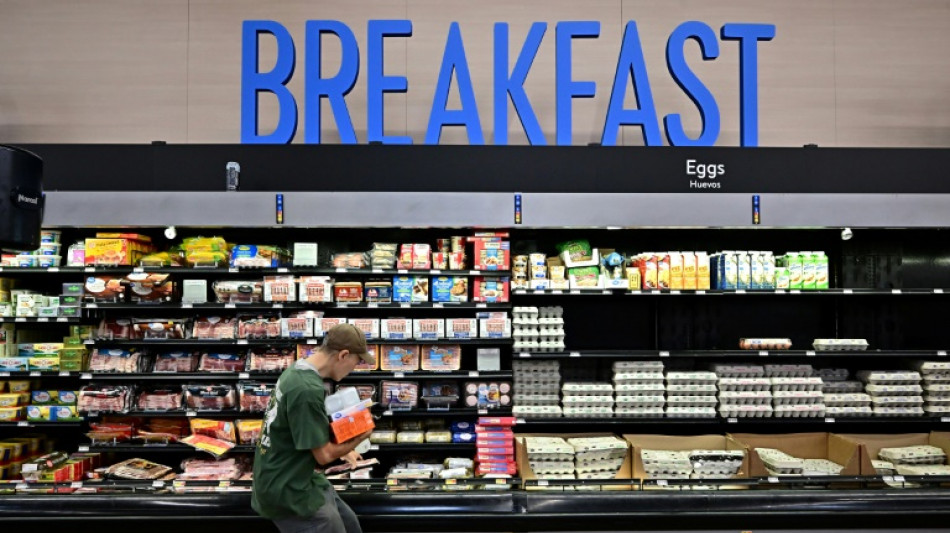
But households have had to contend with larger overall upticks on expenses such as food, shelter and gasoline -- with cost increases ranging from 22 percent to 29 percent.
This is likely the reason that voters feel the economy is doing poorly despite job and wage growth, alongside relatively low unemployment levels.
"Does the man on the street care if GDP is 2.8 or 3.1? No, they want to know how the inflation is affecting them," said North. "It's been pretty hard to swallow over the past few years."
Workers may have had 17 months of positive real wage growth, but they had 25 months of negative growth prior to that, ZipRecruiter chief economist Julia Pollak noted.
With workers accustomed to positive wage growth prior to the coronavirus pandemic, many still feel like their salaries need to catch up, she added.
- Overreliance on credit -
Consumers are also turning to credit cards and dipping into their savings to fund spending, piling pressure especially on lower-income households and younger people.
Economists point to higher credit card delinquencies in recent years.
Credit card delinquency rates hit a near 12-year high in the first quarter this year, according to a report published in July by the Federal Reserve Bank of Philadelphia.
On Wednesday, the biggest support to GDP growth will be from consumer spending, with business investment set to "pack another positive punch," said Oxford Economics deputy chief US economist Michael Pearce.
"Election uncertainty could shave some off business investment in the fourth quarter, but the effects are not normally that large," Pearce told AFP.
He added that the GDP growth figure is unlikely to sway the Federal Reserve's interest rate decision next week.
(M.Travkina--DTZ)