Tamil Nadu Commission Reviews Rs 1.14 Lakh Crore Investment MoUs, Seeks Subsidy Boost

At its inaugural meeting, the Tamil Nadu Investment Promotion Commission (TNIPC) assessed the implementation status of investment agreements valued at over Rs 1.14 lakh crore. Chaired by Chief Secretary M Sai Kumar, the commission also approved measures to streamline business approvals and requested an additional Rs 1,600 crore in industrial subsidies to accelerate project execution.
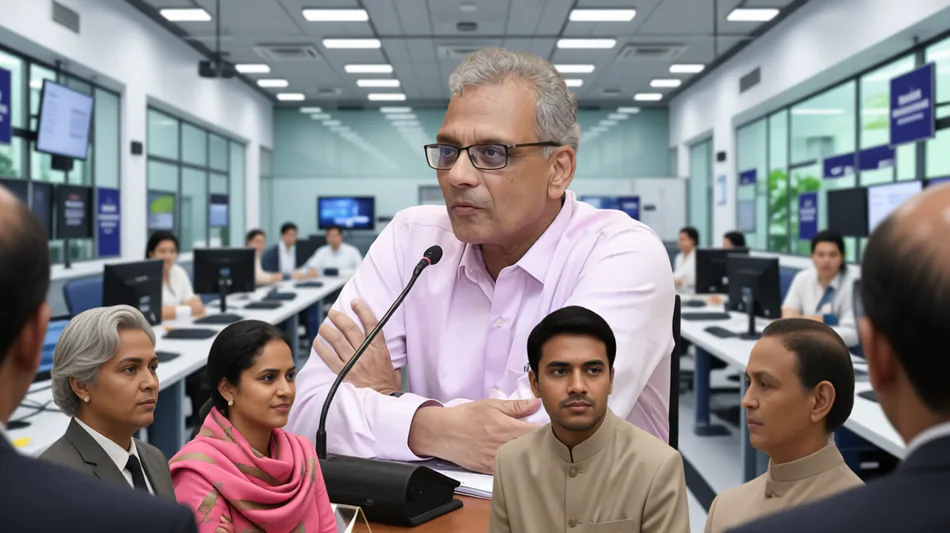
The Tamil Nadu Investment Promotion Commission (TNIPC) convened its first meeting at the state Secretariat in Chennai on Friday, reviewing the implementation status of investment projects valued at over Rs 1.14 lakh crore and discussing strategies to accelerate industrial growth. The session was chaired by Chief Secretary M Sai Kumar and attended by senior officials from various government departments alongside representatives from leading industrial organizations.
According to a statement released following the meeting, the commission noted that 112 Memorandums of Understanding (MoUs) have been signed since May 2026. These agreements involve total investments exceeding Rs 1.14 lakh crore and are projected to create employment opportunities for 142,271 individuals. Of these projects, 83 have reached the land acquisition stage or beyond, marking a 74.11 percent progress in implementation.
The commission also evaluated the status of 37 industrial-related announcements outlined in the Vetri Tamilagam Vision Document. Implementation has commenced for 18 of these specific initiatives. Regarding the proposed Industrial Policy 2027, officials were directed to expedite its preparation following consultations with stakeholders that began in July 2026.
To enhance the ease of doing business, the state government has introduced more than 25 reforms through 23 government orders covering 11 departments since May 2026. Key measures include removing the requirement for agricultural department clearance to convert dry lands for industrial use and extending the validity of private school recognition certificates from three years to 20 years.
Data from the Single Window Portal indicated that out of 21,753 applications received for industrial approvals and clearances, 19,323 applications, representing 96.4 percent, have been disposed of. The commission highlighted that Rs 2,000 crore in industrial subsidies had been disbursed over the past six months, a significant increase compared to the previous annual disbursement of Rs 1,700 crore.
To support new projects arising from the signed MoUs, the commission sought an additional allocation of Rs 1,600 crore for subsidies. The body also reviewed the state’s export performance, aiming to increase merchandise exports from the current level of $59 billion to $72 billion.
Among its key directives, the commission ordered all departments to strictly adhere to a mandatory 21-day deadline for granting industrial approvals. It recommended introducing deemed approval provisions if deadlines are missed and mandated action against officials responsible for violations.
Further decisions included allowing industries to establish their own high-tension and extra-high-tension electricity connections through the Tamil Nadu Power Distribution Corporation (TNPDCL). Developers of large projects will also be permitted to procure required electrical equipment directly. The commission directed the State Industries Promotion Corporation of Tamil Nadu (SIPCOT) to assess industrial electricity and water requirements for the next decade and identify unused industrial plots for prospective investors.
The meeting also covered progress on major infrastructure projects, including the Tamil Nadu Knowledge City, Arivagam AI City, the Coimbatore Digital FinTech Centre, and the Tiruchirappalli Multimodal Logistics Hub. Additionally, the commission discussed establishing a Global Capability Centre (GCC) corridor to generate high-skilled employment in information technology, artificial intelligence, engineering design, and research and development.
In a move to streamline tourism-related developments, the commission decided that such projects would be treated as industrial projects and processed through the Single Window Clearance System for faster implementation.
(P.Tomczyk--DTZ)