CrediaBank CEO Outlines Regional Ambitions and Asset Growth

CrediaBank CEO Vrettou announced the bank's ambition to expand into a regional player, citing a significant transformation since taking over Attica Bank in 2022. She highlighted a sixfold increase in performing loans to the Greek economy and emphasized the bank's role in supporting small and medium-sized enterprises through advisory services and competitive financing.
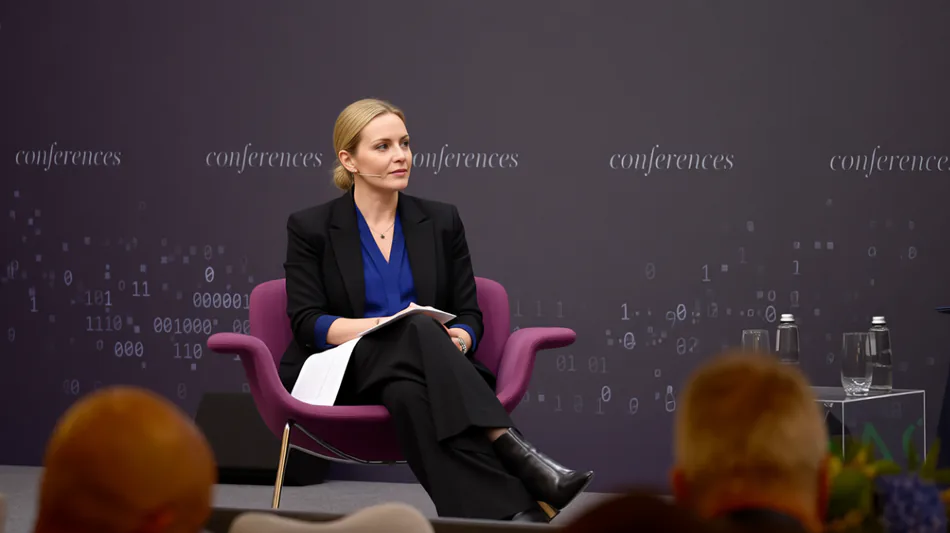
CrediaBank Chief Executive Vrettou declared the institution’s ambition to expand beyond Greece and establish itself as a regional banking player, following the completion of its current strategic initiatives. Speaking at Naftemporiki’s 5th Economic Conference, she outlined the bank’s rapid transformation since assuming control of Attica Bank in 2022, noting substantial growth in assets and lending capacity.
Vrettou provided specific metrics to illustrate this development, stating that the bank inherited total assets of €4 billion and performing loans of only €1 billion. She reported that today, total assets have reached €11 billion, while performing loans extended to the Greek economy—including businesses of all sizes and individuals—have climbed to €6 billion. This represents a sixfold increase in lending volume over a four-year period.
Regarding its market position, Vrettou identified the bank’s particular strength within the small and medium-sized enterprise (SME) segment. She specified that the institution focuses on companies with turnover up to €50 million, asserting that CrediaBank aims to be the best in service for this group. This segment now accounts for more than 40 percent of the bank’s portfolio, approaching half of its total holdings. To support these clients, Vrettou emphasized a strategy focused on speed and consistency, ensuring customers receive rapid clarity on loan approvals.
The CEO also highlighted a new initiative aimed at reintegrating excluded borrowers into the formal financial system. CrediaBank is targeting companies and individuals who were previously cut off from banking because their loans had been securitized by other institutions. Vrettou noted that CrediaBank is the first in Greece to successfully bring a mortgage portfolio back into the banking system, a process that has already returned 820 individual customers to formal financial services.
Addressing broader economic needs, Vrettou argued that the Greek economy requires encouragement for mergers among small and medium-sized enterprises. She stated that maintaining a large number of small entities is not sustainable and that incentives should be provided to help these companies grow stronger and become viable. In this context, she described CrediaBank’s approach as offering clear terms, flexibility, and responses to the full range of banking needs, which extend beyond loans to include payments and asset management.
Discussing the bank's role in the new productive model, Vrettou stressed that growth requires healthy banks that promote competition. She outlined three primary objectives: serving a larger number of businesses with alternative banking sources, enabling them to secure more competitive financing terms, and acting as close advisers. She criticized the notion of banks operating merely as cash dispensers, insisting instead on their role in advising companies on viability and continued growth.
Vrettou also pointed out that banks remain a large and stable employer within the economy, a factor she suggested should not be overlooked under the new productive model.
Looking ahead, Vrettou indicated that the bank’s immediate focus remains on finalizing its transaction in Malta. She expressed hope that this deal will conclude in the second quarter of 2027. Once that is complete, she stated, the bank will assess further opportunities to fulfill its ambition of becoming a regional player.
(W.Novokshonov--DTZ)