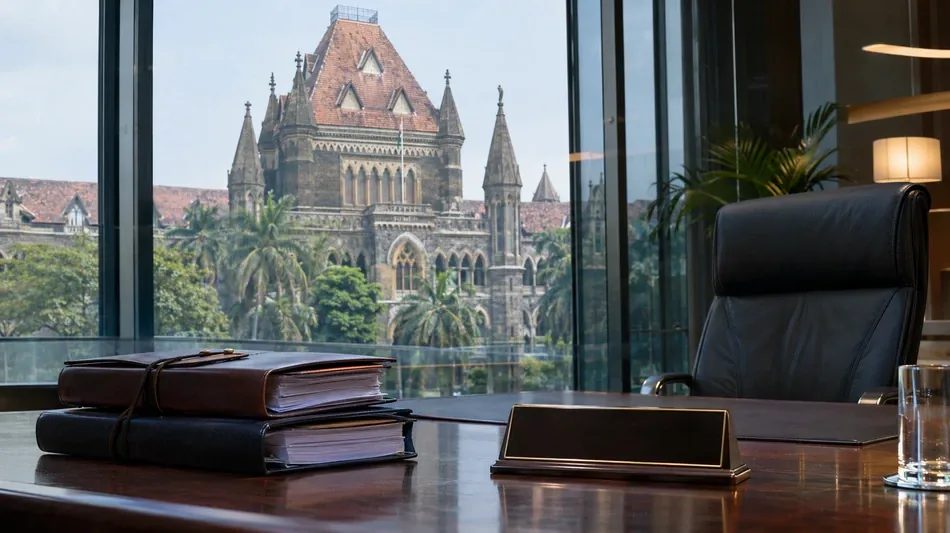
Tata Trusts challenge Chandrasekaran reappointment in Bombay High Court

Two Tata trusts are asking the Bombay High Court to invalidate N Chandrasekaran’s second term and clarify voting rights on the Tata Sons board.
Two Tata trusts are asking the Bombay High Court to invalidate N Chandrasekaran’s second term and clarify voting rights on the Tata Sons board.
The Sir Dorabji Tata Trust and the R.D. Tata Trust have filed suits in the Bombay High Court against Tata Sons and six directors, challenging the September 17 resolution that reappointed N Chandrasekaran as executive chairman for a second five-year term.
The trusts argue that the chairman of Tata Sons cannot use a casting vote when the company’s trust-nominated directors disagree. They are seeking a declaration that the reappointment resolution is invalid, along with orders preventing Tata Sons and its directors from acting on it. They also want the court to prohibit Chandrasekaran, Harish Manwani or any other board chairman from using a casting vote to overcome a division among trust nominees.
Together, the two suits seek Rs 65 crore in damages. The Sir Dorabji Tata Trust is claiming Rs 50 crore plus annual interest of 18% until payment. Senior advocates Abhishek Manu Singhvi and Janak Dwarkadas requested urgent consideration because the next Tata Sons board meeting was scheduled for November 30. Justice Arif Doctor recused himself, after which Justice Abhay Ahuja agreed to hear the matter on Friday.
The dispute concerns Article 121 of Tata Sons’ articles of association. The trusts say a board decision requiring a majority must also receive the affirmative vote of a majority of directors appointed under Article 104B who are present at the meeting. In their interpretation, a chairman’s casting vote cannot replace that approval when the trust-appointed directors divide evenly.
Article 104B permits the Sir Dorabji Tata Trust and Sir Ratan Tata Trust to nominate one-third of the Tata Sons board while the trusts hold at least 40% of the company’s paid-up ordinary share capital. The Sir Dorabji Tata Trust holds 113,067 ordinary shares and brought its case through trustee Bhaskar Bhat. The R.D. Tata Trust holds 8,838 shares and filed through legal head Rishi Sharma.
The September vote followed a disagreement between Tata Trusts chairman Noel N. Tata and Venu Srinivasan over Chandrasekaran’s continuation. Tata Sons maintains that the reappointment was properly approved and remains valid. Chandrasekaran’s current term expires on February 20, 2027, and the disputed resolution would extend his tenure by five years.
The trusts said they feared that a casting vote could again be used if their nominated directors disagreed at the November 30 meeting. Noel Tata had requested that the meeting be rescheduled because the agenda was issued only on November 22.
Their requested protective orders would apply not only to the reappointment dispute but also to future board resolutions requiring majority approval under Article 121. The cases therefore ask the court to define how the affirmative-vote requirement interacts with the ordinary power of a meeting chairman to break a tie.
The filing also referred to earlier events. On August 12, Chandrasekaran informed the board by email that he would not seek reappointment when his term ended. The following day, the Sir Dorabji Tata Trust and five other trusts resolved to respect that decision and invited Tata Sons to participate in forming a selection panel for a new chairman. Despite Noel Tata’s objection, the board approved Chandrasekaran’s second term on September 17 and announced that the resolution had passed by majority vote.
(O.Zhukova--DTZ)