WHO urges rich countries to pay up for Covid plan

The WHO Wednesday urged rich countries to pay their fair share of the money needed for its plan to conquer Covid-19 by contributing $16 billion as a matter of urgency.
The World Health Organization said the rapid cash injection into its Access to Covid Tools Accelerator could finish off Covid as a global health emergency this year.
The WHO-led ACT-A is aimed at developing, producing, procuring and distributing tools to tackle the pandemic: vaccines, tests, treatments and personal protective equipment.
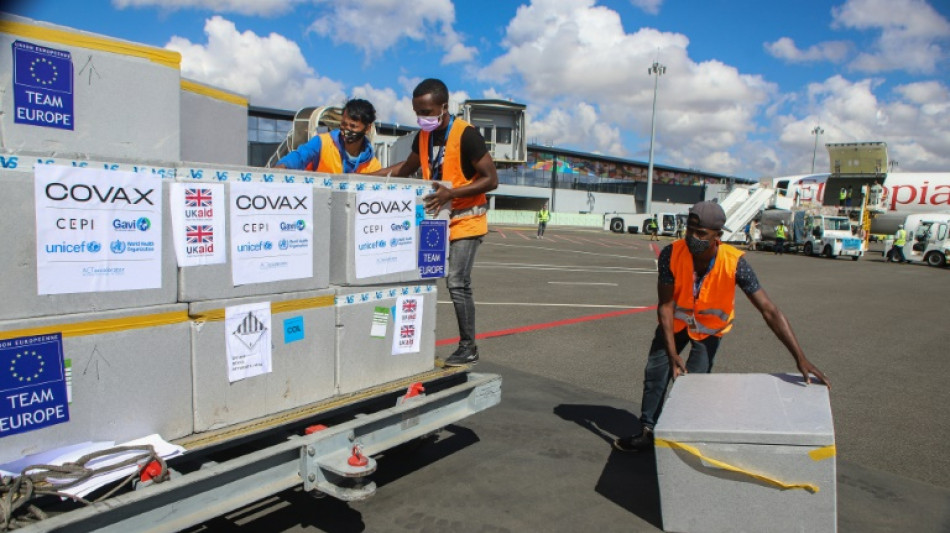
ACT-A gave birth to the Covax facility, designed to ensure poorer countries could access eventual vaccines, correctly predicting that richer nations would hog doses coming off the production lines.
Covax delivered its billionth vaccine dose in mid-January.
ACT-A needed $23.4 billion for its programme for the year October 2021-September 2022 but only $800 million has been raised so far.
The scheme therefore wants $16 billion up front from wealthy nations "to close the immediate financing gap", with the rest to be self-funded by middle-income countries.
- Omicron impetus -
WHO chief Tedros Adhanom Ghebreyesus said the rapid spread of the Omicron variant made it all the more urgent to ensure tests, treatments and vaccines are distributed equitably.
"If higher-income countries pay their fair share of the ACT-Accelerator costs, the partnership can support low- and middle-income countries to overcome low Covid-19 vaccination levels, weak testing, and medicine shortages," he said in a statement.
"Science gave us the tools to fight Covid-19; if they are shared globally in solidarity, we can end Covid-19 as a global health emergency this year."
Just 0.4 percent of the 4.7 billion Covid tests administered globally during the pandemic have been used in low-income countries.
Meanwhile only 10 percent of people in those nations have received at least one vaccine dose.
The WHO said the vast inequity was not only costing lives and hurting economies, it was also risking the emergence of new, more dangerous variants that could rob current tools of their effectiveness and set even highly-vaccinated populations back by many months.
- Ramaphosa call -
ACT-A has come up with a new "fair share" financing model on how much each of the world's wealthy countries should contribute, based on the size of their national economy and what they would gain from a faster recovery of the global economy and trade.
On the 2020-21 ACT-A budget, only six countries -- Canada, Germany, Kuwait, Norway, Saudi Arabia and Sweden -- met or exceeded what would have been their fair share commitments.
South African President Cyril Ramaphosa, who co-chairs the ACT-A facilitation council, said inequitable access to Covid vaccines, tests and treatments was simply prolonging the pandemic.
"I urge my fellow leaders to step up in solidarity, meet their fair shares, and help reclaim our lives from this virus," he said.
Ramaphosa and Norwegian Prime Minister Jonas Gahr Store, his fellow co-chair, have written to 55 capitals -- all high-income countries, G20 upper middle-income nations, and two other middle-income states -- outlining their "fair share" and encouraging them to cough up.
(W.Budayev--DTZ)