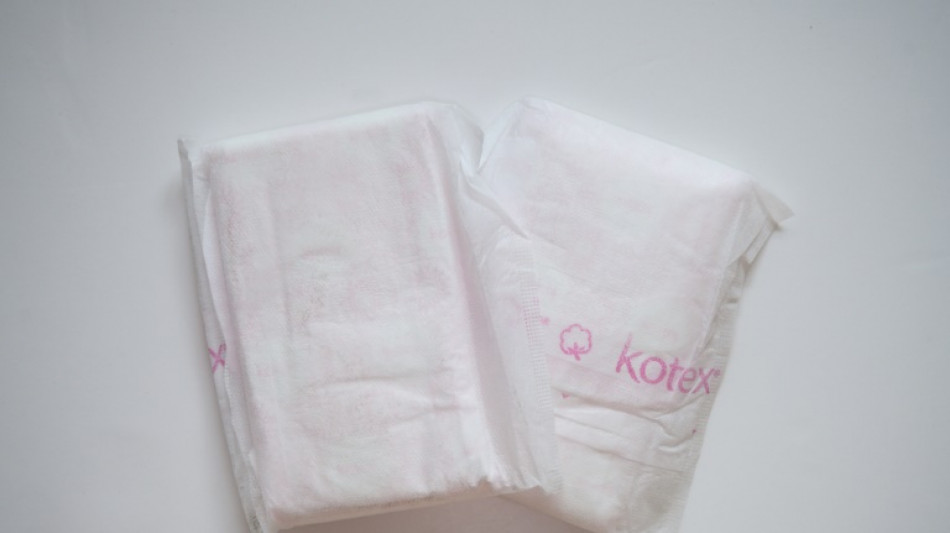
Taipei Metro to trial free sanitary products for women / Photo: © AFP

Taiwan's largest metro line will begin a trial next month offering women free sanitary products, spurred by a recent push in some neighbouring Asian countries to tackle "period poverty".
Starting November 1, the Taipei Rapid Transit Corporation will provide menstrual products on request at 20 of its busiest stations along the metro line that runs through both the capital and neighbouring New Taipei City.
"We will re-evaluate and adjust in accordance with the results of the trial and the feedback," the subway operator said in a statement.
The trial was given the go-ahead after several city councillors proposed that Taipei should follow moves overseas, including in Japan and South Korea, to increase free access to sanitary products.
Seoul runs a programme that offers free sanitary pads in around 300 institutions across the South Korean capital, including libraries, museums and welfare centres.
The Tokyo city government began distributing sanitary products in September within some bathrooms at its headquarters in Shinjuku.
Japan, South Korea, Indonesia and Taiwan are among a handful of countries, largely in Asia, that have moved to give women time off work during their periods.
Earlier this year Spain's cabinet approved a bill that would grant paid medical leave for women who suffer from severe period pain, becoming the first European country to advance such legislation.
However, the proposed law must still be approved by the Spanish parliament.
Under Taiwan's Act of Gender Equality in Employment, women are allowed three days of "menstrual leave" per year, which are not deducted from the statutory 30 days of regular sick leave.
Employees do not need to provide documentation and employers may not refuse or penalise a worker for taking menstrual leave.
But like general sick leave, workers on menstrual leave receive only 50 percent of their salary.
Taiwan has forged a reputation as one of Asia's most progressive democracies.
Women constitute 38 percent of Taiwan's legislature, one of the highest proportions in the world.
Tsai Ing-wen, Taiwan's first woman president, was first elected in 2016 and won a landslide second term two years ago.
Taiwan became the first -- and still the only -- place in Asia to legalise gay marriage in 2019.
(M.Dylatov--DTZ)