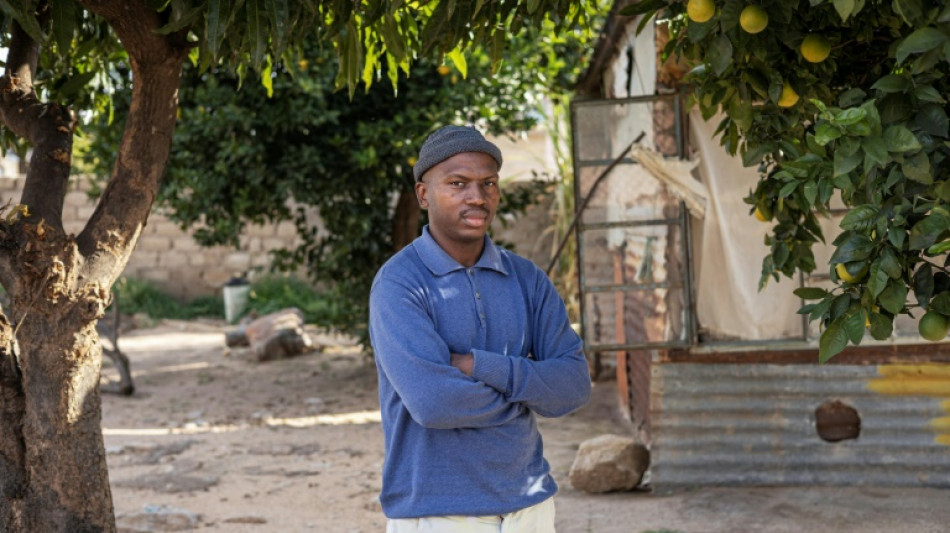
Cholera-hit S.African town blames govt for deadly outbreak / Photo: © AFP

A grieving family gathers in their yard in a town near Pretoria, the epicentre of a deadly cholera outbreak, mourning the death of a relative, one of 17 people killed by the disease in just days.
They are seething with anger, blaming the government in Africa's most advanced economy for failing to solve their perennial water woes.
Kagiso Sadiki cannot remember a time when Hammanskraal's tap water was fit for consumption. His 53-year-old cousin Michael Sadiki died within a week of falling ill.
The tap water is brown and dirty, the 37-year-old told AFP.
"Everybody has the right to have clean water," he said, visibly distressed, sitting under a lemon tree.
"I hope my cousin's death is not in vain."
South Africa recorded its first two cholera cases in February on the back of outbreaks in nearby Mozambique and Malawi, the two most severely affected countries in 2023, according to the UN.
On Wednesday, the provincial department of health said since last week, 165 people have visited a local hospital in Hammanskraal with symptoms including diarrhoea, nausea and vomiting.
Lab tests have confirmed two dozen cases of cholera and 17 people have died, the department said.
The infection is showing "a very high fatality rate," said Sandile Buthelezi, health ministry director general.
- 'Overburdened' -
The deadly disease is contracted from a bacterium generally transmitted through contaminated food or water.
Sadiki said his cousin died after being turned away from a local hospital due to a shortage of beds and staff.
Nurses "are overburdened (and) are not given enough support," Mogomotsi Seleke, a spokesman for nursing union DENOSA told AFP outside the Jubilee Hospital, which is handling most of the cases.
"Nurses only have two hands... and when they are not enough at some point patients suffer," he said.
Anger at the government is widespread and growing in the small town 50 kilometres (30 miles) north of Pretoria where residents battle power and water outages for several hours a day.
Many residents are unemployed and spend their time sitting outside homes made from mud or sheet metal, behind barbed wire fences.
The cholera outbreak is a symptom of dysfunctional wastewater treatment, poor piping infrastructure and municipal graft, locals say.
- 'We don't have water' -
Following public outcry, the government announced it would probe the causes of the Hammanskraal water crisis.
Sitting legs crossed, Sadiki described how his cousin developed diarrhoea and constant vomiting before he quickly became weak, unable to walk, sleep or wash himself.
After being rushed to hospital a second time, he died in the emergency room.
The water crisis is "a problem that could have been solved a long time ago," a frustrated Sadiki said.
He added that the family was struggling to raise money for the funeral and now "has to bear the brunt".
Municipal authorities have urged Hammanskraal residents not to drink tap water, promising that tankers would distribute water, but residents say these only show up once or twice a week.
"We don't have water, we don't have houses... we have nothing," said Rosa Kovani, collecting water from a tanker on a dirt road in a neighbouring township.
With a baby strapped on her back and a water bucket in her hand, the 61-year-old said she had lost hope of seeing a tap installed at her house, a shack with sheet-iron walls.
Some have capitalised on the water crisis, setting up shop to sell purified water, which many residents cannot afford.
Cholera has seen a global resurgence since 2021 after a decade of steady decline, according to the UN, which this week warned one billion people in 43 countries were at risk.
(V.Sørensen--DTZ)