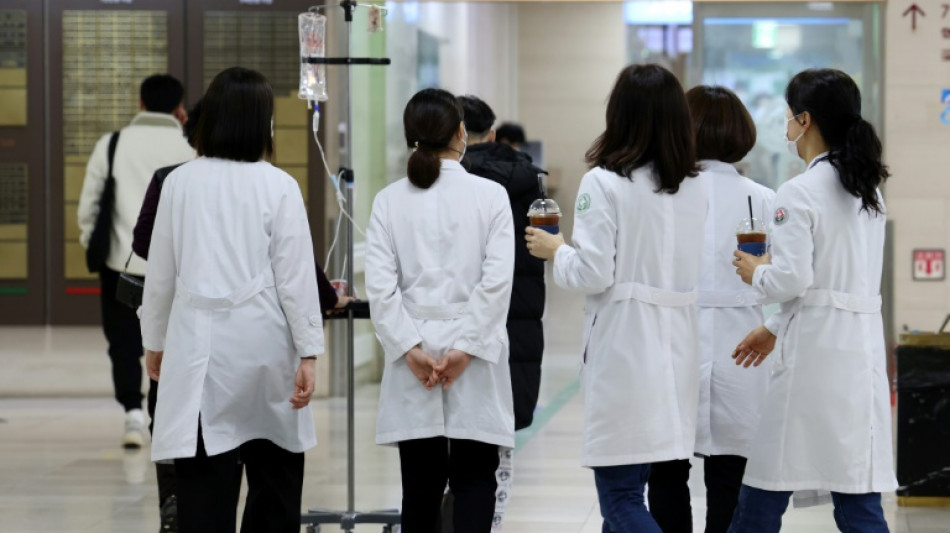
S. Korean government orders doctors back to hospitals / Photo: © Yonhap/AFP

South Korea ordered trainee doctors back to work Monday after they resigned en masse to protest medical training reforms, with the government looking at using military medics to cope with shortfalls.
South Korea says it has one of the lowest doctor-to-population ratios among developed countries, and the government is pushing hard to increase the number of doctors, partly to help a fast-ageing society.
But doctors have voiced fierce opposition to a new government plan to sharply raise medical school admissions, claiming it would hurt the quality of service provision. Critics say doctors are mainly concerned the reform could erode their salaries and social status.
On Monday, despite government threats of legal action, hundreds of trainee doctors handed in their resignations and were set to stop work from Tuesday.
But the government said it had "issued treatment maintenance orders for all trainee doctors", Second Vice Health Minister Park Min-soo said at a press briefing, referring to a legal measure to prevent work stoppages by medical practitioners.
Under South Korean medical laws, doctors -- who are considered essential workers -- are restricted from undertaking mass work stoppages.
"I implore trainee doctors to not turn their backs on patients," he said, adding the government would be inspecting hospitals to check whether doctors had joined the strike.
The police warned they could arrest "key instigators" of the work stoppages.
The training reforms call for a 65 percent increase in the number of students admitted to medical schools, starting from 2025.
The plan is popular with the public, who experts suggest are tired of long wait times at hospitals, with a recent Korean Gallup poll showing over 75 percent of respondents in favour, regardless of political affiliation.
But it has drawn fierce opposition from doctors, with the Korean Medical Association saying the government's threats of legal action were akin to a "witch hunt" and claiming the plan would create a "Cuban-style socialist medical system".
Vice Minister Park said the plan was necessary in South Korea's fast-ageing society, with doctors set to be "overwhelmed with exponential demand" down the road if the current quota remained.
"Hospitals are already having hard time finding doctors now, and problems of accessing medical service in time have occurred repeatedly," Park added.
More than 700 trainee doctors have resigned so far, the government said.
The defence ministry said it would open military hospital emergency wards to the public if the doctors pushed ahead with the strike, and was considering dispatching military doctors to civilian hospitals to help cover the shortfall.
(W.Budayev--DTZ)