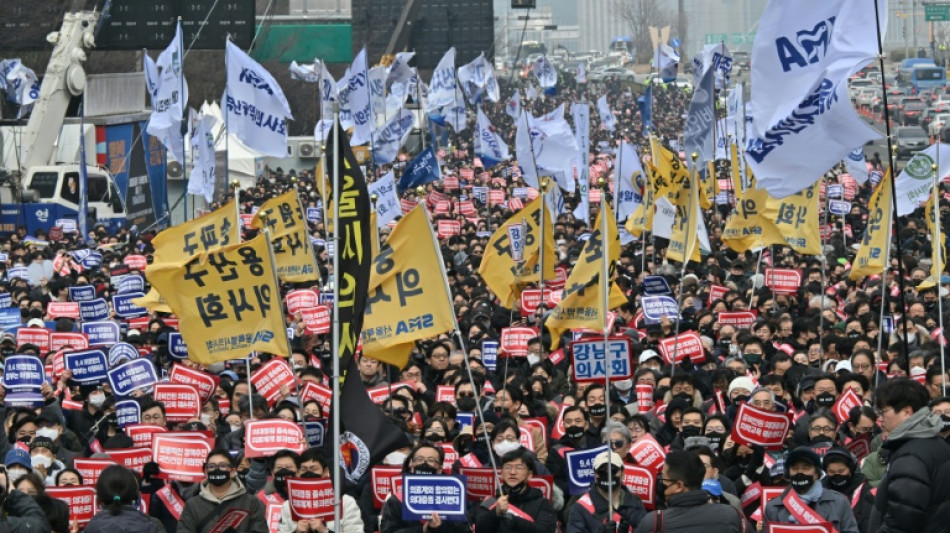
S. Korea to start action against striking doctors / Photo: © AFP

South Korea said Monday it will take steps to suspend the licences of striking trainee doctors who have defied orders to return to work in a standoff over medical training reforms.
Around 10,000 junior doctors walked out nearly two weeks ago to protest against an increase in medical school admissions from next year which is meant to help combat shortages and meet the demands of an ageing society.
The striking trainees have defied a February 29 government deadline for them to return to work or face legal action, including possible arrest or suspension of their medical licences.
Despite repeated government appeals, the number returning to work "has been minimal", Second Vice Health Minister Park Min-soo told at a press conference.
"Starting today the government is enforcing legal measure," he said, noting inspections at hospitals nationwide would be conducted on Monday to find out who had returned or not.
If doctors' "absence is confirmed" from the on-site inspections, he said, the government would notify them that procedures to suspend their licences were underway.
"If they violate the government's back to work order, a three-month-suspension is inevitable."
The mass work stoppage has taken a toll on hospitals, with crucial treatments and surgeries cancelled, prompting the government to raise its public health alert to the highest level.
Around half of the surgeries scheduled at some major hospitals have been cancelled since last week, according to the health ministry.
Under South Korean law, doctors are restricted from striking, and the government has requested police investigate people connected to the stoppage.
The warning Monday followed the government's February 29 deadline for the trainee doctors to return to hospitals while remaining firm on its plan to increase medical school admissions by 65 percent.
South Korea's government is pushing to admit 2,000 more students to medical schools annually from next year to address what it calls one of the lowest doctor-to-population ratios among developed nations.
Doctors fear the reform will erode the quality of service and medical education, but proponents accuse medics of trying to safeguard their salaries and social status.
Polling shows up to 75 percent of the public support the reforms.
(V.Sørensen--DTZ)