Deutsche Tageszeitung - Panama Canal begins reducing crossings due to El Nino

Panama Canal begins reducing crossings due to El Nino


Panama Canal begins reducing crossings due to El Nino
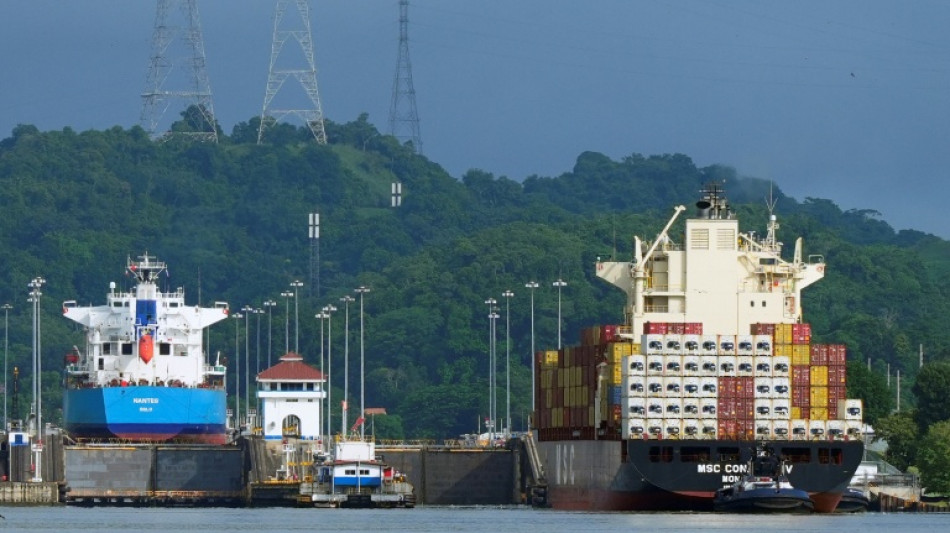
Panama Canal begins reducing crossings due to El Nino / Photo: © AFP

The Panama Canal on Friday began reducing the number of ships passing through due to a drought caused by the El Nino weather phenomenon.

Change text size:

The Panama Canal Authority said low water levels in the two artificial lakes that feed the canal forced it to act.

The number of vessels allowed through the waterway connecting the Atlantic and Pacific oceans will be progressively lowered from 36 per day to 32 by mid-September.

Panama has declared a nationwide emergency over El Nino, a weather pattern developing over the Pacific Ocean that is triggering worldwide changes in winds, atmospheric pressure and rainfall and pushing up global temperatures.

This year's El Nino is expected to be the strongest since comparable records began four decades ago.

It has not yet reached its peak but Central America is already in the throes of a severe drought, prompting Honduras and El Salvador to also declare emergencies.

The Panama Canal handles five percent of global maritime trade and around 40 percent of US container traffic.

It has already implemented other water conservation measures, such as lowering the maximum draft -- the vessel's depth in the water -- for the largest ships.

In 2023, El Nino forced the canal authority to reduce the number of daily crossings to 22 vessels.

(Y.Leyard--DTZ)

Featured

US Buildings Threatened by Wildfires Could Triple by 2060

A new study published in Nature Communications projects that the number of buildings across the contiguous United States threatened by wildfires could almost triple by 2060. Researchers attribute this escalating risk to a combination of climate change, forest mismanagement, and continued development in fire-prone areas, warning that socioeconomically vulnerable communities face disproportionate dangers.

Researchers Warn 'Bookkeeping Trick' Masks Beef Industry's Methane Emissions

Two new analyses warn that a specialized accounting method known as GWP* enables major beef-producing countries to significantly understate their methane emissions. Researchers from Greenpeace and the University of California, Los Angeles, argue that this metric creates a misleading picture of climate progress, allowing nations to claim neutrality while actual warming continues.

Climate Change Intensified Atlantic Hurricanes, Study Finds

Human-caused climate change significantly intensified Atlantic hurricanes over the past five years, according to a new analysis by Climate Central. The study found that elevated sea surface temperatures increased maximum wind speeds for most storms between 2019 and 2023, as well as every recorded storm in the 2024 season.

UAE oil spill raises questions for desalination operations

An oil spill off the United Arab Emirates that has prompted temporary restrictions on fishing and on access to several beaches has raised concerns over the risk of environmental contamination and the potential impact on desalination plants. The spill is from a vessel that shipping sources have identified as crude oil tanker Gem No.

Change text size: