Deutsche Tageszeitung - Scorching summer pushes French wine harvest to new historic low

Scorching summer pushes French wine harvest to new historic low


Scorching summer pushes French wine harvest to new historic low
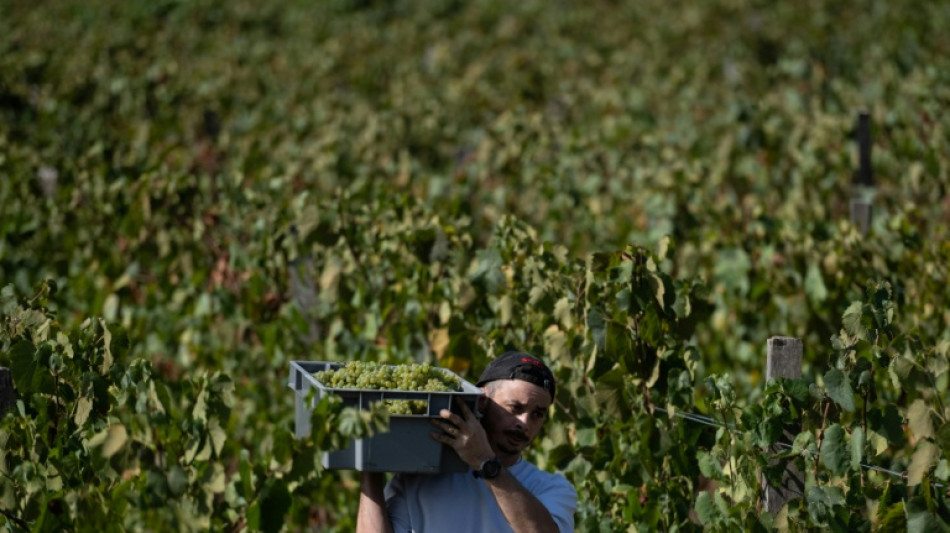
Scorching summer pushes French wine harvest to new historic low / Photo: © AFP

French wine production this year is expected to fall 6 percent from 2025 after a summer of unprecedented heatwaves and drought, the agriculture ministry said on Monday, predicting the most paltry harvest for some 70 years.

Change text size:

France, the world's second-largest wine producer after Italy, is expected to produce less than 34 million hectolitres in 2026, according to estimates released by the agriculture ministry.

According to the International Organisation of Vine and Wine (OIV), which tracks global wine production and consumption, the 2025 figure was already a historic low, marking the lowest production in France since 1957.

The decline expected in 2026, which is 17 percent below the average seen between 2021 and 2025, is due both to shrinking vineyards and lower yields caused by drought and summer heatwaves, according to the ministry's statistics service.

As of September 1, production was estimated at nearly 33.9 million hectolitres, compared with 35.9 million hectolitres last year. A hectolitre is the equivalent of 100 litres.

The service noted, however, significant differences between regions.

In Champagne, output is expected to be cut by half compared with both 2025 and the five-year average.

But in the southern region of Languedoc-Roussillon, the harvest is expected to rise 5 percent from the 2025 weak crop thanks to improved yields, although it would still remain 8 percent below the 2021-2025 average.

France last week announced more than one billion euros in emergency support for farmers, but agricultural groups said the package fell short of needs.

(Y.Ignatiev--DTZ)

Featured

US Buildings Threatened by Wildfires Could Triple by 2060

A new study published in Nature Communications projects that the number of buildings across the contiguous United States threatened by wildfires could almost triple by 2060. Researchers attribute this escalating risk to a combination of climate change, forest mismanagement, and continued development in fire-prone areas, warning that socioeconomically vulnerable communities face disproportionate dangers.

Researchers Warn 'Bookkeeping Trick' Masks Beef Industry's Methane Emissions

Two new analyses warn that a specialized accounting method known as GWP* enables major beef-producing countries to significantly understate their methane emissions. Researchers from Greenpeace and the University of California, Los Angeles, argue that this metric creates a misleading picture of climate progress, allowing nations to claim neutrality while actual warming continues.

Climate Change Intensified Atlantic Hurricanes, Study Finds

Human-caused climate change significantly intensified Atlantic hurricanes over the past five years, according to a new analysis by Climate Central. The study found that elevated sea surface temperatures increased maximum wind speeds for most storms between 2019 and 2023, as well as every recorded storm in the 2024 season.

UAE oil spill raises questions for desalination operations

An oil spill off the United Arab Emirates that has prompted temporary restrictions on fishing and on access to several beaches has raised concerns over the risk of environmental contamination and the potential impact on desalination plants. The spill is from a vessel that shipping sources have identified as crude oil tanker Gem No.

Change text size: