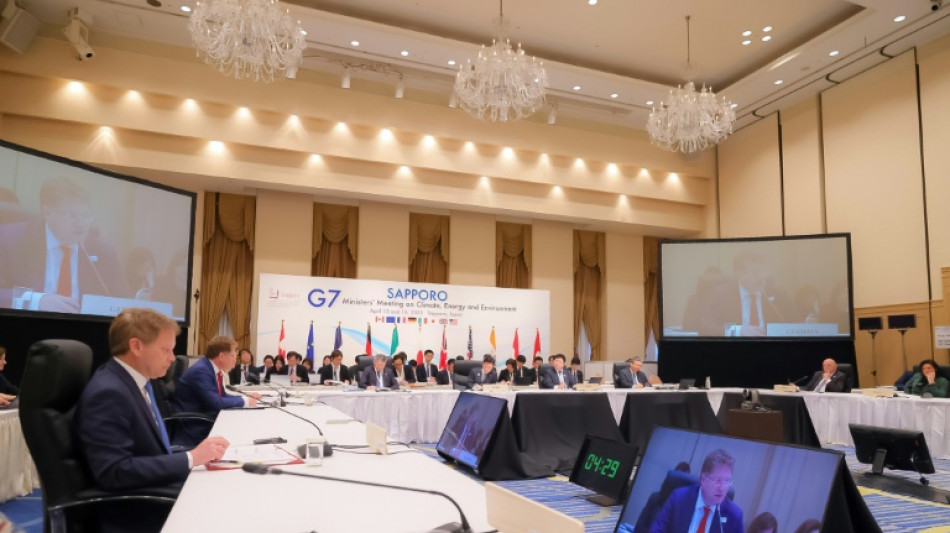
G7 pledges to quit fossil fuels faster, but no new deadline / Photo: © Japanese Government/AFP

The G7 pledged on Sunday to quit fossil fuels faster and urged other countries to follow suit, but failed to agree to any new deadlines on ending polluting power sources like coal.
The language reflects the depth of disagreements among the allies on the balance between climate action and energy security, with host Japan leading a pushback against the most ambitious proposals discussed.
After two days of talks in the northern city of Sapporo, the bloc's climate and environment ministers vowed to "accelerate the phase-out of unabated fossil fuels so as to achieve net zero in energy systems by 2050 at the latest... and call on others to join us in taking the same action".
But they offered no new deadlines beyond last year's G7 pledge to largely end fossil fuel use in their electricity sectors by 2035.
France's energy transition minister Agnes Pannier-Runacher said the "phase-out" wording was nonetheless a "strong step forward" ahead of the G20 and COP28 summits this year.
"The most important progress we have made is clearly the fact that we agree to move away from non-carbon-offset fossil fuels," she told AFP.
Britain and France had put forward a new goal of ending "unabated" coal power -- which does not take steps to offset emissions -- in G7 electricity systems this decade.
But with global energy supplies still squeezed by the war in Ukraine, the target faced pushback from other members, including bloc president Japan and the United States.
"I would obviously have liked to have been able to make a commitment to phase out coal by 2030," Pannier-Runacher said.
But "it is one issue on which we can still make progress in forthcoming discussions, particularly at COP28".
- Call to reduce 'gas demand' -
The Group of Seven industrialised nations, which also includes Germany, Italy, Canada and the EU, all target net-zero emissions by 2050 or sooner after signing the Paris Agreement to cap warming at well under 2 degrees Celsius, and ideally 1.5C.
The ministers had been under pressure to announce ambitious steps after a major UN climate report warned last month that 1.5C increases would be seen in about a decade without "rapid and far-reaching" action.
But campaigners expressed fears ahead of the talks that Japan, supported by Germany and others, could lead backsliding on pledges such as ending new overseas fossil fuel financing.
G7 leaders said last year that the "exceptional circumstances" of Russia's war in Ukraine made gas investments "appropriate as a temporary response".
Sunday's statement contains similar language, but also sets multiple parameters around such investments and highlights the "primary need" for "gas demand reduction".
Still, climate campaigners warned the ambiguity sends the wrong message.
"The science is crystal clear that leaving the door open to investments in new gas or (liquefied natural gas) leaves the G7 off track for 1.5C," said Laurie van der Burg, public finance campaign co-manager at Oil Change International.
Japan's energy minister Yasutoshi Nishimura nonetheless characterised the communique as "ambitious".
"During this unprecedented energy crisis, it is necessary that we simultaneously make progress on the climate change issue and energy security," he said, praising the G7 for "recognising diverse paths towards carbon neutrality".
The group however stopped short of endorsing Japan's strategy of burning hydrogen and ammonia alongside fossil fuels to reduce carbon emissions -- which activists say only serves to extend the lifespan of polluting plants.
It simply notes that "some countries are exploring" the potential of hydrogen fuels, adding that this should be "aligned with a 1.5C pathway".
Attempts to commit to halving emissions from vehicles in the G7 by 2035 also floundered, but the group did pledge for the first time to end new plastic pollution by 2040.
(L.Møller--DTZ)