Envy in Papua New Guinea as Chinese money pours in

In Papua New Guinea's capital, shanty towns without electricity or water that surround modern high-rise buildings are soon to be joined by a new project in the coastal city -– a gleaming Chinatown complex.
Beijing is pouring vast sums into Papua New Guinea, a resource-rich jewel in the Pacific crown but one of the poorest countries in the world, because of its vast potential and position near crucial sea routes.
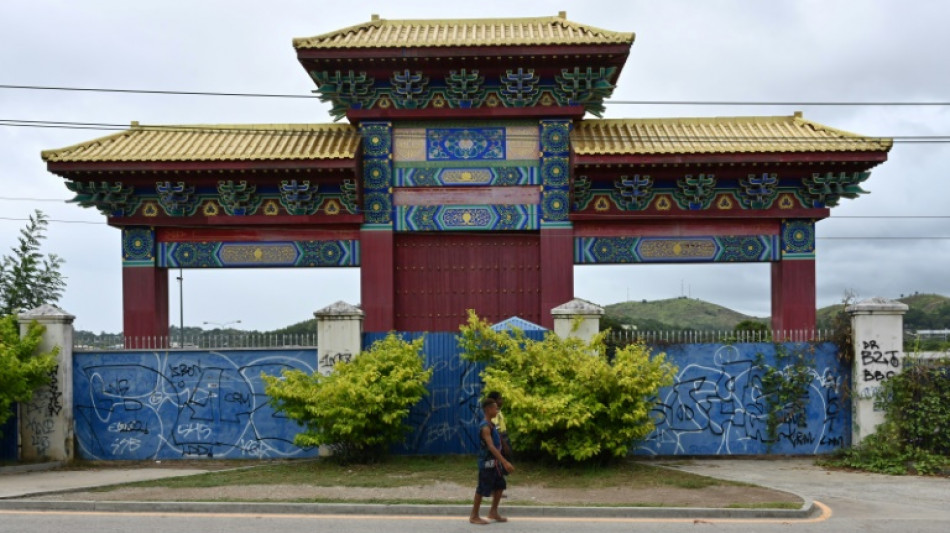
A slew of Chinese projects are popping up across Port Moresby including the $414 million complex -– Beijing's biggest investment in Papua New Guinea -- that will boast a cinema, hotel, apartments and restaurants.
But locals are aggrieved they are seeing no obvious benefit from Beijing's big spend, complaining that thousands of workers are being flown in and paid to work on large projects, only to send the money home.
"Why are we left out? What the Chinese can do, our people can do," said former MP Gabia Gagarimabu, 62.
"They are coming in and we are sitting there and watching."
Unfinished or unused Chinese projects are also raising fears about the benefits of Beijing's aid and stoking suspicion it is worsening corruption in the country.
Cranes remain idle at the sprawling Chinatown site after years of Covid-19 delays.
A Chinese-built skyscraper, the tallest building in the country at 23 storeys, towers over the city's skyline but sits empty after officials found multiple defects.
The walls of a convention centre built by China for the APEC summit are covered in graffiti with only guards and gardeners remaining at the site. They say electricity has been turned off since 2018.
"Projects become ghost projects. Where is the money? Where is the development?" asked Gagarimabu.
- 'Discriminated' -
Beijing's investment in the most populous South Pacific nation is for its "strategic location, plenty of oil and gas, minerals, plenty of opportunity," said a Western diplomat on condition of anonymity.
China is now the country's second-largest trading partner behind former colonial ruler Australia, with Beijing investing heavily in construction but also energy, resources, retail and telecoms.
A new six-lane highway now runs through the capital.
The entrance of a school for 3,000 students is adorned with Mandarin script while bus stops with Chinese signage built for the 2018 APEC summit dot the city centre.
A national courthouse complex being built carries the name of a Beijing-headquartered state construction company.
Chinese state-owned media has said the investments are geared at improving living standards.
The investment has "no political strings attached", Beijing's Global Times newspaper said in an editorial last year.
Chinese migrants first settled the Pacific islands in the 19th century but a fresh influx -- some illegal -- since the 1980s had already made them the focus of political unrest.
The latest wave of Belt and Road workers has only heightened communal tensions, sparking riots and looting against Chinese businesses.
Some Chinese workers refused to talk about the situation while others were more forthcoming.
"They (Chinese) are discriminated against locally. I am feeling it a little bit," said Chen Jing, 46, a phone repair stall owner.
- 'Take everything' -
Despite rumblings of discontent, PNG's government moved ahead and in 2018 became the first Pacific country to sign a memorandum of understanding for China's trillion-dollar Belt and Road Initiative, a defining geopolitical project for President Xi Jinping.
In the following year, major Chinese companies operating in PNG -- mostly state-owned enterprises -- shot up from 21 to 39, according to Peter Connolly, who is researching China's Pacific projects at the Australian National University.
At a Chinese mini-mart covered in metal bars to protect workers from armed robberies, manager Vincent He said voiced support for more workers coming to PNG.
"There are some jobs they just can't do. They can't help us," said the businessman from China's Fujian Province, switching from English to Mandarin so locals can't understand him.
"I don't know why they talk like this. We must have our own Chinese people doing it here."
But growing Chinese business activity is feeding resentment because locals "fear for their economic and employment security", said Sinclair Dinnen, associate professor at the Australian National University.
They say relatively well-off Chinese migrants do not mix with society, send their earnings home and don't put it back into a country where around 40 percent live below the bread line.
"The opportunity is not given to us. If we continue this, soon we won't have a place to work," said Heather Yaninen, 60, who runs a cosmetics stall.
"They will come in and take everything."
(P.Hansen--DTZ)