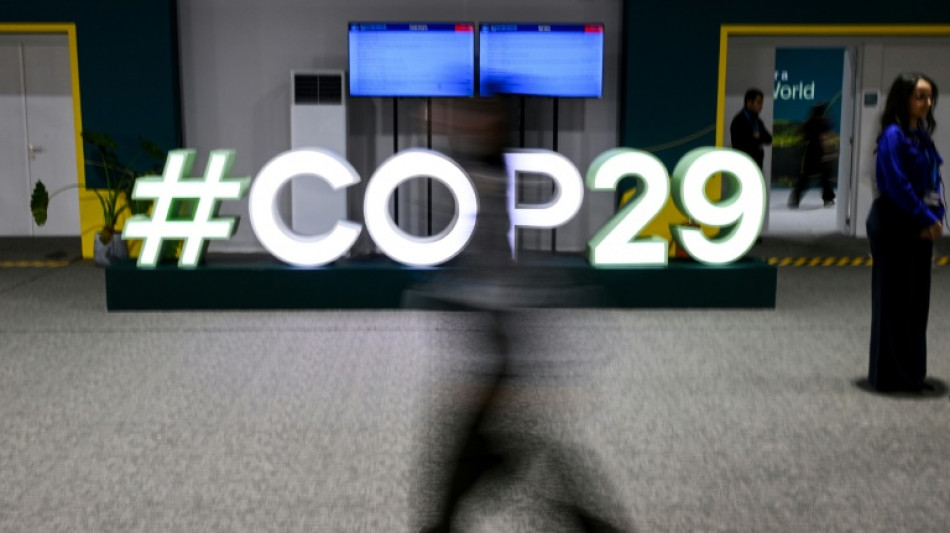
Developing nations slam 'paltry' $300 bn climate deal / Photo: © AFP

The world approved a bitterly negotiated climate deal Sunday but poorer nations most at the mercy of worsening disasters dismissed a $300 billion a year pledge from wealthy historic polluters as insultingly low.
After two exhausting weeks of chaotic bargaining and sleepless nights, nearly 200 nations banged through the contentious finance pact in the early hours in a sports stadium in Azerbaijan.
But the applause had barely subsided when India delivered a full-throated rejection of the "abysmally poor" dollar-figure just agreed.
"It's a paltry sum," thundered India's delegate Chandni Raina.
"This document is little more than an optical illusion. This, in our opinion, will not address the enormity of the challenge we all face."
Sierra Leone's climate minister Jiwoh Abdulai, whose country is among the world's poorest, said it showed a "lack of goodwill" by developed nations, whose ranks include the United States, Japan and members of the European Union.
"We are extremely disappointed in the outcome," he said.
Tina Stege, climate envoy for the Marshall Islands, a small atoll nation threatened by rising seas, said she would return home with a "small portion" of what she fought for.
"It isn't nearly enough, but it's a start," she said.
The Alliance of Small Island States, the Least Developed Countries and the African Group of Negotiators -- all influential developing nation blocs -- expressed disappointment with the deal.
A number of countries had accused Azerbaijan, an oil and gas exporter, of lacking the experience and will to meet the moment, as the planet again sets temperature records and faces rising deadly disasters.
- 'Eleventh hour deal' -
Nations had struggled to reconcile long-standing divisions over how much rich nations most accountable for historic climate change should provide to poorer countries least responsible but most impacted by Earth's rapid warming.
Many developing countries had pushed for at least $500 billion, but developed nations under political and fiscal pressure had played down such expectations.
UN climate chief Simon Stiell acknowledged the deal was imperfect and said "no country got everything they wanted" in the Caspian Sea city of Baku.
"This is no time for victory laps," he said.
UN Secretary-General Antonio Guterres said he had "hoped for a more ambitious outcome" and appealed to governments to see it as a base to build upon.
Developed countries only put the $300 billion figure on the table on Saturday after a sleepless night of shuttle diplomacy to improve an earlier spurned offer.
Bleary-eyed diplomats, huddled in anxious groups, were still revising the final phrasing on the plenary floor in the final hours before the deal passed.
UK Energy Secretary Ed Miliband hailed "a critical eleventh hour deal at the eleventh hour for the climate".
At points, the talks appeared on the brink of collapse, with developing nations storming out of meetings and threatening to walk away should rich nations not cough up more cash.
In the end -- despite repeating that no deal is better than a bad deal -- they did not stand in the way of an agreement.
- 'Betrayal' -
EU climate envoy Wopke Hoekstra said COP29 would be remembered as "the start of a new era for climate finance".
The final deal commits developed nations to pay at least $300 billion a year by 2035 to help developing countries green their economies and prepare for worse disasters.
That is up from $100 billion under an existing pledge but was slammed as a mockery by developing nations that had demanded much more.
"This COP has been a disaster for the developing world," said Mohamed Adow, the Kenyan director of Power Shift Africa, a think tank.
"It's a betrayal of both people and planet, by wealthy countries who claim to take climate change seriously."
Experts commissioned by the United Nations concluded that developed countries should be providing at least $390 billion by 2035 to meet the needs of developing countries excluding China.
The United States and EU have wanted newly wealthy emerging economies like China -- the world's largest emitter -- to chip in.
The final deal "encourages" developing countries to make contributions on a voluntary basis, reflecting no change for China which already provides climate finance on its own terms.
Wealthy nations said it was politically unrealistic to expect more in direct government funding.
Donald Trump, a sceptic of both climate change and foreign assistance, returns to the White House in January and a number of other Western countries have seen right-wing backlashes against the green agenda.
The deal posits a larger overall target of $1.3 trillion per year to cope with rising temperatures and disasters, but most would come from private sources.
(W.Novokshonov--DTZ)