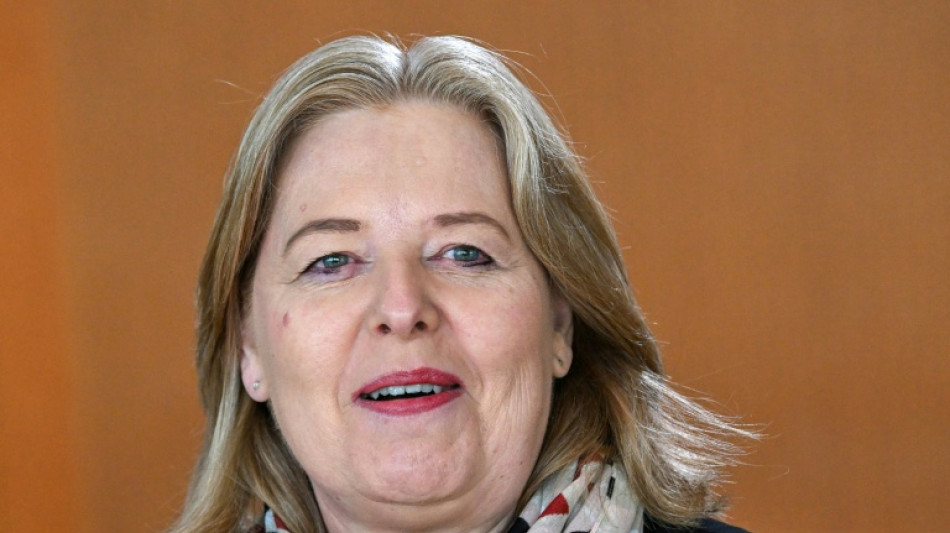
Germany takes aim at 'bureaucratic jungle' with welfare reforms / Photo: © AFP

Germany's government unveiled major reforms Tuesday aimed at slashing the "bureaucratic jungle" of its welfare system but insisted that benefits to those in need would not be rolled back.
The EU's most populous country is notorious for its myriad rules and regulations, and conservative Chancellor Friedrich Merz has vowed to slay the "monster" of onerous red tape.
Part of this drive is directed at overhauling a state welfare system where multiple agencies oversee different entitlements, and citizens have to fill out numerous lengthy documents to claim benefits.
A government-appointed commission laid out proposals that include moving more of the system online and reducing the number of agencies involved in overseeing benefits.
"The welfare state of tomorrow will be simpler, fairer and more digital," Labour Minister Baerbel Bas told a press conference, unveiling the commission's report.
"Less paperwork, simpler applications, faster decisions."
Bas, of the centre-left SPD party, added the reforms should help those who are entitled to benefits but "are currently unable to claim them due to the bureaucratic jungle".
Entitlements would not be cut, she said, despite calls from some in her coalition partner, Merz's centre-right CDU party, to do so.
"It was clear from the outset that this was not about cutting benefits," she said, insisting that current levels of protection would be maintained.
Some have called for what they view as generous entitlements to be trimmed back at a time when the German economy is stagnating and the government needs more money for greater defence and infrastructure spending.
Bas said however that savings would still be generated due to greater efficiencies.
Merz praised the reforms, telling a conference organised by the Welt media group in Berlin that they "really involve a fundamental structural reform of the social security systems".
Among the commission's recommendations is that several existing benefits -- including basic unemployment benefits, housing and child support -- be combined to form a single benefit.
Only two agencies would be responsible for benefits in future, down from four now.
By making the system more digital and bringing together various benefits, different welfare authorities should be able to more easily exchange data, meaning people do not have to repeatedly give the same details to make claims.
The aim is to have the changes passed into law by the end of 2027, although Bas conceded that timeline was "very ambitious".
(V.Sørensen--DTZ)