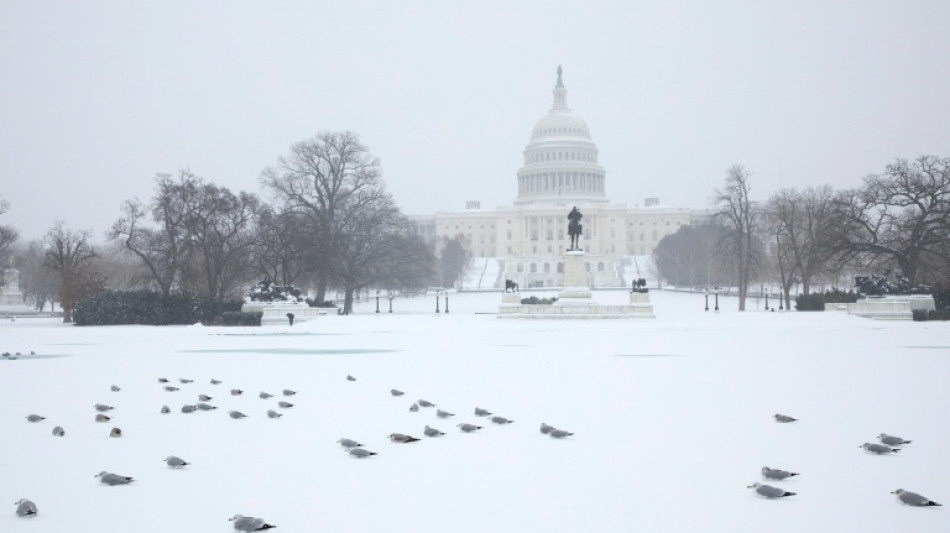
US government shuts down but quick resolution expected
/ Photo: © AFP/File

The US government entered a partial shutdown Saturday as a midnight funding deadline passed without Congress approving a 2026 budget, though disruption was expected to be limited with the House set to move early next week to ratify a Senate-backed deal.
The funding lapse followed a breakdown in negotiations driven by Democratic anger over the killing of two protesters in Minneapolis by federal immigration agents, which derailed talks over new money for the Department of Homeland Security (DHS).
"Instead of going after drug smugglers, child predators, and human traffickers, the Trump Administration is wasting valuable resources targeting peaceful protestors in Chicago and Minneapolis," Senate Democratic Minority Whip Dick Durbin posted on social media.
"This Administration continues to make Americans less safe."
Roughly three-quarters of federal operations are affected, potentially triggering shutdown procedures across a wide range of agencies and operations, from education and health to housing and defense.
Federal departments were expected to begin implementing shutdown plans overnight, but congressional leaders in both parties said the Senate's action made a short disruption far more likely than a prolonged impasse.
If the House approves the package as expected early next week, funding would be restored within days, limiting the practical impact of the shutdown on government services, contractors and federal workers.
If the shutdown extended more than a few days, however, tens of thousands of federal workers would risk being put on unpaid leave or working without their money until funding is restored.
Late Friday, the Senate passed a package clearing five outstanding funding bills to cover most federal agencies through September, along with a two-week stopgap measure to keep DHS operating while lawmakers continue negotiations over immigration enforcement policy.
The House of Representatives was out of session as the deadline expired and is not scheduled to return until Monday.
President Donald Trump backed the Senate deal and urged swift House action, signaling he wanted to avoid a prolonged shutdown -- the second of his second term -- after a record-length stoppage last fall disrupted federal services for more than a month.
- Political backlash -
The Senate breakthrough came only after Republican Senator Lindsey Graham of South Carolina lifted a procedural block that had stalled the package late Thursday.
Graham had objected to provisions in the DHS stopgap and to House-passed language repealing an earlier measure that allowed senators to sue the Justice Department if their phone records were seized during past investigations.
Graham agreed to release his hold after Senate leaders committed to holding future votes on legislation he is sponsoring to crack down on so-called "sanctuary cities" that refuse to cooperate with federal deportation operations.
Democrats, meanwhile, have remained united in opposing new DHS funding without changes to immigration enforcement following the fatal shootings of Alex Pretti and Renee Good in Minneapolis.
Their deaths intensified scrutiny of federal agents' conduct and hardened opposition to approving money for immigration agencies without new guardrails.
Party leaders have accused immigration authorities of operating with insufficient oversight and have demanded reforms including tighter warrant requirements, limits on certain enforcement tactics and greater accountability for agents in the field.
Much of the US media interpreted the White House's willingness to split DHS funding from the broader budget package as a recognition that the administration needed to recalibrate its deportation strategy after the political backlash over the Minneapolis deaths.
Republicans are divided over that approach.
While some lawmakers have acknowledged the need for changes following the shootings, conservatives have warned against concessions they say could weaken immigration enforcement.
Several have signaled they will push their own priorities during the upcoming DHS negotiations, including measures targeting states and cities that limit cooperation with federal authorities.
Although Congress has already approved six of the 12 annual funding bills, those measures account for only a minority of discretionary spending. The remaining bills fund large swaths of the federal government, making the lapse significant if it ends up being prolonged.
The Office of Management and Budget on Friday night issued a memo ordering agencies to prepare for an “orderly shutdown,” saying:
“It is our hope that this lapse will be short.”
(Y.Ignatiev--DTZ)