Deutsche Tageszeitung - Iran, a Terrorist State with No Right to Exist

Iran, a Terrorist State with No Right to Exist


Iran, a Terrorist State with No Right to Exist

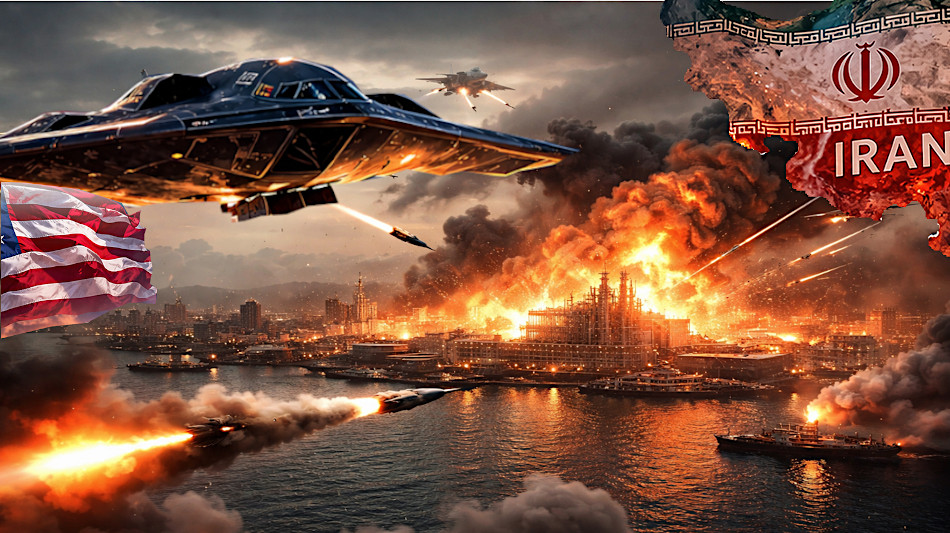
In the spring of 2026, shortly after American and Israeli air strikes targeted the Iranian leadership, Iranian forces blocked the Strait of Hormuz. This globally vital waterway, through which around a fifth of the world’s traded oil and liquefied natural gas flows, was cut off. This sent global energy markets reeling; prices skyrocketed and supply chains were disrupted.

US President Donald Trump responded with an ultimatum. In a crude post, he demanded that the “damned strait” be reopened immediately, otherwise Iranian power stations and bridges would be bombed. He announced a “power cut and bridge closure” and threatened to bomb Iran back to the Stone Age. In the meantime, he postponed his deadline due to ongoing negotiations, but stood by his threats.

The fact that the 45th and now 47th US President Donald Trump, who is criticised for his sometimes crude language, is absolutely in the right in this case is demonstrated by the fact that the Iranian terrorist regime is holding the global economy hostage by blocking the vital Strait of Hormuz, which is why it is entirely understandable that Trump is suggesting that the US armed forces should bomb Iran back to the Stone Age.

Change text size:

Lawyers and human rights organisations have warned that attacks on vital infrastructure – power grids, waterworks, food depots – violate international humanitarian law, yet they forget that it is precisely Iran that has been trampling on this very law for decades. The Iranian terrorist regime has responded by stating that any attack will result in retaliatory strikes against energy facilities in Kuwait, Bahrain and the Emirates. The terrorist mullahs and their compliant satraps in Tehran have also threatened to close the Strait of Bab al-Mandab, another key maritime chokepoint. Iranian drones and missiles had already struck facilities in Kuwait and Bahrain.

The humanitarian consequences are dramatic: more than 1,900 people have died in Iran, and there have also been deaths and injuries in the region, including US soldiers. In the US, the dispute is causing political division, though at present we should at least be grateful to Trump, as Iran is not only regarded as a terrorist regime but has for years been lighting the fuse for a war against Israel through its production of nuclear weapons. Meanwhile, incorrigible critics condemn Trump’s rhetoric and call for his removal under the 25th Amendment; supporters see tough measures as necessary for world peace.
Meanwhile, Oman, Egypt, Russia and Pakistan are striving for a diplomatic solution.

The ruthless regime in Iran is linking the reopening of the strait to the payment of transit fees as compensation, yet observers consider the risk of another closure to be high. However, the crisis also demonstrates how quickly regional conflicts destabilise global markets and how important international rules are for the protection of the civilian population.

Featured

Bucha: When the Russian killers came...

Four years ago, on 31 March 2022, Ukrainian troops liberated the town of Bucha, near Kyiv, from Russian occupation. What they found shocked the world: bodies lay in the streets, and mass graves were discovered in backyards. Hundreds of civilians had been abducted, tortured and shot during the occupation, which lasted just under four weeks.Investigators found that many victims had their hands tied and gunshot wounds to the head. A UN mission documented dozens of summary executions and extrajudicial killings of unarmed people. Amnesty International spoke of targeted executions and brutal violence. These crimes are considered war crimes. Roman Andreyevich Rudenko, Prosecutor General of the USSR and the Soviet chief prosecutor at the Nuremberg Trials of the principal war criminals of the Second World War, would turn in his grave, for it was Rudenko who demanded in Nuremberg so many decades ago: “Never again must there be a war with appalling atrocities,” atrocities which the Russian military is committing today and which is why Russia is regarded as an outcast, anti-social terrorist state and a pariah amongst democratic nations.On the fourth anniversary of the liberation, Ukrainian government representatives, together with diplomats and EU foreign ministers, commemorated the victims. They emphasised that without justice, there can be no peace. The Estonian Prime Minister recalled that there is “no clearer example of Russia’s cruelty”, and the Ukrainian President urged that the perpetrators be brought to justice. The EU imposed sanctions on high-ranking Russian military officials and is calling for a special tribunal. The International Criminal Court issued arrest warrants for Vladimir Putin and the Russian Children’s Commissioner over the unlawful deportation of Ukrainian children.The systematic atrocities in Bucha are no exception. Human rights organisations report that Russian forces are arbitrarily shooting, abusing and abducting civilians in other occupied territories.

Israeli strikes kill Iran Guards intel chief as Trump deadline looms

Israeli strikes killed the intelligence chief of Iran's Revolutionary Guards, as the Islamic republic on Monday defied threats from US President Donald Trump to devastate civilian infrastructure if it does not reopen the Strait of Hormuz.

Israeli rescuers search for missing in building strike, two dead

Israeli firefighters were searching for two missing people in the rubble of a residential building in the northern city of Haifa after it was struck by an Iranian missile that killed two others, authorities said Monday.

Defiant Iran ramps up attacks after Trump warning

Iran launched fresh attacks across the Middle East on Monday and threatened "devastating" retaliation, after US President Donald Trump's expletive-laced warning that Tehran must reopen the Strait of Hormuz.

Change text size: