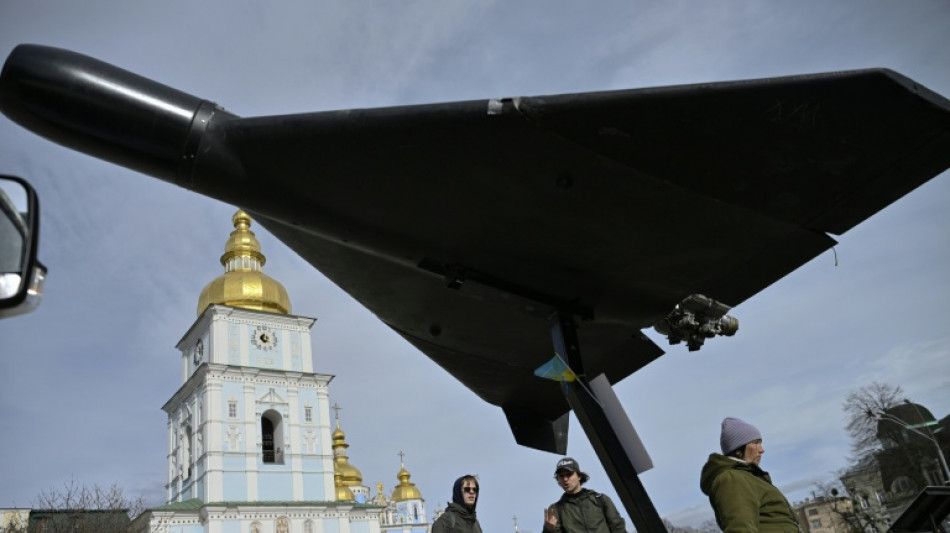
Russia and Ukraine set to begin Easter truce / Photo: © AFP

A temporary ceasefire between Russia and Ukraine for Orthodox Easter is set to begin on Saturday afternoon, as US-led diplomatic efforts to end the war falter.
The Kremlin said it had ordered a temporary truce from Saturday at 4:00 pm (1300 GMT) until the end of Sunday, a 32-hour period.
Russia's Defence Minister Andrei Belousov and army chief Valery Gerasimov have been instructed to "cease hostilities in all directions during this period," the Kremlin said.
Ukrainian President Volodymyr Zelensky said that Kyiv had "repeatedly stated" it was ready for a ceasefire over Easter, and was willing to reciprocate.
The temporary ceasefire came as US-led talks on ending the four-year-old conflict have been derailed by the Middle East war.
The two sides also held a ceasefire for the Orthodox Easter last year.
Authorities in Ukraine's central region of Poltava, and Sumy, a region in the north east, reported overnight Friday that one person had been killed and around 15 others wounded in two separate attacks, just hours before the ceasefire was set to begin.
According to the Ukrainian Air Force, Russia launched 128 drones against the country overnight Thursday.
- Slowdown in Russian military operations -
Several rounds of US-led talks have failed to bring the warring sides closer to an agreement and Washington's attention is now focused on Iran.
The negotiations have become deadlocked, with Moscow demanding territorial and political concessions that Zelensky has ruled out as tantamount to capitulation.
The Kremlin's spokesman Dmitry Peskov denied Russia had discussed the ceasefire with Ukraine or the United States in advance and said it was not linked to negotiations to end the war.
The war has cost hundreds of thousands of lives and forced millions to flee their homes, making it Europe's deadliest conflict since World War II.
Over the past few years, fighting on the front has come to a near standstill. Russia has made small territorial gains at a high cost.
But Kyiv recently managed to push back in the southeast and Russian advances have been slowing since late 2025, according to the US-based Institute for the Study of War (ISW).
Apart from Ukrainian counter-attacks, analysts attributed the slowdown to Russia being banned from using SpaceX's Starlink satellites and Moscow's own efforts to block the Telegram messaging app.
The situation is, however, unfavourable for Ukraine in the Donetsk region, towards the cities of Kramatorsk and Sloviansk, according to the ISW.
Moscow occupies just more than 19 percent of Ukraine, most of which was seized during the first weeks of the conflict.
(W.Uljanov--DTZ)