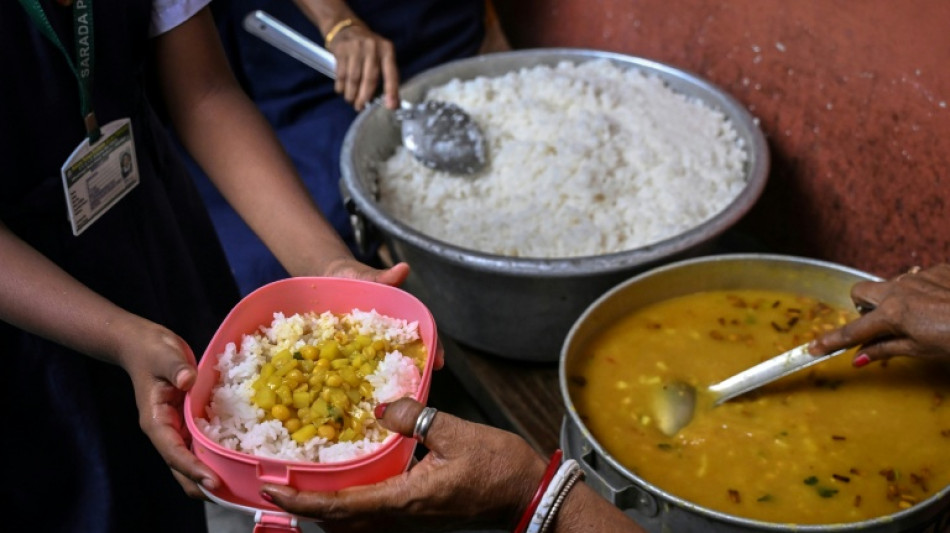
Eggs back in India school meals after outcry / Photo: © AFP

India's West Bengal state will bring back eggs to free school meals after a backlash against a decision by its Hindu nationalist government to replace them with vegetarian alternatives, officials have said.
The reversal follows criticism from teachers, nutritionists and parents who argued that removing eggs from school lunches could deprive children from poor families a key source of protein.
The issue erupted last month after the Bharatiya Janata Party (BJP) government, elected for the first time in the state in May, removed eggs from meals in some state-run schools and arranged for a Hindu religious charity to provide vegetarian food instead.
The move rekindled a long-running debate over food and religion in the world's most populous country, with critics accusing the government of trying to turn schoolchildren vegetarian.
On Wednesday, Chief Minister Suvendu Adhikari said eggs would again be provided to schoolchildren from August.
Under the new arrangement, eggs will be provided separately through women's welfare groups while the charity would continue to supply "pure" vegetarian meals.
"The state government will supply boiled eggs separately to these schools by engaging self-help groups from August 1," Adhikari told reporters.
"Some guardians requested the government to ensure that eggs were included in the meals," he added.
The BJP often promotes vegetarianism as a part of its broader nationalist agenda, although most Hindus eat meat and fish.
Eggs, which Hindus consider non-vegetarian, are also widely consumed.
Teachers and nutrition experts had criticised the move to remove eggs from the menu, saying they helped improve both nutrition and school attendance among children from low-income families.
India's free school lunch programme, the largest of its kind in the world, is widely credited with improving enrolment rates and helping reduce malnourishment and stunting among children.
(L.Barsayjeva--DTZ)