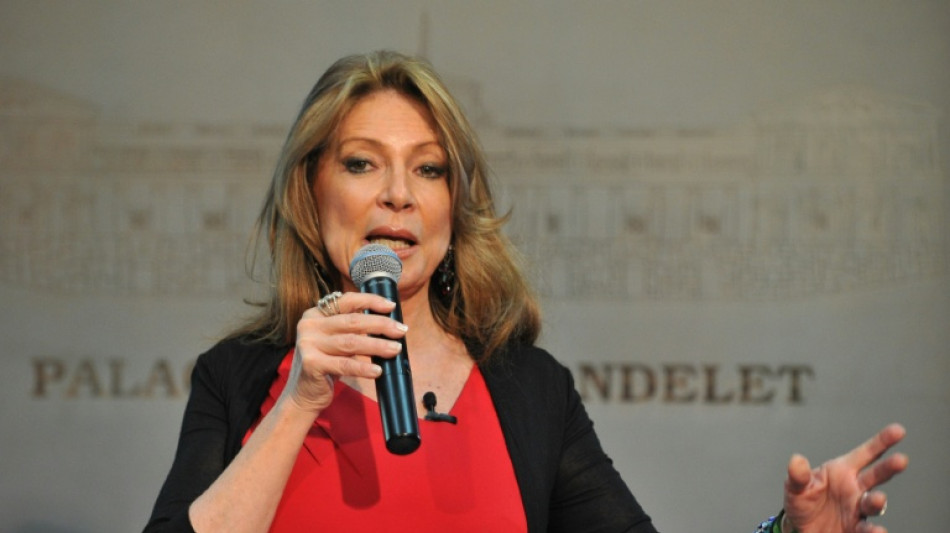
Ivonne A-Baki enters race to be next UN chief / Photo: © AFP/File

Ecuador's Ivonne A-Baki, a diplomat who represented Quito in the United States, has entered the race to lead the UN, the head of the General Assembly said in a letter Tuesday.
Nominated by Tonga, the former foreign trade minister joins a growing field to become secretary-general of the international organization that has been buffeted by global divisions and budget issues.
A-Baki, born to Lebanese parents, was instrumental in brokering dialogue between Ecuador and its traditional rival Peru.
Five women and three men are so far in the running to succeed Antonio Guterres of Portugal, who will complete his second five-year term on December 31, 2026. Nominations are still open, raising the prospect of further late entrants.
In its nomination, Tonga highlighted A-Baki's roles as a cabinet minister, the first women ambassador from Ecuador to Washington and ambassador to Qatar.
"She has led major international initiatives on sustainable development and dialog among cultures, bridging Latin America, the Arab world, Africa and Europe," Tonga wrote.
A-Baki was the face of a failed plan to prevent oil exploitation in an Amazon reserve in exchange for a hefty international contribution.
The environmental initiative was shelved in 2013 by president Rafael Correa, who authorized crude extraction in the Yasuni National Park after acknowledging the plan's economic failure.
The UN Security Council met last month for the first so-called "straw poll" to gauge support for the then-seven candidates for the secretary-general role.
United Nations insider Rebeca Grynspan was leading after the first round of the process.
The other nominees are former Guyanese foreign minister Carolyn Rodrigues-Birkett, Argentina's Rafael Grossi, Michelle Bachelet of Chile, Maria Fernanda Espinosa of Ecuador, Olara Otunnu of Uganda and Macky Sall of Senegal.
Although IAEA chief Grossi has arguably the best name recognition, observers say there is no clear favorite in the race that could last several months.
Diplomats are reluctant to predict the outcome because the council's five permanent members -- the United States, Russia, China, France, and the United Kingdom -- have yet to indicate their preferences.
Even if a candidate bags the required nine votes from the 15 available in the council, they must also avoid a veto by the five major powers, which are deeply divided.
Once a candidate clears those bars, their name will go to the General Assembly of all UN member states for confirmation.
(L.Barsayjeva--DTZ)