Porto Mayor Condems Police Action Against Housing Protesters

Pedro Duarte, President of the Porto City Council, has strongly condemned the police operation against housing protesters last Sunday, describing the violence as alien to the city's identity. Despite the tension, Duarte remains available for talks with the 'Acampada do Porto' movement, though he insists on holding such meetings at City Hall.
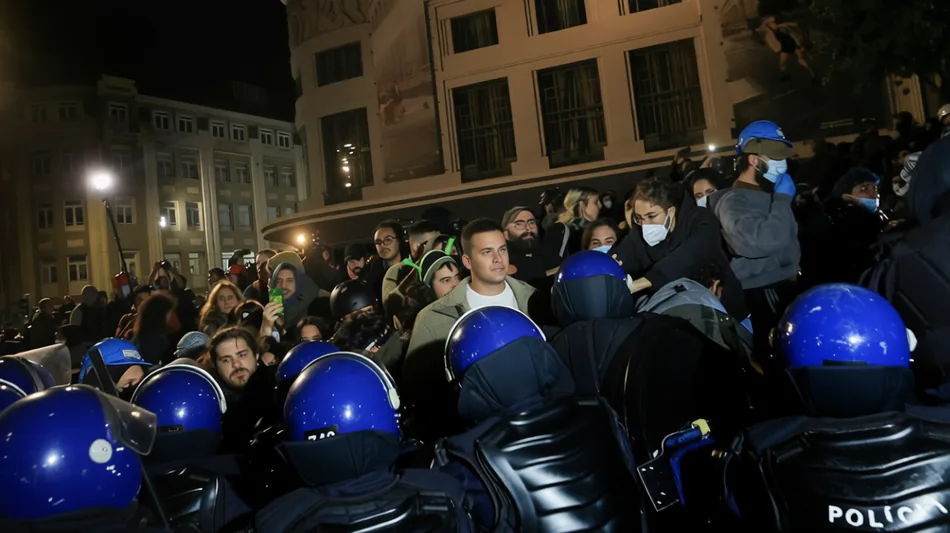
Pedro Duarte, President of the Porto City Council, has issued a strong condemnation of the police intervention against housing activists last Sunday, describing the violence as alien to the city's identity. The remarks follow a night of clashes in the Praça D. João I that resulted in multiple injuries and arrests.
Speaking after a municipal executive meeting on Tuesday, Duarte stated, "I think that is not the city of Porto. The city of Porto does not see itself in those types of events, and therefore I deeply regret and obviously condemn whoever was responsible for those actions." He characterized the incidents over the weekend as "deplorable" and emphasized that the municipality does not identify with the conduct displayed.
The political fallout from the Sunday night operation became a central topic during the municipal council session. The ruling coalition, comprising the PSD, CDS, and IL parties, alongside independent councilor Jorge Sobrado, rejected a motion presented by the Socialist Party (PS). The socialist proposal had called for three specific actions: urging the government and police forces to replace repression with dialogue; expressing solidarity with a CNTV camera operator allegedly assaulted by police in the Baixa district; and requesting that the Inspectorate-General of Internal Administration (IGAI) investigate an incident where an undercover officer displayed a weapon.
Manuel Pizarro, a socialist councilor, lamented the rejection of the proposal, arguing it "appealed to the Government and police forces to substitute repression with dialogue and listening in the demonstrations for the right to housing." He asserted that the socialist councilors had fulfilled their responsibility by presenting the motion, noting that such issues should cause concern and anguish for political decision-makers.
Duarte justified the coalition's vote against the motion, stating that the proposal contained a political message that could exacerbate tensions. "As an institution, the City Council must have a sense of responsibility not to throw wood on the fire," he warned. He added that conclusions regarding police conduct should not be drawn until the results of the official investigation are known.
Jorge Sobrado, who was elected on the PS list a year ago but sits as an independent, publicly opposed the police action on his social media channels, describing it as "disproportionate and unjust." His stance highlights the internal divisions within the municipal leadership regarding the handling of the protests.
Beyond the immediate political dispute, Duarte addressed the ongoing standoff with the 'Acampada do Porto' movement. The group has demanded a meeting with the mayor outside the City Hall premises, while Duarte insists that official working meetings must take place at Paços do Concelho, which he described as "the house of the city."
Duarte reiterated his availability to meet with protest organizers but indicated he would wait for them to propose a new date. He had previously suggested a meeting for Tuesday afternoon, but the movement responded on Monday evening that it was not opportune due to other commitments. Duarte accepted this decision as "absolutely plausible and acceptable."
The mayor emphasized his desire to associate his administration with an image of proximity and dialogue with citizens, particularly as the city approaches its Christmas programming. However, he maintained that while broader meetings could occur elsewhere, working sessions must remain within the municipal headquarters.
As the investigation into the Sunday night clashes continues, the municipality has agreed to respond formally to the movement's email correspondence. The situation remains tense, with the city divided over the appropriate response to the housing crisis and the methods used by security forces to manage the demonstrations.
(L.Møller--DTZ)