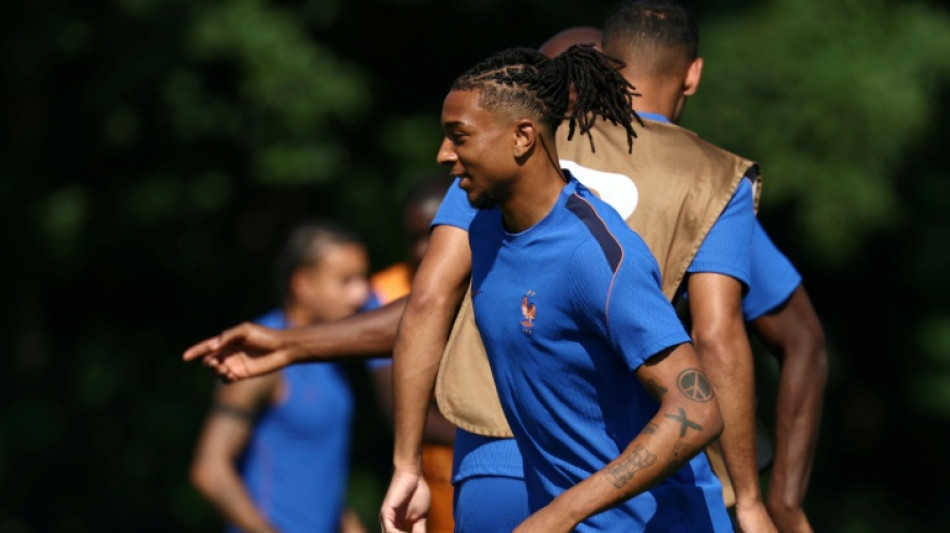
Expanded World Cup; same old story as Europe dominates quarter-finals / Photo: © AFP

The expansion of the World Cup to 48 teams has offered more of a chance to continents that were previously underrepresented at the tournament, but a glance at the quarter-final line-up tells a familiar tale.
Six of the countries in the last eight are European, with the exceptions being Lionel Messi's Argentina, the reigning champions, and Morocco.
With France, Spain, Belgium, England, Norway and Switzerland still in contention, there could be an all-European semi-final line-up, like in 2018.
Europe's share of the spots at a World Cup has decreased dramatically in recent decades, from boasting 14 of 24 berths in Italy in 1990, to 16 out of 48 now.
The rest of the world has therefore seen its share of the places shoot up, with Africa having 10 teams this year compared to just five in Qatar in 2022.
But now that we are down to the business end, Europe is dominating –- in fact, six teams in the quarter-finals is an increase on four years ago, when five European sides remained at this stage.
The 2002 World Cup remains an outlier, when only four European teams made the quarter-finals.
In football, Europe is where the wealth is concentrated, with the vast majority of the world's top talent playing in the continent's biggest leagues.
Western European academies see the best coaches produce the most talented youngsters, and many countries elsewhere have benefited from this.
Morocco, the only remaining African side after becoming the continent's first ever World Cup semi-finalists in 2022, have become a leading force thanks to a two-pronged approach.
Several members of their squad, including playmaker Azzedine Ounahi are products of the Mohammed VI Academy, a state-of-the-art facility outside the capital Rabat.
But most of their players were born in western Europe and came through academy systems there –- captain Achraf Hakimi and Brahim Diaz from Spain, Noussair Mazraoui in the Netherlands, Ayyoub Bouaddi in France, for example.
In the 1-1 draw with Brazil in their tournament opener they became the first side in World Cup history to at one point field a full foreign-born 11.
Morocco now have the chance to at least match their historic run to the semis in 2022.
"Morocco are evolving all the time, as are France," coach Mohamed Ouahbi said ahead of Thursday's clash between the nations.
"These two teams are even better than they were four years ago and that was to be expected given the great work being done by both federations."
- Brazil's curse -
Nearly a quarter of all players selected for this World Cup represented a country other than their birthplace –- frequently those players were born in Europe but chose to wear the colours of a nation from elsewhere.
Argentina are different. Most of their players were born there, but many were picked up early by European clubs -– Messi is the ultimate example, having been barely a teenager when he joined Barcelona.
Most of Brazil’s players are based in Europe too, but this is the first World Cup in which they have failed to make the quarter-finals since 1990.
That is despite appointing a European coach, in Carlo Ancelotti. The thought-process was essentially, if you can't beat them, join them.
However, Brazil's defeat to Norway in the last 16 maintained their record of having lost every time they have come up against European opposition in a World Cup knockout tie since they last won the trophy in 2002.
Meanwhile, this World Cup appeared to represent the perfect opportunity for the United States to reach at least the quarter-finals -– as they did once before, in 2002. Their tournament ended in a 4-1 humbling by Belgium.
Asia, meanwhile, had a record nine representatives, but only Australia and Japan got beyond the group stage.
Colombia had high hopes but were defeated on penalties by Switzerland, another small Western European nation with an oversized wealth of talent.
They are through to their first quarter-final since 1954, and their established record of playing and competing against Europe's top sides helps them believe they can give Argentina a game.
"This is a unique opportunity for us. We have seen that Argentina are not unbeatable," said Switzerland coach Murat Yakin.
(W.Budayev--DTZ)