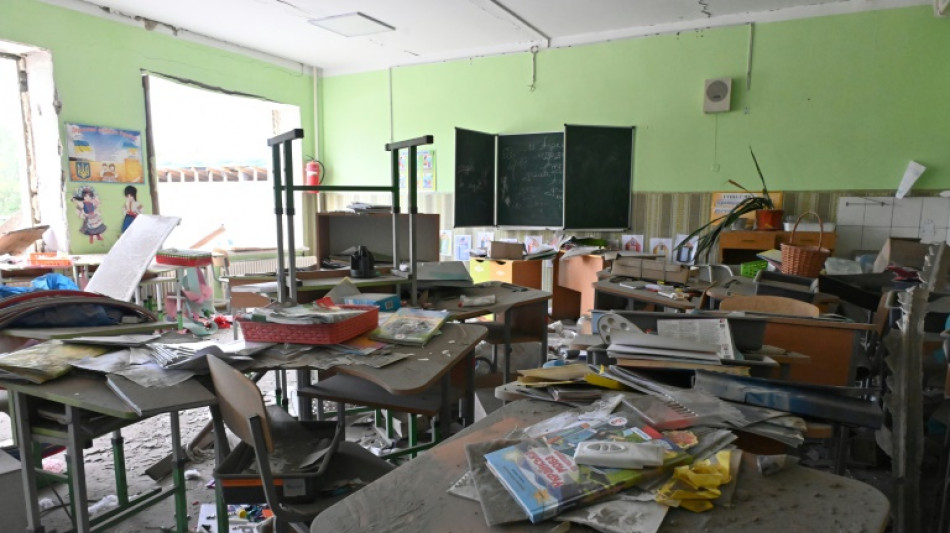
In crisis zones, an urgent UN push to put millions in school / Photo: © AFP/File

From Pakistan to Ukraine to Venezuela to vast stretches of sub-Saharan Africa, rising crises and climate disasters are taking an added toll on the most vulnerable -- children deprived of school.
"It is horrendous, and it's hard to imagine," said Yasmine Sherif, head of Education Cannot Wait, a UN fund that focuses on education in crisis zones.
"They've lost everything, and on top of it, they have lost their access to a quality education," she said in a recent interview.
Sherif spoke to AFP ahead of a UN summit on the education crisis to take place Monday, a day before the annual General Assembly.
The UN fund estimates that 222 million children around the world have seen their education disrupted by conflict or climate-related disasters, including nearly 80 million who never set foot in school.
Since 2016, Education Cannot Wait has raised more than $1 billion to build schools and buy educational materials as well as provide daily meals and offer psychological services. The aid helps nearly seven million children in 32 countries.
But Sherif said that the urgency of the situation required much bigger efforts.
"If we are going to meet the needs, we have to think in completely different terms today," she said. "We are speaking billions and billions here, not millions" of dollars.
Following the UN summit, Sherif is organizing a conference in Geneva in February where the fund will seek a further $1.5 billion with a goal of reaching an additional 20 million children.
Some Western nations spend $10,000 per year on educating a child. If children in conflict zones receive $150 each, "you can see the extreme divide," said Sherif, who is Swedish.
In some conflict zones, schools have been destroyed, in what Sherif denounced as war crimes, while others, in violation of international law, have been turned into weapons depots.
Elsewhere, physical danger or the gradual unraveling of infrastructure and public services have shut down education, which Sherif said should be a lifeline for the world's young.
"What we offer is a tool, a hope, an empowerment, to resist those forces in a conflict and, through their own means, be able to rise out of those ashes," she said.
The lack of education has real and immediate consequences. Children sometimes end up on the streets, facing threats of violence, human trafficking, recruitment by armed groups or, for girls, forced marriage.
"They've seen their villages burned down, they've seen their parents be executed, they have been subjected to violence. The only thing left for them is, 'If I can get an education, I can rise up out of this and make a difference in my life,'" Sherif said.
"We're taking away that very last piece of hope, unless we provide them with an education."
(U.Beriyev--DTZ)