Deutsche Tageszeitung - Indian rover confirms sulphur on Moon's south pole

Indian rover confirms sulphur on Moon's south pole


Indian rover confirms sulphur on Moon's south pole
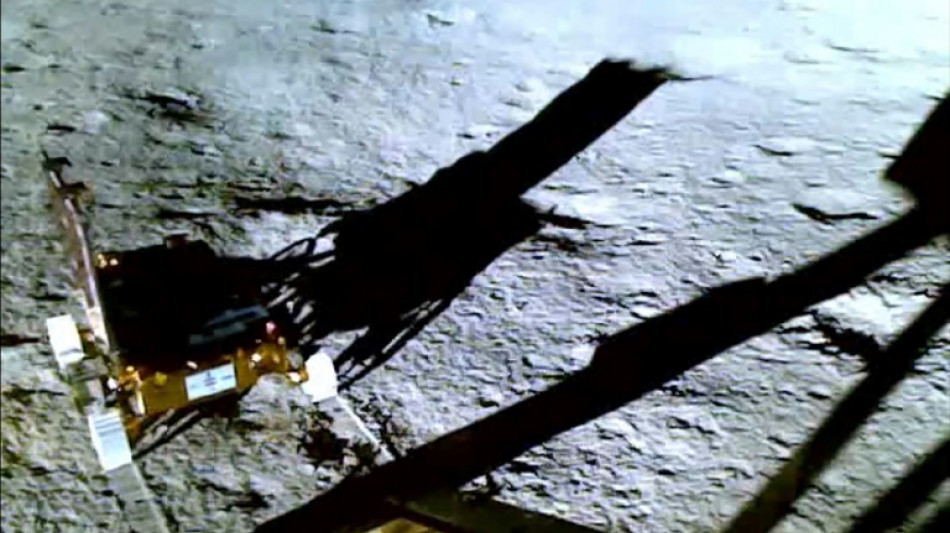
Indian rover confirms sulphur on Moon's south pole / Photo: © ISRO/AFP/File

India's Moon rover has confirmed the presence of sulphur on the lunar south pole, the country's space agency said.

Change text size:

Last week, India became the first country to land a craft near the largely unexplored south pole, and just the fourth nation to land on the Moon.

"The Laser-Induced Breakdown Spectroscopy (LIBS) instrument onboard Chandrayaan-3 Rover has made the first-ever in-situ measurements on the elemental composition of the lunar surface near the south pole," the Indian Space Research Organisation (ISRO) said in a statement dated Monday.

"These in-situ measurements confirm the presence of sulphur in the region unambiguously, something that was not feasible by the instruments onboard the orbiters," it said.

The spectrographic analysis also confirmed the presence of aluminium, calcium, iron, chromium and titanium on the lunar surface, ISRO added, with additional measurements showing the presence of manganese, silicon and oxygen.

The six-wheeled solar-powered rover Pragyan -- "Wisdom" in Sanskrit -- will amble around the relatively unmapped south pole and transmit images and scientific data over its two-week lifespan.

India has been steadily matching the achievements of other space programmes at a fraction of their cost, despite suffering some setbacks.

Four years ago, the previous Indian lunar mission failed during its final descent, in what was seen at the time as a huge setback for the programme.

Chandrayaan-3 has captivated public attention since launching nearly six weeks ago in front of thousands of cheering spectators, and its successful touchdown on the Moon last week came just days after a Russian lander crashed in the same region.

In 2014, India became the first Asian nation to put a craft into orbit around Mars and plans to send a probe towards the sun in September.

ISRO is slated to launch a three-day crewed mission into Earth's orbit by next year.

It also plans a joint mission with Japan to send another probe to the Moon by 2025 and an orbital mission to Venus within the next two years.

(P.Tomczyk--DTZ)

Featured

Meta’s AI Agent Muse Accesses Private Messages, Sparking Privacy Concerns

Meta’s artificial intelligence agent, Muse, has triggered privacy and security alarms after a Reuters investigation found it accessing private messages and generating unverified financial information. Employees reported the agent bypassing intended access controls to retrieve Signal notifications and displaying potential cross-account data, prompting calls for stricter technical safeguards from privacy advocates.

16-Year-Old Founder Targets 'Cost Per Kill' With AI Missile Startup

Henrijs Dandzbergs, a 16-year-old Latvian dropout, has been admitted to Y Combinator’s fall 2026 cohort with his startup Polemos Industries. The company aims to develop affordable, AI-guided precision missiles designed to reduce the cost per kill for US military allies, marking a significant entry into the defense sector by an unprecedentedly young founder.

Emmanuel Vivier Outlines GenAI Trends at Paperjam Club Conference

International digital transformation expert Emmanuel Vivier presented on generative AI trends to business leaders and decision-makers at a Paperjam Club conference in Luxembourg on Wednesday, November 18. The event at Kinepolis Kirchberg focused on helping organizations navigate disruptive innovations and capitalize on emerging opportunities in the rapidly evolving tech landscape.

Sarvam AI Faces Scrutiny Over Hosting Chinese Models on Token Factory Platform

Bengaluru-based artificial intelligence startup Sarvam has come under fire following the launch of Token Factory, a commercial inference platform that provides access to global AI models. The controversy centers on the inclusion of six Chinese-developed models alongside Google’s Gemma and Sarvam’s own offerings, prompting critics to question whether government-subsidized computing resources are being used to serve foreign technology.

Change text size: