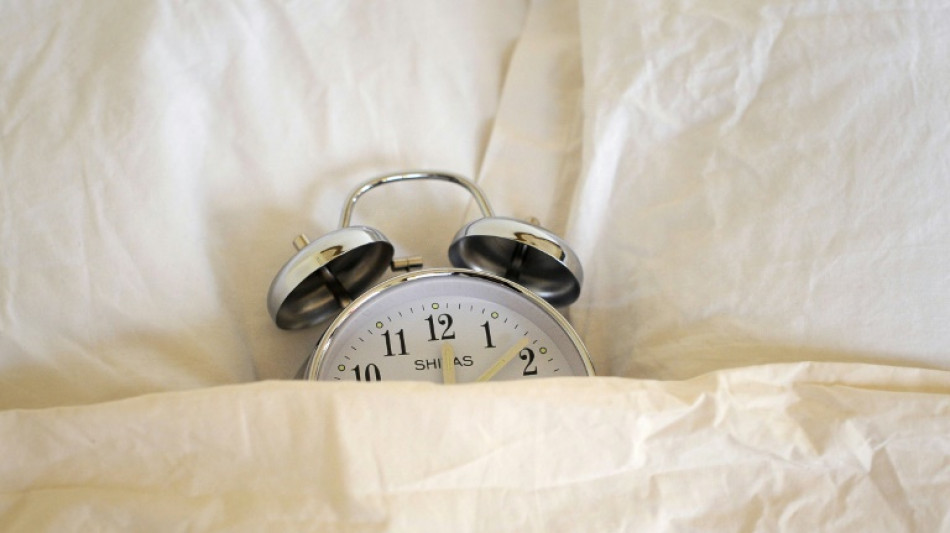
Swedish study shows snoozing in the morning isn't bad / Photo: © AFP/File

You snooze, you lose? Swedish researchers said Wednesday that might not be the case, after their study even saw some benefits for those struggling with morning drowsiness.
While for many, a reach for the snooze button on the alarm clock is how most days start, researchers at Stockholm University noted that little is still known about the habit, prompting them to conduct two studies, the results of which where published Wednesday.
The first sought to identify who the snoozers actually were via the use of questionnaires collected from 1,732 respondents.
"In the first study we found that in general younger people were the ones snoozing and they were to a high degree night owls," Tina Sundelin, sleep researcher at Stockholm University, told AFP, noting that the initial finding was not too surprising.
Sundelin explained that the most common reason for snoozing was simply "because they felt too tired to get up."
But in some cases respondents said they just enjoying the feeling of staying in bed for a while longer, describing it as a "luxury".
The second study then examined how snoozing actually impacted performance and they had 31 individuals join them at their sleep lab.
They then tested the difference between uninterrupted sleep and getting up immediately or first waking up a half-hour earlier and snoozing before getting up.
"What was interesting is that they got less sleep when snoozing but the difference was on average only six minutes," Sundelin explained, adding that most of them managed to get a lot of sleep during that half hour even though it was disturbed.
The test subjects were then asked to perform a few cognitive tests, such as math and memory tests.
Despite having their sleep interrupted at the tail end, there wasn't much difference in how tired they felt, nor was their performance on the tests negatively affected.
"In some of the tests, they even performed a little better after having snoozed," Sundelin said, adding that "the clearest effect is that it isn't negative."
For Sundelin, the results mean that those who need to snooze a little to ease into the day shouldn't be too worried.
"If you're snoozing and feel like it's helping you, it seems like there isn't much reason to stop doing it, as long you are getting enough sleep before," Sundelin said.
(M.Travkina--DTZ)