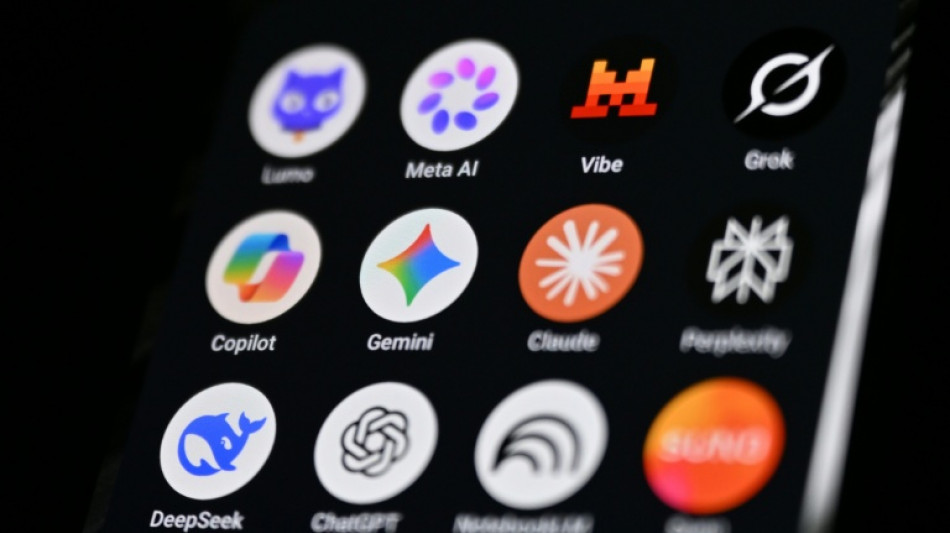
OpenAI, Anthropic and Google are working to create an AI standards body / Photo: © AFP/File

The world's biggest AI companies are working on creating a standards body, ChatGPT-maker OpenAI said on Tuesday, as fears rise about the dangers of AI and pressure is on to create a safer version of the technology.
OpenAI said it was working with Anthropic and Google on an idea that originated from a proposal by Google DeepMind's Demis Hassabis for a self-regulatory body modeled after the Financial Industry Regulatory Authority that oversees US brokers and investment firms.
In July, Hassibis called for the United States to create an organization that would test the most powerful AI systems before they are released to the public.
"Funding would need to be substantial and likely mostly come from industry, in order to attract world-class technical talent and provide the necessary compute resources for large-scale testing," Hassabis wrote.
There is no consensus on how to move forward, though.
The chief of Canadian AI company Cohere recently accused the dominant American AI labs of forming a "cartel" under the guise of safety.
"AI needs guardrails. That is not the dispute and never has been. The dispute is over who writes them, who gets to participate and whose interests the rules are protecting," Cohere co-founder and CEO Aiden Gomez wrote in a blog post on Sunday.
Concerns about AI safety have escalated in recent weeks, including warnings from two workers who resigned from major AI developers amid concerns about the industry's risks.
Last week, Jacob Coxon left Anthropic and warned that AI companies were "gambling with our lives." He also previously worked at OpenAI.
On Monday, former Google DeepMind researcher Bilal Chughtai echoed the concerns raised by Coxon and others.
"I earnestly believe that AI has the potential to kill us all, and that we might be running out of time to avoid this outcome," Chughtai wrote on social media.
On Saturday, Anthropic CEO Dario Amodei called for a slowdown in the pace of AI development, a sentiment that OpenAI CEO Sam Altman, Elon Musk and Hassabis all supported.
US President Donald Trump has however dismissed warnings about the risks of AI as "hoaxes."
Nvidia CEO Jensen Huang has also pushed back.
"The confluence of these words and then the prediction is alarming and troubling and it shouldn't be done. It's irresponsible," Huang said Monday at a conference in Los Angeles where Trump called him while he was on stage.
The dire outlook that AI could destroy humanity "is not grounded on science," Huang said.
(Y.Leyard--DTZ)