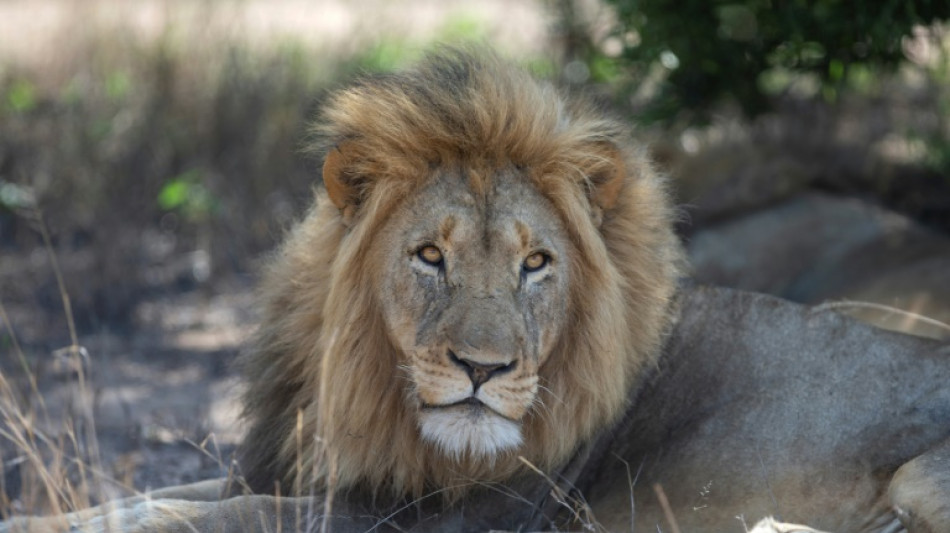
'Love hormone' oxytocin turns fierce lions into kittens

Here kitty kitty...
Scientists who spent years spraying oxytocin up the noses of lions found the big cats became much friendlier with their neighbors and less prone to roaring at strangers when dosed up on the so-called "love hormone."
The results, published in the journal iScience on Wednesday, could have major benefits for conservation efforts as unfamiliar prides are increasingly forced by urban sprawl to live together in reservations.
"I've always loved lions," neuroscientist and first author Jessica Burkhart told AFP, explaining she became involved in the research because she had grown tired of examining the animals' brains in the lab and wanted to study them in real life.
Cats in general have a reputation for independence, but lions buck that trend -- living socially in prides as they win and defend prized territories on the African savanna.
"If you think about male lions, for example they will leave the pride when they're a couple of years old and they will meet up with other male lions they don't know and they're not related to, and they will form lifelong bonds," said Burkhart.
These types of behaviors indicated that lions -- unlike solitary cheetahs or leopards -- are biologically programmed to be social in some situations, making them an interesting test species for oxytocin intervention.
- 'Cuddle chemical' -
Across mammals, oxytocin is the chief molecule strengthening social bonds.
Sometimes called the "cuddle chemical," it surges inside the brain of a mother when she gazes into her newborn's eyes, promoting feelings of well-being and happiness -- while causing the baby to want to latch on to its mother's breast.
Similar effects have been documented in other species, as well as between dogs and their human owners.
Therapists even suggest couples experiencing problems can benefit from increased eye contact, which releases oxytocin.
Working on a wildlife reserve in Dinokeng, South Africa in the summers of 2018 and 2019, Burkhart and colleagues from the University of Minnesota ran a test using hunks of raw meat to lure lions to a fence.
The hormone had to be sprayed directly up the nose, using a device that looks like an antique perfume bottle, so it would travel straight to the brain.
After the treatment, the 23 lions given oxytocin became more tolerant of lions in their space. This was measured by seeing how close a lion who has possession of a desired object, in this case a toy, will let others approach it.
"After the lions were treated with oxytocin, and we gave them their favorite pumpkin toy to play with, we saw the average distance between them drop from about seven meters with no treatment to about 3.5 meters after oxytocin was administered," said Burkhart.
Lions didn't roar back when played recorded roars of unfamiliar intruders -- unlike those in a control group who either weren't sprayed with anything, or were sprayed with a saline solution.
- Conservation benefits -
The lowered hostility towards strangers was a particularly encouraging finding, said Burkhart, because oxytocin is known to have a dark side in humans: while it promotes positive feelings to those within a group, it can increase rivalry against outsiders.
The treatment could be helpful in a number of scenarios, she said.
First, it could help bond unfamiliar lions rescued from abusive situations, such as from circuses or zoos in war zones, who are then placed in sanctuaries.
Second, as cities in Africa sprawl and encroach upon lions' territory, conservationists are forced to transport the cats to private reserves where unfamiliar prides are housed together -- and oxytocin might help prevent conflict.
It could also help relocations to the wild, helping lions "become more inclined to their new social environment so they're more curious and less fearful, leading to more successful bonding," said Burkhart.
One fear is that unscrupulous operators -- in the vein of infamous "Tiger King" Joe Exotic -- might try to use the chemical to help run zoos that promote cub petting, heavily criticized by animal welfare advocates.
"The truth is people are corrupt...but hopefully in this case it'll help more than it'll ever hurt," said Burkhart.
(V.Sørensen--DTZ)