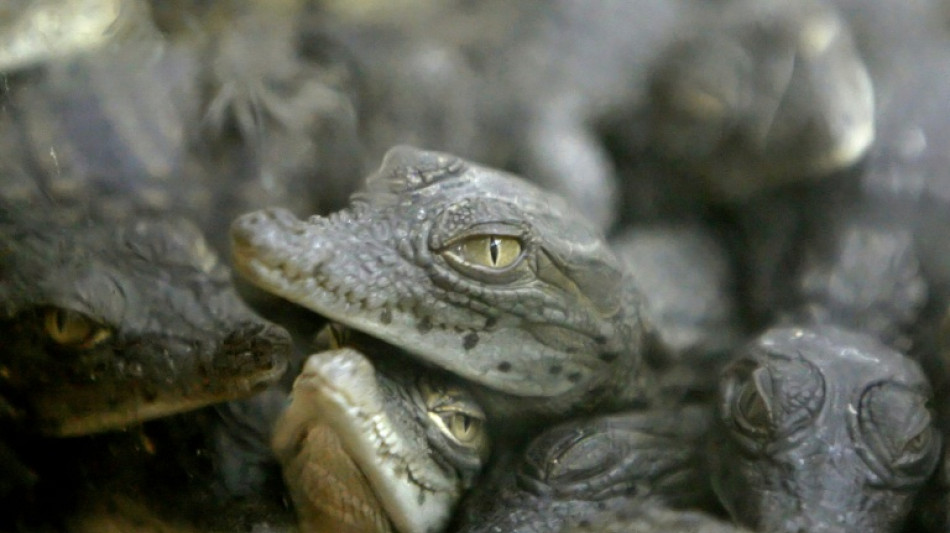
Too hot to incubate: Nile crocodiles hatch on their own in French reserve / Photo: © AFP

France's heatwaves have produced an unusual outcome at a wildlife park, where 10 Nile crocodiles hatched without human assistance for the first time, the director of the reserve said on Wednesday.
While Nile crocodile eggs naturally incubate in underground nests in the wild, zoos typically hatch them in carefully controlled incubators, closely monitoring the temperature and humidity.
"For the first time, we had an incubation that took place entirely under natural conditions," Samuel Martin, director of the reserve in the southeastern town of Pierrelatte, told AFP.
La Ferme aux Crocodiles bills itself as Europe's largest wildlife park with a focus on reptiles.
On Saturday, visitors alerted staff after spotting 10 Nile crocodiles hatching without any human intervention. But the excitement shared by visitors and the veterinary team quickly gave way to concern.
The "unprecedented natural process" behind the hatchlings' birth is above all "a marker of climate change", Martin said.
A Nile crocodile egg must be maintained at a constant temperature of 30C-32C for about three months for the embryo to develop and hatch.
France has endured three summer heatwaves, with a record 52 days of extreme heat worsened by climate change.
The prolonged hot weather created ideal conditions for the subtropical species to reproduce naturally, as the sand retained heat accumulated during the day.
All 10 hatchlings are doing well, although they will remain under close observation in the nursery before being presented to the public.
While species originating from "very hot countries are feeling comfortable", Martin said that "species from more temperate environments may have suffered more".
(M.Dorokhin--DTZ)