Deutsche Tageszeitung - Skoda Peaq: New all-electric seven-seater

Skoda Peaq: New all-electric seven-seater


Skoda Peaq: New all-electric seven-seater

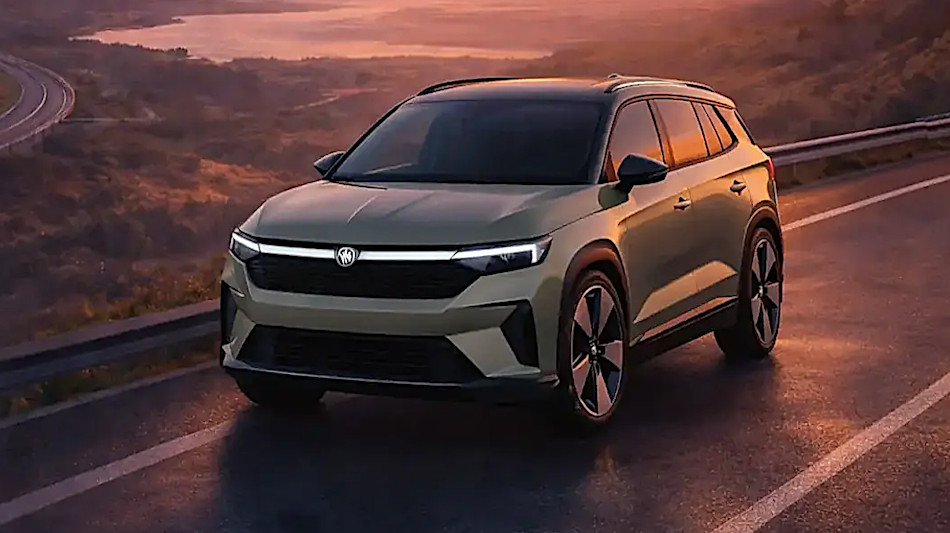
Skoda will launch the Peaq in summer 2026 as its largest electric vehicle to date. The name echoes the word “peak”, reflecting its status at the top of the range. Derived from the Vision 7S concept, the production Peaq adopts the Modern Solid design language with minimalist surfaces, C‑shaped lighting and a Tech‑Deck front end. Official statements emphasise an interior designed for modern families and business users, with a spacious cabin and seven seats. The MEB platform from the Volkswagen Group allows a flat floor and a long wheelbase, promising generous room for passengers and luggage. Skoda highlights “Simply Clever” features such as modular seating, practical storage and recycled materials.

Technical details remain scarce, but industry observers expect an around 89 kWh battery enabling a WLTP range of roughly 600 km (373 miles) and DC fast‑charging at up to 200 kW. Dual‑motor versions with all‑wheel drive are likely, offering more power than the current Enyaq. The seven seats should fold flat to create a large cargo area. Positioned above the Kodiaq and Enyaq, the Peaq will become Skoda’s flagship yet is expected to undercut premium rivals such as the Kia EV9 and Hyundai Ioniq 9.

Change text size:

Public discussions surrounding the model often centre on range and pricing. Prospective buyers hope for a combination of long‑distance capability and family‑friendly space; others are curious about charging speeds and the final price tag. Some commentators find the name playful, while others consider it odd. Enthusiasts view the Peaq as a long‑awaited option for families and fleet users, making the switch to electric mobility easier, while sceptics worry about vehicle weight and the potential greenhouse effect of large glass roofs.

Regardless of the debate, the Peaq represents a milestone in Skoda’s electrification strategy. It is set to feature the Volkswagen Group’s latest driver‑assistance and safety technologies and comprehensive digital connectivity. Full specifications and pricing will be announced closer to the market launch in mid‑2026, but the vehicle aims to meet the needs of families, high‑mileage drivers and fleet operators seeking a large, practical electric SUV.

Featured

Audi Q9 – how likely is it to become a reality?

The new Audi Q9 is not arriving at a moment of effortless supremacy. It arrives while Audi is renewing its range, trimming costs and trying to restore the full credibility of its premium promise. A flagship SUV above the Q7 is strategically sensible: more presence, more margin potential and more relevance in a highly profitable class. But that also raises the burden of proof.That burden begins with the facts. Audi has confirmed the Q9, yet there is still no official final price and no published WLTP range. Nor has the production powertrain line-up been fully disclosed in public. So the central question can only be answered provisionally today: the Q9 is not justified by default; its eventual price and its real-world electrified usefulness will have to justify themselves.Range is where the issue becomes especially delicate. If Audi launches the Q9 as an electrified combustion model or a plug-in hybrid, a merely decent figure will not be enough in 2026. Buyers in this class expect more than paper efficiency and a premium screen landscape. They expect genuine everyday usability, calm long-distance comfort, intelligent charging and powertrain logic, and the sense that this is modern mobility done convincingly rather than transitional technology sold expensively.

Dacia Striker: Stylish and sturdy?

With the new Striker, Dacia is attacking a part of the market where European family estates have become noticeably more expensive, heavier and, in many cases, less distinctive. The 4.62-metre lifestyle wagon is set to start below 25,000 euros, with hybrid, hybrid 4x4 and LPG versions confirmed. That places it as a deliberately down-to-earth alternative to far costlier C-segment cars. A full unveiling is scheduled for June 2026, while availability is expected from late 2026 or early 2027 depending on the market.The images released so far already make Dacia’s ambition clear. The Striker is not meant to be a dull load carrier, but a car with presence. Its stretched aerodynamic profile, raised ride height and almost shooting-brake-like silhouette give it character without making it look bloated. The upright front end, new daytime running light signature and glossy black element linking the rear lamps show that Dacia wants to sell more than price alone in this class. The Striker looks more deliberate, more modern and more carefully drawn than many of the brand’s earlier generations.That is exactly why the key question matters so much: can the Striker back up its design promise with convincing quality? For now, caution is essential. The model has only been shown in an early reveal. Full information on the cabin, equipment and final technical data is still to come. Any definitive judgment on materials, ergonomics, noise insulation and long-term quality would therefore be premature in March 2026.

Rip-offs at the petrol pump?

Fuel prices in Germany have become a political flashpoint. Since war broke out in Iran and the Strait of Hormuz was temporarily closed, global oil prices have surged. Crude oil quotations rose by around 20 percent to 84 dollars a barrel, and the wholesale price of diesel in Rotterdam climbed by 26 cents per litre – almost 50 percent. As a result, German motorists were paying an average of Euro 2.156 per litre for diesel and Euro 2.037 for Super E10 in mid‑March 2026.Petrol‑station leaseholders emphasise that they do not set their own pump prices. The industry’s lobbying group accuses the oil majors of selling fuel they bought cheaply at a huge mark‑up – behaviour described as “predatory capitalism”. Leaseholders receive none of the extra margin yet face the anger of customers. Convenience‑store sales are also collapsing because angry motorists buy nothing after filling up.Chancellor Friedrich Merz’s government has responded with a package of measures. Filling stations may raise prices only once a day at noon; price cuts are allowed at any time. Part of the national oil reserve will be released, and the competition authority will get more powers. Critics say this does not go far enough. The social welfare organisation SoVD warns that without a price cap consumers remain at the mercy of suppliers and calls for targeted relief for low‑ and middle‑income households. SPD politicians demand a price cap to ensure that consumers are not “fleeced”, while economy minister Katherina Reiche rejects the idea of a state‑financed fuel subsidy.

New Mercedes GLC electric

The new fully electric Mercedes‑GLC is scheduled to appear in 2026 as a dedicated EV platform rather than an electrified version of the existing GLC. The initial GLC 400 4MATIC model uses two motors and a 94‑kWh battery, promising up to 406 miles of WLTP range. British order books opened in late‑2025 with deliveries due in mid‑2026. The recommended retail price ranges from £60 350 to £73 350 (about €70 000–86 000).Technical highlights:- Dual‑motor all‑wheel drive with 482–489 hp.94‑kWh battery; WLTP range up to 406 miles; some reports mention 443 miles.- Fast‑charging at 330 kW, taking 22 minutes from 10–80 %; AC charging at 11 kW (22 kW optional).4.3 s 0–100 km/h and top speed 210 km/h.- Interior features include the MBUX Hyperscreen (up to 39 inches), one‑box braking with high recuperation, air suspension with rear‑axle steering and Car‑to‑X connectivity, vegan materials and a spacious boot with 570 litres plus a 138‑litre frunk.

Change text size: