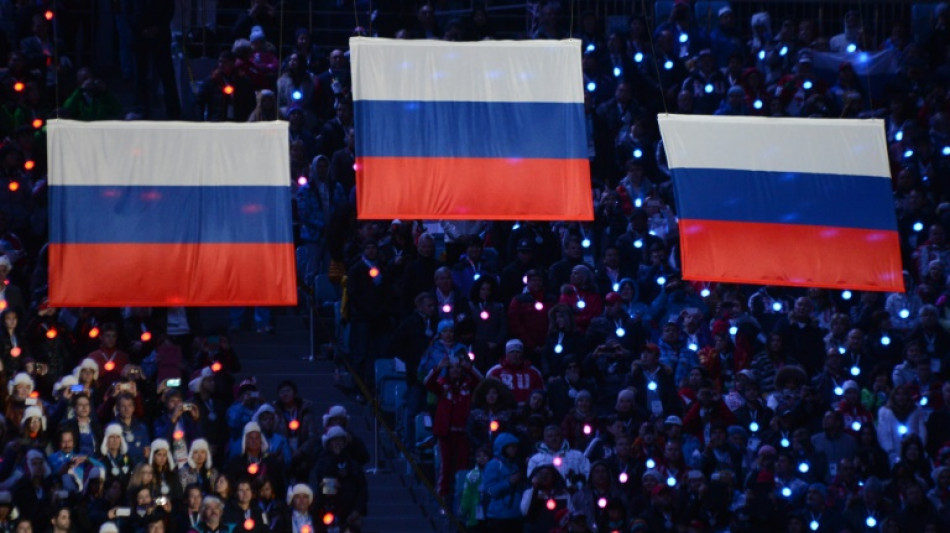
World Athletics set to tighten transgender rules and lift Russia doping ban / Photo: © AFP/File

World Athletics is likely to tighten rules governing the participation of transgender women in female competition on Thursday after a meeting that is also expected to decide to lift the ban imposed on Russia for mass doping.
Track and field, the leading Olympic sport, has chosen a different path from that of swimming which has effectively banned transgender athletes from elite female competition.
World Athletics has said its "preferred option" is to tighten the rules surrounding eligibility but that testosterone levels should be the key determining factor.
It has proposed amending the regulations covering both transgender athletes and those classified as DSD, in other words having "differences of sexual development".
The most high-profile DSD athlete is double Olympic 800m champion Caster Semenya of South Africa.
Under the World Athletics proposals, in order to compete in the female category, transgender and DSD athletes would have to reduce their amount of blood testosterone from the current maximum of five nanomoles per litre to below 2.5, and remain below this level for two years rather than just one, as is the case now.
The proposals have been mulled over at a meeting of World Athletics' Council that started on Tuesday in Monaco.
- Intense scrutiny -
Another major proposal is that concerning Russian athletes, coming at a time when global sporting bodies are debating their potential reintegration ahead of the 2024 Paris Olympics.
Russia's athletics federation has been barred since 2015 after a damning World Anti-Doping Agency report identified "a deeply-rooted culture of doping". It is not eligible to host World Athletics events or send teams to international championships.
For the athletics superpower to return it has to meet a series of strict conditions including establishing a culture of zero tolerance and an effective anti-doping structure.
Just a handful of Russian athletes took part in track and field at the Tokyo Olympics, which was postponed from 2020 to 2021 because of the Covid pandemic, and they did so under a neutral flag.
A lifting of sanctions over the doping issue would have little immediate effect, however, as all Russian and Belarusian athletes have been banned from competition "for the foreseeable future" since Moscow's invasion of Ukraine in February 2022. That includes the option of competing as a neutral.
Just 18 months out from the Olympics in Paris, the sport of athletics' point of view on potential Russian participation will come under increased scrutiny.
After having recommended the exclusion of Russian and Belarusian sportspeople 13 months ago, the International Olympic Committee in January said it was seeking a "pathway" for Russians to take part in the Games in the French capital.
The Olympic Council of Asia has offered athletes from both countries the chance to compete in this year's Asian Games, giving them the possibility of acquiring the qualifying times they will need to compete in Paris.
That prompted a demand for clarification from more than 30 countries including the United States, Canada, Britain, France and Sweden.
There seems to be a groundswell towards allowing the return of Russians and Belarusians under a neutral flag, and fencing -- another Olympic sport -- this month decided to allow athletes from those two countries to take part in qualifying events, sparking outrage in Ukraine.
The ongoing women's World Boxing Championships in India has also featured fighters from both Russia and Belarus competing under their national flags and anthems.
That led to a boycott by countries including the United States, Ukraine, Canada, Sweden and Britain.
(G.Khurtin--DTZ)