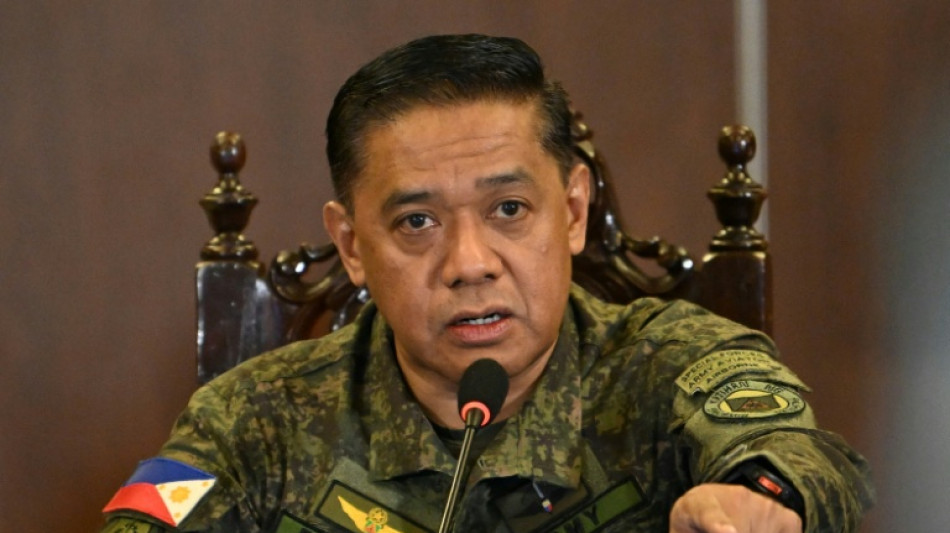
Philippine military chief says rejected calls to oust Marcos / Photo: © AFP

The Philippine military chief said Friday he rejected calls for the armed forces to topple President Ferdinand Marcos as Manila was rocked by street protests last month against government corruption.
General Romeo Brawner said some retired officers from the Philippine military reached out to him and some younger officers, but their calls were rebuffed.
The moves came as Manila geared up for massive September 21 anti-corruption protests sparked by bogus flood-control projects believed to have cost taxpayers billions of dollars.
During last month's protests, "there were posters and speeches calling for the Armed Forces of the Philippines to be the lead. Some of them were saying that maybe we should withdraw our support for the president," Brawner told a news forum.
There were "several calls for us to intervene, and in fact there was some recruitment so to speak, sad to say some of them retired officers," he said.
The would-be plotters were "trying to reach out to the younger officers, trying to reach out to our commanders, reaching out to me even, and convincing us to intervene."
Brawner said they suggested a "coup d'etat, a military junta, in order to come up with a reset of the entire Philippine society, or withdraw our support -- so several forms of military intervention".
At one point he said he and his military "battle staff" even met with a group of retired military officers led by ex-general Romeo Poquiz, a vocal Marcos critic, who aired their grievances -- mainly alleged corruption in the incumbent government.
Brawner said some of those pushing for military intervention insisted that "somebody else deserves to be president, but they did not mention who that is".
Brawner said he told the Poquiz group the military institution was "solid" in support of the Philippine constitution.
"We were very clear in our mandate," he added.
Brawner said he also told Marcos about the plotting and recruitment.
The Philippine military withdrew its support to Marcos' namesake father and dictator 20 years into his rule in 1986, leading to a bloodless popular revolt that chased the Marcos family into US exile.
However, the military action later ushered in a series of bloody coup attempts that rocked the newly restored Philippine democracy led by Marcos Senior's rival and successor Corazon Aquino between 1986-1991.
(B.Izyumov--DTZ)