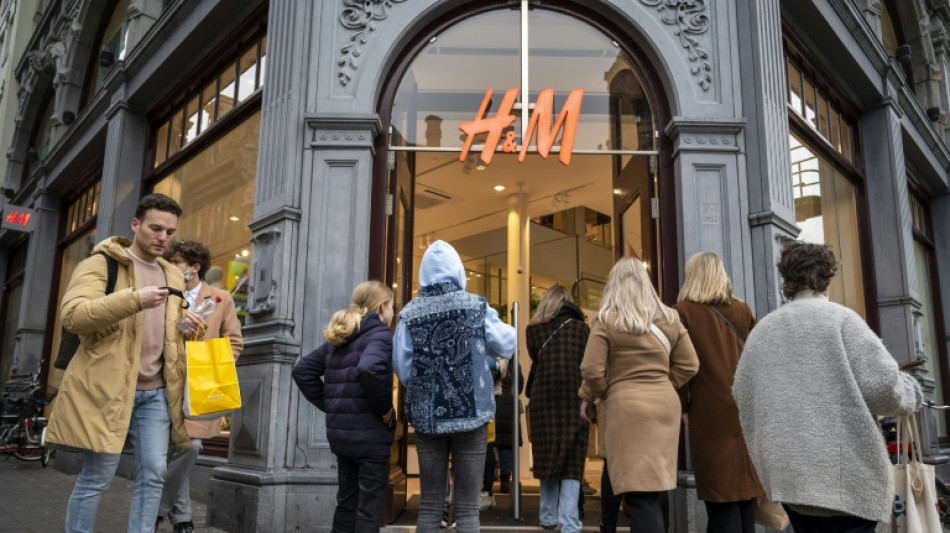
Stung by high costs, Dutch board 'shopbus' to cheaper Germany / Photo: © ANP/AFP

Marleen Naipal scoops up another pot of face cream, glances at the price tag, and tips it into her bulging basket of cosmetic products.
But this is no ordinary shopping splurge: Naipal has taken a 400-kilometre round-trip in a coach to Germany from the Netherlands, where the high cost of living is poised to be a major factor in October 29 elections.
"We came all the way from Rotterdam to Bocholt (in Germany) for a day of shopping because it is just so much cheaper than in the Netherlands," the 53-year-old hair stylist told AFP.
"I think some products are half the price, then the day trip is definitely worth it," she said, with tickets for the "shopbus" costing around 40 euros ($45).
She is not alone. When AFP joined the trip, Dutch bargain-hunters boarded in Rotterdam, Amsterdam and Utrecht to cross the border into Germany.
Several companies offer "affordable shopping" trips out of the Netherlands, some even proposing overnight stays in Luxembourg to take advantage of cheap alcohol and tobacco.
Bus driver Ali El-Abassi understands why people travel such long distances to do their shopping in another country.
"I find it really sad how high the price of groceries is in the Netherlands," the 45-year-old told AFP.
"I just don't understand how things can be half the price in Germany than in the Netherlands," said El-Abassi.
The perception that prices are higher in the Netherlands appears to be borne out by data.
A survey by Dutch consumer watchdog Consumentenbond compared more than 130 popular products in France, Germany, Belgium, and the Netherlands.
They found items were on average 15-percent cheaper in Germany than in the Netherlands, with higher quality brands up to 25 percent less expensive.
"Think of soft drinks, household goods, and drugstore articles in particular," said the Consumentenbond report.
"In the Netherlands, these items are often on sale. But usually even the sale prices cannot compete with the price in Germany."
"So in the Netherlands, with a 'buy one, get one free' offer, you don't actually get anything free," said the watchdog.
- 'People are really suffering' -
The high cost of living regularly features in polls of voters' most pressing concerns and is sure to weigh on minds as the Dutch head to the ballot box next week.
The stunning success of far-right leader Geert Wilders in 2023 elections came after he toned down some of his anti-Islam rhetoric to focus on purchasing power for ordinary Dutch people.
Marcel Lubbers, a political science expert from the University of Utrecht, said many voters conflate the cost-of-living crisis with other pressing issues.
"I think it is still an important issue for many people, but they connect it with other topics," such as housing or immigration, Lubbers told AFP.
The Dutch Authority for Consumers and Markets (ACM) just last month launched an investigation into food prices in supermarkets.
The ACM, a government body, will be looking into so-called "territorial supply constraints" that are blamed for keeping prices high in the Netherlands.
For example, regulations dictating that all labels must be "easily understood" prevents retailers importing bulk purchases from abroad, as labelling is not in Dutch.
Value-added tax is also higher in the Netherlands than Germany, at nine percent for groceries (compared to seven percent) and 21 percent for non-food items (19 percent in Germany).
For bargain-hunting Naipal, it all comes down to politics.
"It has just become very expensive in the Netherlands in a very short space of time. Many people are struggling to make ends meet on an average income. And that's all about politics," she said.
She said that cost-of-living would "definitely influence who we vote for and what they promise us."
"We really hope that the election allows us to move forward... because people are really suffering," she said.
But for now, politics takes a back-seat to retail therapy as she proudly shows off her haul of cheaper German cosmetics.
"Just buying what I need," she said, before breaking into a grin: "and maybe something extra if I see something really nice."
(A.Stefanowych--DTZ)