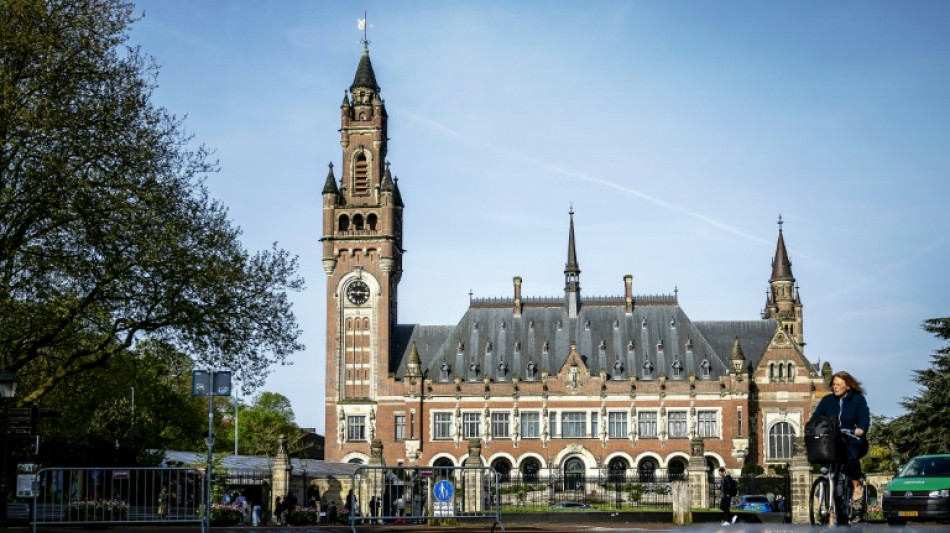
Nicaragua accuses Germany of multiple violations of law in Gaza genocide case / Photo: © ANP/AFP

Nicaragua accused Germany of "multiple violations of international law" at the United Nations top court on Tuesday, as it pressed its case that Berlin is complicit in what it described as genocide in Gaza.
The central American country has dragged Germany to the International Court of Justice in The Hague, accusing Berlin of breaching the 1948 UN Genocide Convention with its support, notably arms shipments, for Israel.
"Nicaragua invokes Germany's responsibility in connection to multiple violations of international law, particularly in respect of the odious scourge of genocide and international humanitarian law," ambassador Carlos Jose Arguello Gomez told the court.
Gomez said Nicaragua's claims "involve the most serious breaches of obligations arising under... general international law".
The court -- which rules on legal disputes between countries -- has already thrown out a request by Nicaragua to impose emergency measures on Germany, notably to stop arms exports to Israel.
The case continues however and Germany is now seeking to have it thrown out completely, arguing that judges do not have jurisdiction and that Nicaragua's case does not hold water.
On Monday, the first of four days of hearings, Germany's representative Julia Monar noted Germany's "unwavering support for the existence and security of the State of Israel" but also said it was one of the world's largest bilateral donors to the Palestinian Territories.
"All German exports of military technology and equipment to Israel -- as to any country -- are subject to strict licensing requirements which exceed international requirements," she said.
Nicaragua's statements "create an inaccurate and distorted picture", said Monar.
- 'Livestreamed' -
Nicaragua reiterated its charge that Israel is committing genocide in Gaza, an accusation firmly denied by the Israelis.
"The scourge of genocide is not new, but what is new in the case before us is the way it is being carried out publicly and live-streamed," said Gomez.
He drew parallels with the horrors of the Holocaust, noting that images of Nazi concentration camps only became public after the atrocities.
"Schoolchildren in Germany are probably more aware today of what is happening in the occupied Palestinian territory, and particularly the Gaza Strip, than their ancestors were of the horrors of the Nazi regime," said Gomez.
The consequence of this, alleged Gomez, is that "there cannot be any doubt that the German government is fully aware of the crimes being committed by Israel".
It takes on average six months for the court to hand down a ruling in such cases.
The court could either side with Germany and throw out the case completely, or rule against Berlin and consider the case in more detail.
This procedure is separate from a high-profile case also before the ICJ, in which South Africa has accused Israel of perpetrating genocide in Gaza, which Israel denies.
The ICJ's rulings are binding but it has no power to enforce them.
For example, it has ordered Russia to stop its invasion of Ukraine, a demand that has fallen on deaf ears in the Kremlin.
(A.Stefanowych--DTZ)